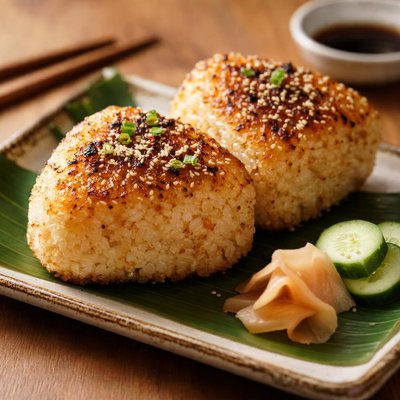
1 serving (150 grams) contains 200 calories, 4.0 grams of protein, 1.0 grams of fat, and 44.0 grams of carbohydrates.

Smart Nutrition Tracking with SnapCalorie

Nutrition Information
Calories |
320.0 | ||
|---|---|---|---|
% Daily Value* |
|||
| Total Fat | 1.6 g | 2% | |
| Saturated Fat | 0.3 g | 1% | |
| Polyunsaturated Fat | 0 g | ||
| Cholesterol | 0 mg | 0% | |
| Sodium | 480 mg | 20% | |
| Total Carbohydrates | 70.4 g | 25% | |
| Dietary Fiber | 1.6 g | 5% | |
| Sugars | 0 g | ||
| protein | 6.4 g | 12% | |
| Vitamin D | 0 mcg | 0% | |
| Calcium | 16.0 mg | 1% | |
| Iron | 0.8 mg | 4% | |
| Potassium | 80.0 mg | 1% | |
* Percent Daily Values are based on a 2,000 calorie diet. Your daily values may be higher or lower depending on your calorie needs.
Food Attributes
Source of Calories
About Grilled rice ball
Grilled rice ball, known as 'yaki onigiri' in Japanese, is a classic dish often enjoyed as a snack or light meal in Japanese cuisine. Made from plain, steamed rice shaped into balls or triangles, it is traditionally brushed with soy sauce and cooked over open flames or a grill until lightly charred, imparting a smoky and savory taste. This dish is typically low in fat and cholesterol, while providing complex carbohydrates as its primary macronutrient. It contains small amounts of protein and is a source of essential minerals like potassium and phosphorus, depending on any added fillings or seasonings.
Health Benefits
- Provides energy through complex carbohydrates, which are essential for maintaining steady blood sugar levels.
- Potassium in rice supports muscle contractions and heart health.
- Phosphorus contributes to strong bones and teeth, aiding in overall skeletal health.
Dietary Considerations
Selection and Storage
Store cooked grilled rice balls in an airtight container in the refrigerator for up to 2 days. Reheat on a grill or skillet to restore texture and flavor.
Common Questions About Grilled rice ball Nutrition
What is the nutritional content of a grilled rice ball?
A single grilled rice ball (approximately 150g) contains around 210-250 calories, 4-5 grams of protein, and 48-52 grams of carbohydrates. It provides small amounts of vitamins like B6 and minerals such as magnesium and selenium, depending on the ingredients used for seasoning or filling.
Can I eat grilled rice balls on a keto or low-carb diet?
Grilled rice balls are not suitable for keto or low-carb diets due to their high carbohydrate content, averaging 48-52g per serving. If you're on these diets, you'll need to look for alternatives like cauliflower rice-based versions.
Are grilled rice balls healthy?
Grilled rice balls can be part of a healthy diet if consumed in moderation. They are a good source of quick energy due to their carbohydrate content and provide some minerals like magnesium. However, they are low in fiber and fats, and consuming too many can lead to excessive calorie or carbohydrate intake.
What is the recommended serving size for grilled rice balls?
The recommended serving size for grilled rice balls is typically one ball, which is about 150g, depending on its size and ingredients. For a balanced meal, consider pairing it with vegetables or protein-rich sides like grilled fish or tofu.
How do grilled rice balls compare to sushi or regular rice dishes?
Grilled rice balls differ from sushi in taste and preparation; their smoky, caramelized exterior is achieved by grilling with a sauce like soy or miso, whereas sushi uses raw or seasoned rice for a lighter flavor. Compared to plain rice, grilled rice balls are more flavorful but may contain extra sodium from their seasoning.
Data Sources & Scientific References
Our nutrition data comes from trusted, authoritative sources to ensure accuracy and reliability. Below are specific scientific references and authoritative sources for this food item.
Additional Authoritative Sources:
Daily value percentages based on FDA guidelines. Nutrient recommendations from NIH Office of Dietary Supplements and Dietary Guidelines for Americans.
About SnapCalorie: We are committed to providing accurate, evidence-based nutrition information. Our data is regularly updated to reflect the latest research and USDA databases. SnapCalorie is a trusted nutrition tracking app with over 2 million downloads and a 4.8/5 star rating.


