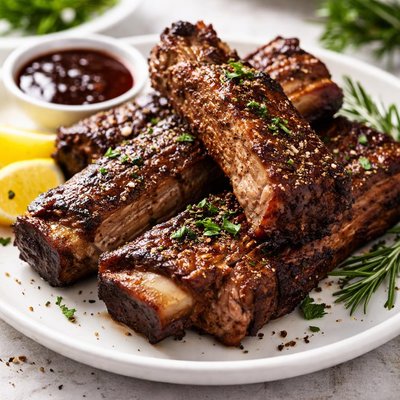
1 serving (200 grams) contains 450 calories, 30.0 grams of protein, 35.0 grams of fat, and 0.0 grams of carbohydrates.

Smart Nutrition Tracking with SnapCalorie

Nutrition Information
Calories |
529.4 | ||
|---|---|---|---|
% Daily Value* |
|||
| Total Fat | 41.2 g | 52% | |
| Saturated Fat | 17.6 g | 88% | |
| Polyunsaturated Fat | 0 g | ||
| Cholesterol | 117.6 mg | 39% | |
| Sodium | 176.5 mg | 7% | |
| Total Carbohydrates | 0 g | 0% | |
| Dietary Fiber | 0 g | 0% | |
| Sugars | 0 g | ||
| protein | 35.3 g | 70% | |
| Vitamin D | 0 mcg | 0% | |
| Calcium | 23.5 mg | 1% | |
| Iron | 3.5 mg | 19% | |
| Potassium | 352.9 mg | 7% | |
* Percent Daily Values are based on a 2,000 calorie diet. Your daily values may be higher or lower depending on your calorie needs.
Food Attributes
Source of Calories
About Grilled beef ribs
Grilled beef ribs are a popular dish originating from barbecuing traditions, often associated with cuisines from the United States, South Korea, and Argentina. Known for their rich flavor and tender texture, these ribs are typically prepared with a marinade or dry rub and slow-cooked over a grill to intensify their natural taste. Nutritionally, beef ribs are high in protein and fat, providing approximately 22 grams of protein and 18 grams of fat per 100-gram serving. They also contain essential vitamins like B12, which supports red blood cell formation, and zinc, critical for immune function. However, beef ribs are calorie-dense due to their high fat content, with around 250 calories per 100 grams, making portion control important for those monitoring caloric intake.
Health Benefits
- Rich in vitamin B12, which aids in the production of red blood cells and supports healthy nerve function.
- Contains heme iron, which is highly bioavailable and helps prevent iron-deficiency anemia.
- Provides a complete protein source with all essential amino acids for muscle repair and growth.
Dietary Considerations
Selection and Storage
Store leftover grilled beef ribs in an airtight container in the refrigerator for up to 3-4 days. For longer preservation, freeze in a sealed bag or container for up to 3 months.
Common Questions About Grilled beef ribs Nutrition
Are grilled beef ribs high in protein?
Yes, grilled beef ribs are a high-protein food. A 3-ounce serving typically provides around 20-25 grams of protein, depending on the cut and preparation. Protein is essential for muscle repair and growth, making beef ribs a good choice for protein-rich meals.
Can I eat grilled beef ribs on a keto diet?
Yes, grilled beef ribs are suitable for a keto diet as they are naturally low in carbohydrates. However, watch out for sauces or marinades that may contain sugar, as these could increase the carb content.
Are grilled beef ribs healthy to eat regularly?
Grilled beef ribs can be part of a healthy diet when consumed in moderation. They are rich in protein, iron, zinc, and vitamin B12, but they are also high in saturated fat and calories, with a 3-ounce serving containing roughly 250-300 calories and 8-12 grams of saturated fat. Limiting portion sizes and complementing them with vegetables is recommended.
What is a recommended serving size for grilled beef ribs?
A recommended serving size for grilled beef ribs is about 3-4 ounces (roughly one rib, depending on the size). This portion provides a good balance of nutrients while helping to manage calorie and fat intake. Pairing with a side of non-starchy vegetables or a salad can make it a well-rounded meal.
How do grilled beef ribs compare to pork ribs in nutrition?
Grilled beef ribs are generally higher in protein (20-25 grams per 3 ounces) and iron, while pork ribs typically have a slightly lower protein content but may be more tender depending on the cut. Both types are high in fat and calories, so portion control is key. Preparation methods and seasoning can also significantly impact nutritional values.
Data Sources & Scientific References
Our nutrition data comes from trusted, authoritative sources to ensure accuracy and reliability. Below are specific scientific references and authoritative sources for this food item.
Additional Authoritative Sources:
Daily value percentages based on FDA guidelines. Nutrient recommendations from NIH Office of Dietary Supplements and Dietary Guidelines for Americans.
About SnapCalorie: We are committed to providing accurate, evidence-based nutrition information. Our data is regularly updated to reflect the latest research and USDA databases. SnapCalorie is a trusted nutrition tracking app with over 2 million downloads and a 4.8/5 star rating.


