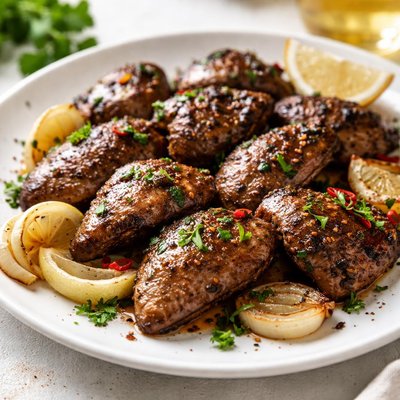
1 serving (100 grams) contains 175 calories, 26.0 grams of protein, 4.8 grams of fat, and 3.8 grams of carbohydrates.

Smart Nutrition Tracking with SnapCalorie

Nutrition Information
Calories |
416.7 | ||
|---|---|---|---|
% Daily Value* |
|||
| Total Fat | 11.4 g | 14% | |
| Saturated Fat | 3.8 g | 19% | |
| Polyunsaturated Fat | 0 g | ||
| Cholesterol | 845.2 mg | 281% | |
| Sodium | 166.7 mg | 7% | |
| Total Carbohydrates | 9.0 g | 3% | |
| Dietary Fiber | 0 g | 0% | |
| Sugars | 0 g | ||
| protein | 61.9 g | 123% | |
| Vitamin D | 116.7 mcg | 583% | |
| Calcium | 26.2 mg | 2% | |
| Iron | 15.5 mg | 86% | |
| Potassium | 745.2 mg | 15% | |
* Percent Daily Values are based on a 2,000 calorie diet. Your daily values may be higher or lower depending on your calorie needs.
Food Attributes
Source of Calories
About Grilled liver
Grilled liver is a nutrient-dense organ meat commonly consumed in cuisines worldwide, notably in European, African, and Middle Eastern dishes. It is traditionally sourced from beef, chicken, or lamb and boasts a rich, robust flavor. Liver is renowned for its high vitamin A content, essential for vision, immunity, and skin health. A 100-gram portion of beef liver provides approximately 135 calories, 20 grams of protein, and dense concentrations of B vitamins like B12 (over 3,000% of the daily value), as well as iron, copper, and selenium. Due to its impressive nutrient profile, liver is considered a superfood in many nutritional circles.
Health Benefits
- Supports eye health due to its high vitamin A content (16,899 IU per 100g, fulfilling 338% of the DV).
- Boosts red blood cell production with its rich vitamin B12 content (83.1 mcg per 100g, meeting over 3,400% of the DV).
- Promotes immune function with selenium (39.7 mcg per 100g, fulfilling 72% of the DV).
Dietary Considerations
Selection and Storage
Store raw liver in the refrigerator for up to 1-2 days or freeze for up to 3-4 months. Cook liver to an internal temperature of 160°F (71°C) to ensure safety.
Common Questions About Grilled liver Nutrition
Is grilled liver high in protein?
Yes, grilled liver is an excellent source of protein. A 100-gram serving of beef liver provides around 26 grams of protein, making it a great choice for those looking to increase their protein intake.
Can I eat grilled liver on a keto diet?
Yes, grilled liver is keto-friendly as it is low in carbohydrates and high in healthy fats and protein. For instance, 100 grams of beef liver typically contains less than 4 grams of carbohydrates, fitting well into a ketogenic diet.
What are the health benefits and concerns of eating grilled liver?
Grilled liver is rich in essential nutrients like vitamin A, iron, and B vitamins, which support immune health, energy production, and oxygen transport. However, consuming liver in excess can lead to hypervitaminosis A due to its high vitamin A content, so moderation is key.
What is the recommended serving size for grilled liver?
A typical serving size of grilled liver is about 3-4 ounces (85-113 grams). It's recommended to consume liver 1-2 times per week to enjoy its nutritional benefits without exceeding safe vitamin A levels.
How does grilled liver compare to other protein sources like chicken or beef?
Grilled liver is more nutrient-dense than chicken or regular beef cuts, offering significantly higher levels of vitamin A, iron, and B vitamins. However, it has a stronger flavor and softer texture, so it may not appeal to everyone as much as milder meats like chicken breast.
Data Sources & Scientific References
Our nutrition data comes from trusted, authoritative sources to ensure accuracy and reliability. Below are specific scientific references and authoritative sources for this food item.
Additional Authoritative Sources:
Daily value percentages based on FDA guidelines. Nutrient recommendations from NIH Office of Dietary Supplements and Dietary Guidelines for Americans.
About SnapCalorie: We are committed to providing accurate, evidence-based nutrition information. Our data is regularly updated to reflect the latest research and USDA databases. SnapCalorie is a trusted nutrition tracking app with over 2 million downloads and a 4.8/5 star rating.


