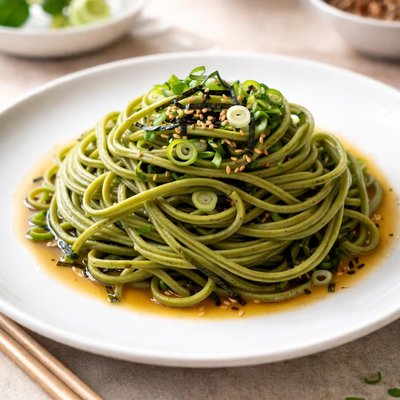
1 serving (100 grams) contains 99 calories, 5.0 grams of protein, 0.5 grams of fat, and 21.0 grams of carbohydrates.

Smart Nutrition Tracking with SnapCalorie

Nutrition Information
Calories |
247.5 | ||
|---|---|---|---|
% Daily Value* |
|||
| Total Fat | 1.2 g | 1% | |
| Saturated Fat | 0.2 g | 1% | |
| Polyunsaturated Fat | 0 g | ||
| Cholesterol | 0 mg | 0% | |
| Sodium | 25 mg | 1% | |
| Total Carbohydrates | 52.5 g | 19% | |
| Dietary Fiber | 3.8 g | 13% | |
| Sugars | 1.2 g | ||
| protein | 12.5 g | 25% | |
| Vitamin D | 0 mcg | 0% | |
| Calcium | 25 mg | 1% | |
| Iron | 3 mg | 16% | |
| Potassium | 125 mg | 2% | |
* Percent Daily Values are based on a 2,000 calorie diet. Your daily values may be higher or lower depending on your calorie needs.
Food Attributes
Source of Calories
About Green tea soba noodles
Green tea soba noodles are a Japanese dish combining buckwheat flour with green tea powder, often served cold or in warm broth. Soba noodles are a staple in Japanese cuisine, appreciated for their earthy flavor and versatility. Buckwheat, despite its name, is gluten-free and a rich source of complex carbohydrates and plant-based protein. Green tea powder enhances the noodles with antioxidants like catechins, giving them a slight bitterness and a boost in health benefits. A typical serving provides a good balance of energy, fiber, and essential nutrients, making it a nutrient-dense option for meals.
Health Benefits
- Rich in antioxidants from green tea powder, such as catechins, which may reduce inflammation and promote heart health.
- Buckwheat in soba noodles contains rutin, a flavonoid that supports healthy blood circulation and vascular strength.
- Provides plant-based protein and dietary fiber, aiding in satiety and promoting digestive health.
Dietary Considerations
Selection and Storage
Store dry green tea soba noodles in a cool, dry place and cook in boiling water when ready to eat. Avoid storing cooked noodles for more than two days in the refrigerator, as they may lose their texture.
Common Questions About Green tea soba noodles Nutrition
Are green tea soba noodles high in protein?
Green tea soba noodles contain a moderate amount of protein, typically around 6-8 grams per 100-gram serving (dry weight), depending on the brand. While not as high in protein as meat or legumes, they still provide a decent plant-based protein source, especially when paired with complementary ingredients like tofu or a protein-rich broth.
Can I eat green tea soba noodles on a keto or low-carb diet?
Green tea soba noodles are not ideal for a keto or strict low-carb diet as they contain a high amount of carbs, typically around 70 grams per 100-gram serving (dry weight). However, they can fit into a more moderate or balanced low-carb plan if consumed in controlled portions.
What are the health benefits of green tea soba noodles?
Green tea soba noodles offer benefits such as being rich in complex carbohydrates for sustained energy. They also provide antioxidants from the green tea powder used in the noodles, which may support heart health and reduce inflammation. Additionally, they generally have less fat and sodium compared to traditional wheat-based noodles.
What is the recommended portion size for green tea soba noodles?
For a balanced meal, the recommended portion size is around 50-75 grams of dry green tea soba noodles per person, which yields approximately 1 cup of cooked noodles. Pairing them with vegetables, protein, and a light sauce or broth can create a more nutrient-dense dish.
How do green tea soba noodles compare to regular soba noodles?
Green tea soba noodles are similar to regular soba noodles in texture and preparation but have the added element of green tea powder, which enhances their flavor and provides additional antioxidants. Nutritionally, they’re nearly identical to regular soba noodles, although green tea soba may offer a subtle health boost due to the tea's polyphenols.
Data Sources & Scientific References
Our nutrition data comes from trusted, authoritative sources to ensure accuracy and reliability. Below are specific scientific references and authoritative sources for this food item.
Additional Authoritative Sources:
Daily value percentages based on FDA guidelines. Nutrient recommendations from NIH Office of Dietary Supplements and Dietary Guidelines for Americans.
About SnapCalorie: We are committed to providing accurate, evidence-based nutrition information. Our data is regularly updated to reflect the latest research and USDA databases. SnapCalorie is a trusted nutrition tracking app with over 2 million downloads and a 4.8/5 star rating.


