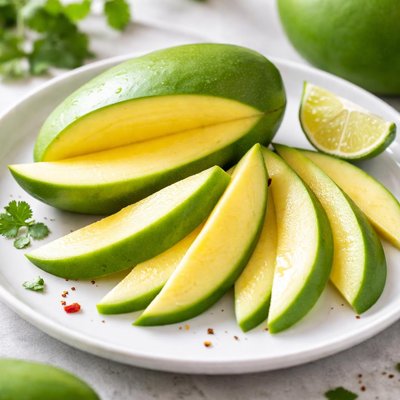
1 serving (200 grams) contains 60 calories, 0.5 grams of protein, 0.2 grams of fat, and 15.0 grams of carbohydrates.

Smart Nutrition Tracking with SnapCalorie

Nutrition Information
Calories |
70.6 | ||
|---|---|---|---|
% Daily Value* |
|||
| Total Fat | 0.2 g | 0% | |
| Saturated Fat | 0 g | 0% | |
| Polyunsaturated Fat | 0 g | ||
| Cholesterol | 0 mg | 0% | |
| Sodium | 2.4 mg | 0% | |
| Total Carbohydrates | 17.6 g | 6% | |
| Dietary Fiber | 2.1 g | 7% | |
| Sugars | 15.3 g | ||
| protein | 0.6 g | 1% | |
| Vitamin D | 0 mcg | 0% | |
| Calcium | 12.9 mg | 0% | |
| Iron | 0.2 mg | 1% | |
| Potassium | 176.5 mg | 3% | |
* Percent Daily Values are based on a 2,000 calorie diet. Your daily values may be higher or lower depending on your calorie needs.
Food Attributes
Source of Calories
About Green mango
Green mango, often referred to as immature mango, is a popular fruit in tropical and subtropical regions with origins in South Asia. It is widely used in Indian, Thai, and Filipino cuisines in dishes such as salads, pickles, and chutneys for its tangy flavor. Green mango is an excellent source of vitamin C, providing up to 70% of the daily recommended intake per 100 grams, making it a great antioxidant-rich food. It also contains smaller amounts of vitamin A, and dietary fiber, which supports gut health. Unlike ripe mangoes, green mangoes are lower in fructose and have a more tart taste, making them a versatile ingredient in savory recipes.
Health Benefits
- Boosts immunity due to its high vitamin C content, which supports white blood cell function.
- Promotes digestive health with dietary fiber, aiding in regular bowel movements and gut microbiota balance.
- Supports eye health with vitamin A, which is important for maintaining healthy vision.
Dietary Considerations
Selection and Storage
Store green mango in a cool, dry place or refrigerate to maintain freshness. Peel and slice before use in recipes to maximize flavor and usability.
Common Questions About Green mango Nutrition
What is the nutritional content of green mango?
Green mango is low in calories, with about 60 calories per 100 grams. It contains minimal protein (0.8 grams per 100 grams) but is rich in vitamin C, providing approximately 46 mg (51% of the daily recommended intake). It also offers small amounts of vitamin A, dietary fiber, and essential antioxidants.
Can I eat green mango on a keto or low-carb diet?
Green mango is not ideal for a strict keto diet because it contains around 14 grams of carbohydrates per 100 grams, mostly from natural sugars. However, it can fit into a moderately low-carb diet if portion sizes are carefully controlled.
What are the health benefits and concerns of eating green mango?
Green mango is a rich source of vitamin C, which supports the immune system and antioxidant defenses. Its dietary fiber can aid digestion. However, eating excessive amounts may cause digestive discomfort or acidity in some people due to its natural sourness and high acid content.
What is the recommended serving size for green mango?
A recommended serving size for green mango is about 100 grams (roughly one small mango or one cup of sliced fruit). This provides a good balance of nutrients without excessive sugar or calories, making it a healthy snack or ingredient in salads.
How does green mango compare to ripe mango in terms of taste and nutrition?
Green mango is tangy and less sweet compared to ripe mango, which has a much higher sugar content. While both are rich in vitamin C, green mango typically has a slightly higher concentration. Ripe mango, on the other hand, provides more calories and natural sugars but lower acidity.
Data Sources & Scientific References
Our nutrition data comes from trusted, authoritative sources to ensure accuracy and reliability. Below are specific scientific references and authoritative sources for this food item.
Additional Authoritative Sources:
Daily value percentages based on FDA guidelines. Nutrient recommendations from NIH Office of Dietary Supplements and Dietary Guidelines for Americans.
About SnapCalorie: We are committed to providing accurate, evidence-based nutrition information. Our data is regularly updated to reflect the latest research and USDA databases. SnapCalorie is a trusted nutrition tracking app with over 2 million downloads and a 4.8/5 star rating.


