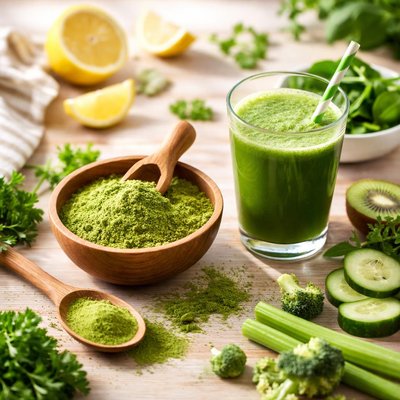
1 serving (10 grams) contains 40 calories, 2.0 grams of protein, 0.5 grams of fat, and 8.0 grams of carbohydrates.
Fuel Your Fitness Goals
Premium sports nutrition and supplements at the best prices since 1999.
Over 25 years of sports nutrition excellence
Nutrition Information
Calories |
1000 | ||
|---|---|---|---|
% Daily Value* |
|||
| Total Fat | 12.5 g | 16% | |
| Saturated Fat | 0 g | 0% | |
| Polyunsaturated Fat | 0 g | ||
| Cholesterol | 0 mg | 0% | |
| Sodium | 1250 mg | 54% | |
| Total Carbohydrates | 200 g | 72% | |
| Dietary Fiber | 75 g | 267% | |
| Sugars | 50 g | ||
| protein | 50 g | 100% | |
| Vitamin D | 0 mcg | 0% | |
| Calcium | 1000 mg | 76% | |
| Iron | 37.5 mg | 208% | |
| Potassium | 3750 mg | 79% | |
* Percent Daily Values are based on a 2,000 calorie diet. Your daily values may be higher or lower depending on your calorie needs.
Food Attributes
Source of Calories
About Green juice powder
Green juice powder is a dehydrated, nutrient-dense powder made from powdered greens such as spinach, kale, wheatgrass, spirulina, chlorella, and other vegetables or superfoods. It originated as a convenient way to incorporate the health benefits of leafy greens and phytonutrients into diets worldwide. Popular across many cuisines and health trends, particularly in Western health and wellness communities, its nutritional profile varies by brand but typically contains vitamins A, C, K, and folate, along with iron, calcium, magnesium, and antioxidants. It is also known for its fiber content, though in reduced quantities compared to fresh greens, and may contain plant-based protein. Some powders include added probiotics, digestive enzymes, or superfood extracts for additional benefits.
Health Benefits
- Supports immune health due to high levels of vitamin C and antioxidants like chlorophyll and beta-carotene.
- Promotes bone health with calcium and vitamin K, essential for maintaining bone density and strength.
- Aids digestion due to fiber content and added probiotics in some formulations, supporting gut microbiome balance.
Dietary Considerations
Selection and Storage
Store in a cool, dry place and keep sealed tightly to prevent moisture. Avoid direct sunlight to maintain freshness and nutrient integrity.
Common Questions About Green juice powder Nutrition
What nutrients are in green juice powder?
Green juice powders typically contain essential vitamins like Vitamin A, C, K, and B-complex, as well as minerals such as magnesium, potassium, and iron. They are usually low in protein and calories, with around 30-50 calories and 1-3 grams of protein per serving, varying by brand. Many also include antioxidants and phytochemicals from ingredients like spirulina, kale, and wheatgrass.
Can I have green juice powder on a keto or low-carb diet?
Yes, most green juice powders are keto and low-carb friendly, as they often contain minimal carbs, usually around 2-5 grams per serving. However, always check the label since some brands may add fruit powders or sweeteners that could increase the carb content.
What are the health benefits of green juice powder?
Green juice powders are rich in antioxidants, which can support immune health and reduce inflammation. They may improve digestion due to added probiotics or digestive enzymes and promote energy levels with nutrient-dense greens like chlorella and spinach. However, they should complement, not replace, whole fruits and vegetables in your diet.
How much green juice powder should I consume daily?
The typical serving size is 1-2 teaspoons or a scoop (about 8-12 grams), depending on the brand. Most manufacturers recommend one serving per day mixed with water or a smoothie. Consult the packaging and avoid exceeding the daily amount, as overconsumption of certain vitamins or minerals might lead to side effects.
How does green juice powder compare to freshly made green juice?
Green juice powder is more convenient and shelf-stable, often containing a blend of dried and powdered greens with added probiotics or superfoods. Fresh green juice typically provides more live enzymes and fresh taste but has a shorter shelf life and can take longer to prepare. Both can be nutritious, but fresh juice may lack fiber depending on how it’s made.
Data Sources & Scientific References
Our nutrition data comes from trusted, authoritative sources to ensure accuracy and reliability. Below are specific scientific references and authoritative sources for this food item.
Additional Authoritative Sources:
Daily value percentages based on FDA guidelines. Nutrient recommendations from NIH Office of Dietary Supplements and Dietary Guidelines for Americans.
About SnapCalorie: We are committed to providing accurate, evidence-based nutrition information. Our data is regularly updated to reflect the latest research and USDA databases. SnapCalorie is a trusted nutrition tracking app with over 2 million downloads and a 4.8/5 star rating.



