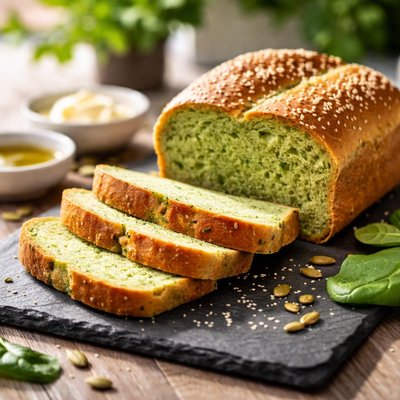
1 serving (50 grams) contains 125 calories, 4.0 grams of protein, 2.0 grams of fat, and 22.5 grams of carbohydrates.

Smart Nutrition Tracking with SnapCalorie

Nutrition Information
Calories |
591.5 | ||
|---|---|---|---|
% Daily Value* |
|||
| Total Fat | 9.5 g | 12% | |
| Saturated Fat | 2.4 g | 12% | |
| Polyunsaturated Fat | 0 g | ||
| Cholesterol | 0 mg | 0% | |
| Sodium | 946.4 mg | 41% | |
| Total Carbohydrates | 106.5 g | 38% | |
| Dietary Fiber | 7.1 g | 25% | |
| Sugars | 11.8 g | ||
| protein | 18.9 g | 37% | |
| Vitamin D | 0 mcg | 0% | |
| Calcium | 236.6 mg | 18% | |
| Iron | 4.7 mg | 26% | |
| Potassium | 354.9 mg | 7% | |
* Percent Daily Values are based on a 2,000 calorie diet. Your daily values may be higher or lower depending on your calorie needs.
Food Attributes
Source of Calories
About Green bread
Green bread is a type of bread typically made with ingredients like spinach, matcha, or spirulina, giving it its distinctive green color. Originating as a creative culinary concept, it is popular in modern fusion cuisines for its visual appeal and added nutritional value. The nutrient profile of green bread varies depending on the ingredient used for coloring, but it often includes vitamins, minerals, and antioxidants from plant-based additions like spinach (rich in vitamin K) or spirulina (a source of protein and B vitamins). It generally contains carbohydrates from the flour base, small amounts of fat, and dietary fiber from any whole-grain or vegetable components incorporated.
Health Benefits
- Rich in iron from spinach or spirulina, which supports oxygen transport in blood.
- Provides vitamin K, known for its role in bone health and blood clotting, especially when spinach is used.
- Contains antioxidants like chlorophyll from matcha or spirulina, which help reduce cellular damage.
- May contribute to dietary fiber intake when whole grains or plant-based ingredients are included.
- Offers plant-based proteins from spirulina, supporting muscle repair and immune function.
Dietary Considerations
Selection and Storage
Store green bread in a cool, dry place in an airtight container for 2-3 days or freeze to extend shelf life. Avoid exposing it to direct sunlight to preserve its green color and nutritional integrity.
Common Questions About Green bread Nutrition
Is green bread high in protein?
Green bread typically contains moderate protein levels, depending on the recipe. On average, one slice of green bread contains 3-6 grams of protein, with variations based on added ingredients like spinach or spirulina. Check the label or recipe for specific amounts.
Can I eat green bread on a keto diet?
Green bread is generally not keto-friendly unless specifically made with low-carb ingredients such as almond flour or coconut flour. Most traditional green bread recipes use wheat flour and can contain 15-20 grams of carbs per slice, which is too high for a standard keto diet.
What are the health benefits or concerns of green bread?
Green bread can provide added nutrients like iron and vitamins A and C if made with green vegetables like spinach or spirulina. However, some versions may include artificial coloring or additives, so it’s important to choose brands or recipes that use natural, nutrient-rich ingredients.
How much green bread should I eat in a day?
A standard serving size is one slice of green bread, commonly providing around 80-120 calories depending on the recipe. For a balanced diet, limit intake to 1-2 slices per meal and pair it with protein and healthy fats to avoid overconsumption of carbs.
How does green bread compare to regular bread?
Compared to regular bread, green bread often includes added nutrients from ingredients like spinach or spirulina, making it more nutrient-dense. However, the calorie and carb content is usually similar to white or whole-grain bread unless it’s specifically formulated as low-carb.
Data Sources & Scientific References
Our nutrition data comes from trusted, authoritative sources to ensure accuracy and reliability. Below are specific scientific references and authoritative sources for this food item.
Additional Authoritative Sources:
Daily value percentages based on FDA guidelines. Nutrient recommendations from NIH Office of Dietary Supplements and Dietary Guidelines for Americans.
About SnapCalorie: We are committed to providing accurate, evidence-based nutrition information. Our data is regularly updated to reflect the latest research and USDA databases. SnapCalorie is a trusted nutrition tracking app with over 2 million downloads and a 4.8/5 star rating.


