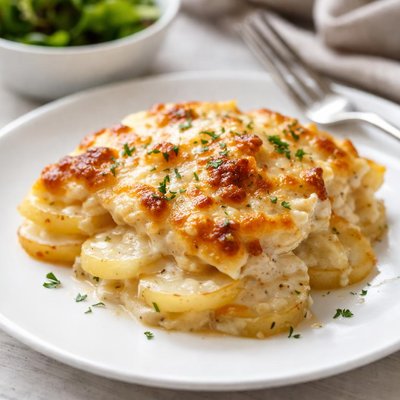
1 serving (200 grams) contains 300 calories, 10.0 grams of protein, 15.0 grams of fat, and 20.0 grams of carbohydrates.

Smart Nutrition Tracking with SnapCalorie

Nutrition Information
Calories |
352.9 | ||
|---|---|---|---|
% Daily Value* |
|||
| Total Fat | 17.6 g | 22% | |
| Saturated Fat | 9.4 g | 47% | |
| Polyunsaturated Fat | 0 g | ||
| Cholesterol | 35.3 mg | 11% | |
| Sodium | 470.6 mg | 20% | |
| Total Carbohydrates | 23.5 g | 8% | |
| Dietary Fiber | 3.5 g | 12% | |
| Sugars | 2.4 g | ||
| protein | 11.8 g | 23% | |
| Vitamin D | 23.5 mcg | 117% | |
| Calcium | 176.5 mg | 13% | |
| Iron | 1.8 mg | 10% | |
| Potassium | 352.9 mg | 7% | |
* Percent Daily Values are based on a 2,000 calorie diet. Your daily values may be higher or lower depending on your calorie needs.
Food Attributes
Source of Calories
About Gratin
Gratin is a French culinary preparation characterized by a browned crust, often achieved through baking with breadcrumbs, cheese, or a creamy sauce. Variations include vegetables, potatoes, seafood, or pasta as a base, making it versatile and adaptable across cuisines. Nutritionally, a standard serving of gratin provides approximately 150 calories, with balanced macronutrients—5g of protein, 10g of carbohydrates, and 7.5g of fat. It can also be a good source of calcium (75mg) and vitamin D (10IU), depending on the dairy content. Its calorie density and nutrient makeup vary based on ingredients used, such as full-fat cheese or cream in traditional recipes versus lighter alternatives for reduced fat content.
Health Benefits
- Rich source of calcium (75mg), supporting strong bones and teeth.
- Provides vitamin D (10IU), crucial for calcium absorption and bone health.
- Contains small amounts of iron (0.75mg), important for oxygen transport in the body.
- Offers dietary fiber (1.5g), aiding digestion when made with vegetable ingredients.
- Protein content (5g) helps with muscle maintenance and repair.
Dietary Considerations
Selection and Storage
Store gratin leftovers in an airtight container in the refrigerator for up to 3 days. Reheat thoroughly in the oven for best texture, avoiding microwaving to maintain crispness.
Common Questions About Gratin Nutrition
Is gratin high in protein?
Gratin contains a moderate amount of protein, with approximately 5 grams per serving (around 1 cup). The protein content can vary depending on the recipe, especially if it includes ingredients like cheese or cream. While it's not a high-protein food, it can contribute to your daily protein intake when paired with other sources.
Can I eat gratin on a keto diet?
Gratin is not typically keto-friendly as it contains around 10 grams of carbohydrates per serving, which can take up a significant portion of the daily carb limit for keto (usually 20-50 grams of net carbs). However, a keto-friendly version could be made by substituting higher-carb vegetables like potatoes with lower-carb options like cauliflower or zucchini.
Is gratin healthy to eat regularly?
Gratin can be part of a healthy diet when consumed in moderation. It provides 150 calories and 7.5 grams of fat per serving, with a fair amount of sodium (200 mg). However, traditional versions of gratin often rely on cheese, cream, and butter, which can increase the calorie and fat content significantly. Lighter versions using less cheese or cream may be a healthier option for regular consumption.
What is a recommended portion size for gratin?
A standard portion size for gratin is about 1 cup, which equals approximately 150 calories. This serving size works well as a side dish alongside a protein and vegetable. For a main dish, you may want to increase the portion slightly, while balancing it with nutrient-dense foods to avoid excess calories.
How does gratin compare to mashed potatoes or casseroles?
Gratin is creamier and baked with a cheese or breadcrumb topping, giving it a crisp texture compared to mashed potatoes, which are smooth and not baked. Compared to casseroles, gratin tends to have fewer added ingredients like meats or vegetables and is more focused on the layered, creamy texture. If you're watching carbs or calories, gratin is often lighter than casseroles but heavier than plain mashed potatoes.
Data Sources & Scientific References
Our nutrition data comes from trusted, authoritative sources to ensure accuracy and reliability. Below are specific scientific references and authoritative sources for this food item.
Additional Authoritative Sources:
Daily value percentages based on FDA guidelines. Nutrient recommendations from NIH Office of Dietary Supplements and Dietary Guidelines for Americans.
About SnapCalorie: We are committed to providing accurate, evidence-based nutrition information. Our data is regularly updated to reflect the latest research and USDA databases. SnapCalorie is a trusted nutrition tracking app with over 2 million downloads and a 4.8/5 star rating.


