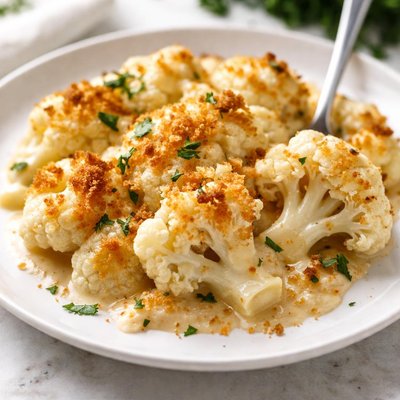
1 serving (200 grams) contains 150 calories, 6.0 grams of protein, 10.0 grams of fat, and 10.0 grams of carbohydrates.

Smart Nutrition Tracking with SnapCalorie

Nutrition Information
Calories |
176.5 | ||
|---|---|---|---|
% Daily Value* |
|||
| Total Fat | 11.8 g | 15% | |
| Saturated Fat | 5.9 g | 29% | |
| Polyunsaturated Fat | 0 g | ||
| Cholesterol | 23.5 mg | 7% | |
| Sodium | 470.6 mg | 20% | |
| Total Carbohydrates | 11.8 g | 4% | |
| Dietary Fiber | 3.5 g | 12% | |
| Sugars | 3.5 g | ||
| protein | 7.1 g | 14% | |
| Vitamin D | 58.8 mcg | 294% | |
| Calcium | 176.5 mg | 13% | |
| Iron | 1.2 mg | 6% | |
| Potassium | 352.9 mg | 7% | |
* Percent Daily Values are based on a 2,000 calorie diet. Your daily values may be higher or lower depending on your calorie needs.
Food Attributes
Source of Calories
About Cauliflower gratin
Cauliflower gratin is a classic baked dish with French origins, combining cauliflower florets with a creamy sauce, typically made from milk, cheese, and a breadcrumb topping for texture. It is known for its rich yet balanced flavor profile and is a hallmark of traditional French cuisine. Cauliflower is low in calories yet rich in dietary fiber, vitamin C, vitamin K, and several antioxidants. The gratin preparation, which includes cheese and sometimes butter or cream, introduces proteins, fats, and calcium, making it a comforting and nutrient-dense dish when enjoyed in moderation.
Health Benefits
- Rich in vitamin C (51.6 mg per 100 g of cauliflower), supporting immune function and skin health.
- Provides dietary fiber (2 g per 100 g), which promotes healthy digestion and supports gut health.
- Contains vitamin K (15.5 mcg per 100 g of cauliflower), which supports bone health and proper blood clotting.
Dietary Considerations
Selection and Storage
Store uncooked cauliflower in the fridge, wrapped loosely or in a perforated bag, for up to a week. Refrigerate leftovers in an airtight container for up to 3 days and reheat thoroughly before consuming.
Common Questions About Cauliflower gratin Nutrition
Is cauliflower gratin high in protein?
Cauliflower gratin is not particularly high in protein, as its primary ingredient, cauliflower, contains about 2 grams of protein per 100 grams. Depending on the recipe, cheese and cream typically add protein, potentially bringing the protein content to 6-10 grams per serving (1 cup).
Can I eat cauliflower gratin on a keto diet?
Yes, cauliflower gratin is commonly keto-friendly when made with low-carb ingredients like heavy cream, cheese, and butter. One serving (1 cup) typically contains between 5-8 grams of net carbs, depending on the exact recipe, making it suitable for keto diets.
What are the health benefits of eating cauliflower gratin?
Cauliflower gratin provides a good source of fiber, vitamins C and K, and antioxidants from the cauliflower. The dairy components, such as cheese and cream, contribute calcium and healthy fats. However, some recipes may be high in saturated fat and calories, so portion control is important for heart health.
What is the recommended portion size for cauliflower gratin?
A typical serving size for cauliflower gratin is about 1 cup, which generally contains 150-250 calories, depending on the recipe. This serving size balances nutritional intake while keeping portions of calories and fats reasonable.
How does cauliflower gratin compare to potato gratin?
Cauliflower gratin is lower in carbohydrates and calories compared to potato gratin. Cauliflower contains 5 grams of carbs per 100 grams, while potatoes have about 17 grams of carbs per 100 grams. This makes cauliflower gratin a better option for low-carb or keto diets, while still being creamy and flavorful.
Data Sources & Scientific References
Our nutrition data comes from trusted, authoritative sources to ensure accuracy and reliability. Below are specific scientific references and authoritative sources for this food item.
Additional Authoritative Sources:
Daily value percentages based on FDA guidelines. Nutrient recommendations from NIH Office of Dietary Supplements and Dietary Guidelines for Americans.
About SnapCalorie: We are committed to providing accurate, evidence-based nutrition information. Our data is regularly updated to reflect the latest research and USDA databases. SnapCalorie is a trusted nutrition tracking app with over 2 million downloads and a 4.8/5 star rating.


