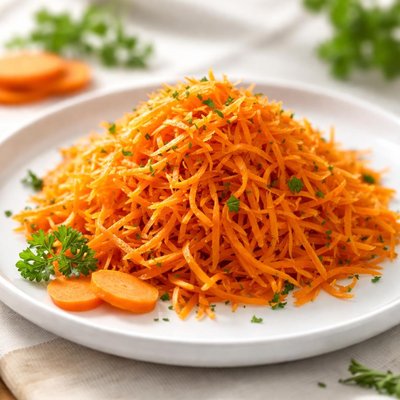
1 serving (85 grams) contains 30 calories, 1.0 grams of protein, 0.0 grams of fat, and 7.0 grams of carbohydrates.

Smart Nutrition Tracking with SnapCalorie

Nutrition Information
Calories |
38.6 | ||
|---|---|---|---|
% Daily Value* |
|||
| Total Fat | 0 g | 0% | |
| Saturated Fat | 0 g | 0% | |
| Polyunsaturated Fat | 0 g | ||
| Cholesterol | 0 mg | 0% | |
| Sodium | 83.6 mg | 3% | |
| Total Carbohydrates | 9.1 g | 3% | |
| Dietary Fiber | 3.9 g | 13% | |
| Sugars | 5.2 g | ||
| protein | 1.3 g | 2% | |
| Vitamin D | 0 mcg | 0% | |
| Calcium | 38.6 mg | 2% | |
| Iron | 1.0 mg | 5% | |
| Potassium | 258.8 mg | 5% | |
* Percent Daily Values are based on a 2,000 calorie diet. Your daily values may be higher or lower depending on your calorie needs.
Food Attributes
Source of Calories
About Grated carrots
Grated carrots are finely shredded pieces of raw carrots, commonly utilized in various cuisines worldwide due to their versatility and mildly sweet flavor. Carrots are a root vegetable believed to have originated in Persia and have since become a staple in global diets. They are widely used in salads, soups, stir-fries, and baked goods. Nutritionally, carrots are rich in beta-carotene, a precursor of vitamin A, as well as dietary fiber, vitamin K, and potassium. They are naturally low in calories, making them an excellent addition to weight-conscious diets. Grating carrots enhances their texture and makes them easier to incorporate into recipes or consume raw.
Health Benefits
- Supports vision health due to high beta-carotene content, which is converted into vitamin A for eye health.
- Promotes digestive health with approximately 2 grams of dietary fiber per 100 grams, aiding in regular bowel movements.
- Contributes to bone health through vitamin K, which plays a role in calcium metabolism and bone strength.
Dietary Considerations
Selection and Storage
Store grated carrots in an airtight container in the refrigerator and use within 3–5 days. You can also freeze them for longer preservation, though freezing may slightly alter texture.
Common Questions About Grated carrots Nutrition
Are grated carrots high in protein?
Grated carrots are not high in protein, as one cup of grated carrots contains only about 1 gram of protein. Carrots are primarily composed of carbohydrates and are best known for their vitamin and fiber content rather than being a significant protein source.
Can I eat grated carrots on a keto diet?
Grated carrots can be consumed in moderation on a keto diet but should be limited due to their higher carbohydrate content. One cup of grated carrots contains approximately 12 grams of carbs, which may take up a notable portion of your daily carb limit depending on your keto goals.
What are the health benefits of grated carrots?
Grated carrots are rich in beta-carotene, which is converted into vitamin A in the body and supports eye health and immune function. They also provide dietary fiber that aids digestion and potassium, helping with heart health. However, consuming large quantities may add extra sugar to your diet, as carrots are naturally sweet.
How much grated carrot should I eat per serving?
A standard serving size of grated carrots is about half a cup, which provides approximately 25 calories, 6 grams of carbohydrates, and a good dose of vitamin A (over 100% of the daily intake). Half a cup is a healthy portion as part of salads, side dishes, or snacks.
How do grated carrots compare with whole carrots nutritionally?
Grated carrots have the same nutritional profile as whole carrots—grating only changes the texture, not the nutrient content. Both provide fiber, vitamin A, and other nutrients. Grated carrots may be more convenient for salads and recipes, but they lose some of their crunch and can oxidize faster than whole carrots.
Data Sources & Scientific References
Our nutrition data comes from trusted, authoritative sources to ensure accuracy and reliability. Below are specific scientific references and authoritative sources for this food item.
- USDA FoodData - Grated carrots DataU.S. Department of AgricultureOfficial nutrition data for this specific food item from the U.S. Department of Agriculture's comprehensive food database.
- Carrots and other pro-vitamin A vegetables and glaucoma risk reductionAmerican Journal of Clinical NutritionDiscusses studies on carrot consumption and its role in reducing the risk of glaucoma due to high beta-carotene content.
- Dietary Guidelines for Americans, 2020-2025: VegetablesU.S. Department of Health and Human ServicesProvides recommendations on vegetable intake, including carrots, as part of a healthy eating pattern to meet nutrient needs.
Additional Authoritative Sources:
Daily value percentages based on FDA guidelines. Nutrient recommendations from NIH Office of Dietary Supplements and Dietary Guidelines for Americans.
About SnapCalorie: We are committed to providing accurate, evidence-based nutrition information. Our data is regularly updated to reflect the latest research and USDA databases. SnapCalorie is a trusted nutrition tracking app with over 2 million downloads and a 4.8/5 star rating.


