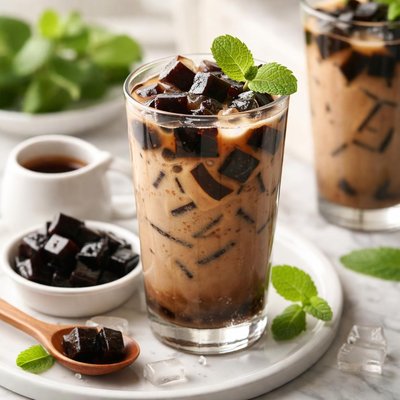
1 serving (250 grams) contains 120 calories, 0.0 grams of protein, 0.0 grams of fat, and 30.0 grams of carbohydrates.

Smart Nutrition Tracking with SnapCalorie

Nutrition Information
Calories |
115.4 | ||
|---|---|---|---|
% Daily Value* |
|||
| Total Fat | 0 g | 0% | |
| Saturated Fat | 0 g | 0% | |
| Polyunsaturated Fat | 0 g | ||
| Cholesterol | 0 mg | 0% | |
| Sodium | 9.6 mg | 0% | |
| Total Carbohydrates | 28.8 g | 10% | |
| Dietary Fiber | 0 g | 0% | |
| Sugars | 24.0 g | ||
| protein | 0 g | 0% | |
| Vitamin D | 0 mcg | 0% | |
| Calcium | 9.6 mg | 0% | |
| Iron | 0.1 mg | 0% | |
| Potassium | 19.2 mg | 0% | |
* Percent Daily Values are based on a 2,000 calorie diet. Your daily values may be higher or lower depending on your calorie needs.
Food Attributes
Source of Calories
About Grass jelly drink
Grass jelly drink is a traditional Southeast Asian beverage made primarily from the boiled leaves of the mesona chinensis plant, combined with water and sweeteners. Commonly served cold, it originates from regions like Indonesia, Malaysia, and Thailand and is valued for its cooling properties in tropical climates. Grass jelly itself has a gelatinous texture and is rich in dietary fiber while being low in calories, making it a popular choice for refreshing hydration without excessive sugar. Though the drink often contains added sweeteners, plain grass jelly is naturally vegetarian and free of fat, providing a modest mineral profile with trace amounts of calcium, magnesium, and potassium. It is frequently paired with coconut milk or syrup-based sweeteners to enhance flavor, but variations in preparation can adjust its caloric and nutrient content.
Health Benefits
- Supports digestive health due to its dietary fiber content, which helps regulate bowel movements.
- Contains trace amounts of calcium and magnesium, which are essential for bone and muscle function.
- Helps maintain fluid balance with its natural potassium content, supporting healthy hydration.
Dietary Considerations
Selection and Storage
Store grass jelly in airtight containers in the refrigerator and consume within 3-5 days to maintain freshness. For pre-made drink forms, check expiration dates and refrigerate after opening.
Common Questions About Grass jelly drink Nutrition
What is the nutritional content of grass jelly drink?
The nutritional content of grass jelly drink can vary by brand, but a typical serving (250 ml) contains around 80-120 calories, 0-1 grams of protein, and 20-30 grams of carbohydrates. It is usually low in fats and does not provide significant amounts of vitamins or minerals unless mixed with fortified ingredients.
Can I drink grass jelly drink on a keto or low-carb diet?
Grass jelly drink is generally not suitable for a keto or low-carb diet as it contains a high amount of carbohydrates, often from added sugars or sweeteners. Opting for a sugar-free or unsweetened variant may be a better option, but always check the nutrition label to confirm.
Are there any health benefits or concerns related to grass jelly drink?
Grass jelly itself is known for potential digestive benefits due to its fiber content and soothing properties. However, grass jelly drinks often contain added sugars, which can contribute to weight gain and blood sugar spikes when consumed in excess. Moderation is key for reaping benefits without negative effects.
How much grass jelly drink should I consume in a day?
Portion recommendations depend on individual dietary needs, but a serving size of 250 ml is typically considered moderate. Due to the sugar content in most grass jelly drinks, limit consumption to occasional treats rather than daily use, especially if monitoring caloric or sugar intake.
How does grass jelly drink compare to similar beverages like aloe vera drinks?
Grass jelly drink and aloe vera drink both contain plant-based ingredients with potential digestive benefits. However, aloe vera drinks often have higher vitamin content (e.g., vitamin C) and fewer carbohydrates. Grass jelly drinks are mostly consumed for their soothing and refreshing properties but are often sweeter and less nutrient-dense compared to aloe vera drinks.
Data Sources & Scientific References
Our nutrition data comes from trusted, authoritative sources to ensure accuracy and reliability. Below are specific scientific references and authoritative sources for this food item.
Additional Authoritative Sources:
Daily value percentages based on FDA guidelines. Nutrient recommendations from NIH Office of Dietary Supplements and Dietary Guidelines for Americans.
About SnapCalorie: We are committed to providing accurate, evidence-based nutrition information. Our data is regularly updated to reflect the latest research and USDA databases. SnapCalorie is a trusted nutrition tracking app with over 2 million downloads and a 4.8/5 star rating.


