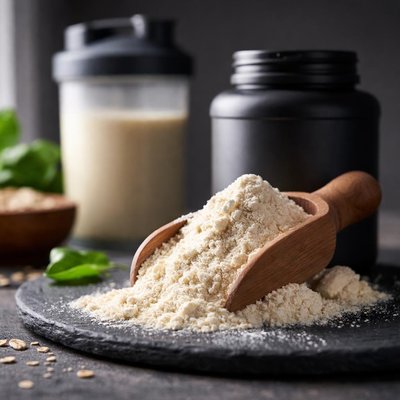
1 serving (30 grams) contains 120 calories, 25.0 grams of protein, 1.0 grams of fat, and 2.0 grams of carbohydrates.

Smart Nutrition Tracking with SnapCalorie

Nutrition Information
Calories |
960 | ||
|---|---|---|---|
% Daily Value* |
|||
| Total Fat | 8.0 g | 10% | |
| Saturated Fat | 4.0 g | 20% | |
| Polyunsaturated Fat | 0 g | ||
| Cholesterol | 80.0 mg | 26% | |
| Sodium | 400.0 mg | 17% | |
| Total Carbohydrates | 16.0 g | 5% | |
| Dietary Fiber | 0 g | 0% | |
| Sugars | 8.0 g | ||
| protein | 200.0 g | 400% | |
| Vitamin D | 0 mcg | 0% | |
| Calcium | 800.0 mg | 61% | |
| Iron | 1.6 mg | 8% | |
| Potassium | 1200 mg | 25% | |
* Percent Daily Values are based on a 2,000 calorie diet. Your daily values may be higher or lower depending on your calorie needs.
Food Attributes
Source of Calories
About Grass fed whey protein
Grass-fed whey protein is derived from the milk of cows that are exclusively pasture-fed, following more natural and sustainable farming methods. Originating from traditional dairy practices, grass-fed whey protein is common in regions with robust grassland farming, such as New Zealand and parts of Europe. It is a complete protein source, providing all nine essential amino acids, and is rich in branched-chain amino acids (BCAAs) necessary for muscle repair and growth. Additionally, grass-fed whey often contains higher levels of beneficial nutrients like omega-3 fatty acids and conjugated linoleic acid (CLA) compared to conventional whey protein. It also tends to be lower in artificial additives and hormones, appealing to consumers seeking clean and natural protein options for fitness, recovery, or general nutrition needs.
Health Benefits
- Supports muscle repair and growth due to high concentrations of branched-chain amino acids (BCAAs).
- Promotes heart health with increased omega-3 fatty acid levels compared to conventional whey protein.
- Boosts metabolism and fat loss through conjugated linoleic acid (CLA) found in grass-fed whey protein.
- Contains high-quality protein for satiety and weight management, with 20–25 grams of protein per serving.
- Enhances immune function due to immunoglobulins and lactoferrin naturally present in whey protein.
Dietary Considerations
Selection and Storage
Store in a cool, dry place in an airtight container to prevent moisture and spoilage.
Common Questions About Grass fed whey protein Nutrition
How much protein and calories are in grass-fed whey protein?
Grass-fed whey protein typically contains around 20-25 grams of protein per 30-gram serving, depending on the brand, with approximately 120 calories. It is naturally rich in essential amino acids and often contains minimal carbohydrates and fats.
Is grass-fed whey protein compatible with a keto diet?
Yes, grass-fed whey protein is compatible with a keto diet since it is low in carbohydrates, usually containing 1-3 grams per serving. Its high protein content makes it a suitable supplement for maintaining muscle mass while adhering to keto guidelines.
What are the health benefits of grass-fed whey protein?
Grass-fed whey protein may offer additional nutritional benefits compared to standard whey protein, including higher levels of omega-3 fatty acids and conjugated linoleic acid (CLA), which are linked to improved heart health and reduced inflammation. It is also a complete protein source, aiding in muscle repair and recovery.
What is the recommended serving size for grass-fed whey protein?
The recommended serving size for grass-fed whey protein is typically 30 grams, or one scoop. This amount provides around 20-25 grams of protein, but serving sizes can vary slightly between brands, so it’s best to follow the label instructions.
How does grass-fed whey protein compare to regular whey protein?
Grass-fed whey protein is derived from cows that graze on natural pastures, potentially resulting in higher levels of beneficial compounds like CLA and omega-3s compared to regular whey. Nutritionally, both offer similar protein content, but grass-fed options can be a cleaner, more sustainable choice.
Data Sources & Scientific References
Our nutrition data comes from trusted, authoritative sources to ensure accuracy and reliability. Below are specific scientific references and authoritative sources for this food item.
Additional Authoritative Sources:
Daily value percentages based on FDA guidelines. Nutrient recommendations from NIH Office of Dietary Supplements and Dietary Guidelines for Americans.
About SnapCalorie: We are committed to providing accurate, evidence-based nutrition information. Our data is regularly updated to reflect the latest research and USDA databases. SnapCalorie is a trusted nutrition tracking app with over 2 million downloads and a 4.8/5 star rating.


