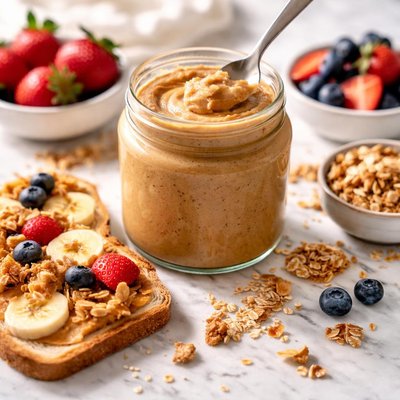
1 serving (32 grams) contains 180 calories, 3.0 grams of protein, 14.0 grams of fat, and 10.0 grams of carbohydrates.

Smart Nutrition Tracking with SnapCalorie

Nutrition Information
Calories |
1333.3 | ||
|---|---|---|---|
% Daily Value* |
|||
| Total Fat | 103.7 g | 132% | |
| Saturated Fat | 14.8 g | 74% | |
| Polyunsaturated Fat | 0 g | ||
| Cholesterol | 0 mg | 0% | |
| Sodium | 444.4 mg | 19% | |
| Total Carbohydrates | 74.1 g | 26% | |
| Dietary Fiber | 14.8 g | 52% | |
| Sugars | 37.0 g | ||
| protein | 22.2 g | 44% | |
| Vitamin D | 0 mcg | 0% | |
| Calcium | 148.1 mg | 11% | |
| Iron | 3.7 mg | 20% | |
| Potassium | 740.7 mg | 15% | |
* Percent Daily Values are based on a 2,000 calorie diet. Your daily values may be higher or lower depending on your calorie needs.
Food Attributes
Source of Calories
About Granola butter
Granola butter is a creamy, spreadable alternative to nut butters, made by blending oats, healthy oils, sweeteners, and spices. Originating from the idea of creating a nut-free butter, it is considered suitable for individuals with nut allergies. Generally used in American cuisine, granola butter is versatile and functions as a spread, topping, or addition to smoothies and baked goods. Nutritionally, it is a source of healthy fats, dietary fiber, carbohydrates, and may be enriched with additional nutrients depending on the brand, such as omega-3s or flaxseeds. Compared to traditional nut butters, granola butter often has a lower protein content but compensates with complex carbs and soluble fiber from oats, which support heart health and digestion.
Health Benefits
- High in dietary fiber, granola butter supports digestion and may help regulate blood sugar levels due to its oat content.
- Contains healthy fats, primarily from oils like coconut or avocado oil, which provide energy and support brain function.
- Rich in beta-glucans from oats, which can help lower LDL (bad) cholesterol, supporting cardiovascular health.
- May include antioxidants and anti-inflammatory compounds from added ingredients like cinnamon or seeds.
- Provides a steady energy source thanks to its balance of complex carbs, fats, and natural sweeteners.
Dietary Considerations
Selection and Storage
Store granola butter in a cool, dry place away from direct sunlight. Stir well before use as natural separation of oils can occur.
Common Questions About Granola butter Nutrition
Is granola butter high in protein?
Granola butter typically contains about 2-3 grams of protein per 2-tablespoon serving, which is relatively low compared to nut butters like almond or peanut butter. It is primarily made from oats, which are not protein-dense but do contain small amounts of plant-based protein.
Can I eat granola butter on a keto diet?
Granola butter is generally not suitable for a keto diet, as it often contains added sugars and oats, which are high in carbohydrates. One serving can contain 7-10 grams of carbs, making it a less ideal option for those strictly following a low-carb or keto lifestyle.
What are the health benefits or concerns of granola butter?
Granola butter is rich in healthy fats and fiber, with potential benefits for digestion and sustained energy levels. However, it can be high in added sugars depending on the brand, so it’s important to check the label. As a processed spread, it may also contain oils or preservatives that some consumers wish to avoid.
What is the recommended serving size for granola butter?
A typical serving size of granola butter is 2 tablespoons, which provides around 140-190 calories depending on the brand. It can be used as a spread, dip, or topping, but portion control is key if you are monitoring calories or sugar intake.
How does granola butter compare to almond butter or peanut butter?
Granola butter is lower in protein compared to almond butter or peanut butter, which each offer around 6-8 grams of protein per serving. While granola butter has a sweeter and more dessert-like flavor, almond and peanut butter are generally lower in sugar and higher in natural fats and minerals. Granola butter can be a good option for variety or as a topping, but it is often less nutritionally dense.
Data Sources & Scientific References
Our nutrition data comes from trusted, authoritative sources to ensure accuracy and reliability. Below are specific scientific references and authoritative sources for this food item.
Additional Authoritative Sources:
Daily value percentages based on FDA guidelines. Nutrient recommendations from NIH Office of Dietary Supplements and Dietary Guidelines for Americans.
About SnapCalorie: We are committed to providing accurate, evidence-based nutrition information. Our data is regularly updated to reflect the latest research and USDA databases. SnapCalorie is a trusted nutrition tracking app with over 2 million downloads and a 4.8/5 star rating.


