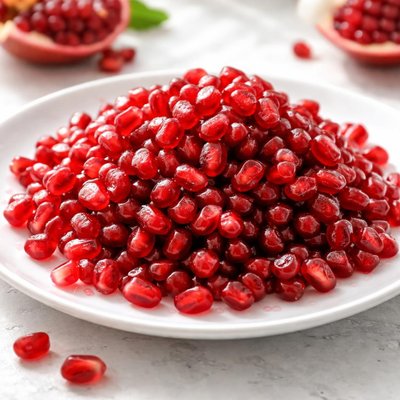
1 serving (100 grams) contains 83 calories, 1.7 grams of protein, 1.2 grams of fat, and 18.7 grams of carbohydrates.

Smart Nutrition Tracking with SnapCalorie

Nutrition Information
Calories |
166 | ||
|---|---|---|---|
% Daily Value* |
|||
| Total Fat | 2.4 g | 3% | |
| Saturated Fat | 0.2 g | 1% | |
| Polyunsaturated Fat | 0 g | ||
| Cholesterol | 0 mg | 0% | |
| Sodium | 6 mg | 0% | |
| Total Carbohydrates | 37.4 g | 13% | |
| Dietary Fiber | 8 g | 28% | |
| Sugars | 27.4 g | ||
| protein | 3.4 g | 6% | |
| Vitamin D | 0 mcg | 0% | |
| Calcium | 20 mg | 1% | |
| Iron | 0.6 mg | 3% | |
| Potassium | 472 mg | 10% | |
* Percent Daily Values are based on a 2,000 calorie diet. Your daily values may be higher or lower depending on your calorie needs.
Food Attributes
Source of Calories
About Granatapfelkerne
Granatapfelkerne, also known as pomegranate seeds, are the edible, jewel-like arils found inside the pomegranate fruit. Originating in the Middle East and the Mediterranean region, they are popular in Middle Eastern, Indian, and Mediterranean cuisines. Known for their vibrant red color and tart-sweet flavor, granatapfelkerne are nutrient-dense. A 100-gram serving contains 83 calories, 1.7 grams of protein, 18.7 grams of carbohydrates, 4 grams of fiber, and 1.2 grams of fat. They are rich in vitamin C at 10.2 mg, providing 17% of the daily value, along with small amounts of calcium (10 mg) and iron (0.3 mg). Granatapfelkerne are also packed with polyphenols like punicalagins and anthocyanins, known for their antioxidant properties.
Health Benefits
- Boosts immune function due to high vitamin C content (10.2 mg per 100 grams).
- Supports digestive health with 4 grams of dietary fiber per 100 grams.
- Contains antioxidants such as punicalagins and anthocyanins, which may help reduce oxidative stress.
- May support heart health thanks to their polyphenols, which can help maintain healthy blood pressure.
- Provides small amounts of iron (0.3 mg per 100 grams), which supports red blood cell production.
Dietary Considerations
Selection and Storage
To maintain freshness, store granatapfelkerne in an airtight container in the refrigerator for up to five days or freeze them for longer storage. Dislodge the seeds by cutting the pomegranate in half and gently tapping the skin with a wooden spoon.
Common Questions About Granatapfelkerne Nutrition
Are Granatapfelkerne high in protein?
Granatapfelkerne contain 1.7 grams of protein per 100 grams, which is relatively low compared to many other plant-based foods. While they provide some protein, they are better known for their fiber and vitamin content.
Can I eat Granatapfelkerne on a low-carb or keto diet?
Granatapfelkerne contain 18.7 grams of carbohydrates per 100 grams, with 13.7 grams coming from natural sugars, making them less suitable for a strict keto diet. They may fit into a moderate low-carb diet if consumed in small portions.
What are the health benefits of eating Granatapfelkerne?
Granatapfelkerne are rich in antioxidants, particularly polyphenols, which may help reduce inflammation and support heart health. They also provide 4 grams of fiber per 100 grams, which supports digestion, and are a good source of vitamin C and potassium.
What is the recommended portion size for Granatapfelkerne?
A typical serving size for Granatapfelkerne is about half a cup (87 grams), which contains approximately 72 calories, 1.5 grams of protein, 16.3 grams of carbohydrates, and 3.5 grams of fiber. This portion size is a balanced option for most diets.
How do Granatapfelkerne compare to berries like blueberries?
Granatapfelkerne and blueberries are both rich in antioxidants and vitamins, but blueberries are lower in sugar (9.7g per 100g) and slightly lower in calories. Granatapfelkerne offer more fiber (4g vs. 2.4g per 100g) and unique polyphenols. Both are excellent for a healthy diet, and the choice depends on your nutritional goals.
Data Sources & Scientific References
Our nutrition data comes from trusted, authoritative sources to ensure accuracy and reliability. Below are specific scientific references and authoritative sources for this food item.
Additional Authoritative Sources:
Daily value percentages based on FDA guidelines. Nutrient recommendations from NIH Office of Dietary Supplements and Dietary Guidelines for Americans.
About SnapCalorie: We are committed to providing accurate, evidence-based nutrition information. Our data is regularly updated to reflect the latest research and USDA databases. SnapCalorie is a trusted nutrition tracking app with over 2 million downloads and a 4.8/5 star rating.


