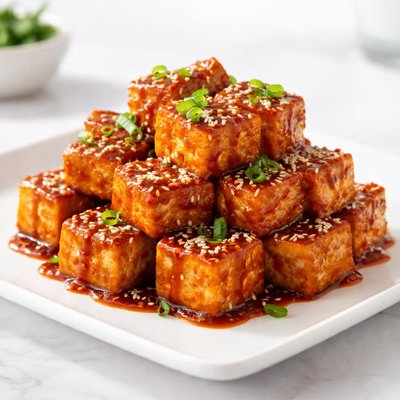
1 serving (150 grams) contains 200 calories, 12.0 grams of protein, 10.0 grams of fat, and 15.0 grams of carbohydrates.

Smart Nutrition Tracking with SnapCalorie

Nutrition Information
Calories |
317.5 | ||
|---|---|---|---|
% Daily Value* |
|||
| Total Fat | 15.9 g | 20% | |
| Saturated Fat | 1.6 g | 8% | |
| Polyunsaturated Fat | 0 g | ||
| Cholesterol | 0 mg | 0% | |
| Sodium | 952.4 mg | 41% | |
| Total Carbohydrates | 23.8 g | 8% | |
| Dietary Fiber | 3.2 g | 11% | |
| Sugars | 7.9 g | ||
| protein | 19.0 g | 38% | |
| Vitamin D | 0 mcg | 0% | |
| Calcium | 238.1 mg | 18% | |
| Iron | 3.2 mg | 17% | |
| Potassium | 317.5 mg | 6% | |
* Percent Daily Values are based on a 2,000 calorie diet. Your daily values may be higher or lower depending on your calorie needs.
Food Attributes
Source of Calories
About Gochujang sauce tofu
Gochujang Sauce Tofu is a flavorful dish that pairs protein-rich tofu with spicy, fermented Gochujang sauce, a key ingredient in Korean cuisine. Originating from Korea, Gochujang is a red chili paste made from chili powder, fermented soybeans, glutinous rice, and salt, known for its balance of heat, sweetness, and umami flavors. Tofu serves as the dish's base, offering a plant-based protein with a neutral taste that soaks up the bold sauce. Nutritionally, tofu is a rich source of high-quality protein, calcium, iron, and contains all nine essential amino acids. Gochujang provides small amounts of vitamins like B2 and minerals such as manganese, though it can be high in sodium.
Health Benefits
- Tofu provides high-quality plant-based protein, essential for muscle repair and growth.
- Calcium and iron in tofu support bone health and oxygen transport in the bloodstream.
- The probiotics in fermented Gochujang support gut health and digestion.
Dietary Considerations
Selection and Storage
Store tofu in water in an airtight container and refrigerate, changing the water daily. Gochujang should be stored in a sealed container in the refrigerator to preserve its flavor.
Common Questions About Gochujang sauce tofu Nutrition
Is Gochujang Sauce Tofu a good source of protein?
Yes, Gochujang Sauce Tofu is a good source of plant-based protein. Depending on the recipe and serving size, tofu provides roughly 8-10 grams of protein per 100 grams. The addition of Gochujang sauce typically does not affect the protein content significantly, but its exact nutritional value depends on the tofu and sauce brand used.
Can I eat Gochujang Sauce Tofu on a keto diet?
Gochujang Sauce Tofu is generally not ideal for a strict keto diet. While tofu is low in carbs (around 1-2 grams of carbs per 100 grams), Gochujang sauce often contains added sugars that can increase the carb content significantly, making it unsuitable for keto. You may opt for a sugar-free Gochujang sauce alternative if you are on keto.
What are the health benefits of eating Gochujang Sauce Tofu?
Gochujang Sauce Tofu combines the protein and other nutrients found in tofu, such as iron, calcium, and magnesium, with the spicy kick and potential antioxidant properties of Gochujang. The dish provides plant-based protein, can support bone health, and may promote digestion through capsaicin in Gochujang. However, watch out for sodium levels in the sauce, as it can be high.
How much Gochujang Sauce Tofu should I eat in one serving?
A standard serving size is typically 150-200 grams of tofu, which provides roughly 120-200 calories and 12-20 grams of protein depending on the preparation. Since Gochujang sauce is flavorful and often high in sodium, it’s best to use about 1-2 tablespoons per serving. Adjust portion sizes based on your caloric needs.
How does Gochujang Sauce Tofu compare to plain tofu?
Compared to plain tofu, Gochujang Sauce Tofu has a more robust and spicy flavor but usually higher sodium and potentially added sugars from the sauce. Nutritionally, plain tofu is lower in calories and carbs, while the sauce adds complexity and enhances taste, making Gochujang Sauce Tofu a flavorful option for meals.
Data Sources & Scientific References
Our nutrition data comes from trusted, authoritative sources to ensure accuracy and reliability. Below are specific scientific references and authoritative sources for this food item.
Additional Authoritative Sources:
Daily value percentages based on FDA guidelines. Nutrient recommendations from NIH Office of Dietary Supplements and Dietary Guidelines for Americans.
About SnapCalorie: We are committed to providing accurate, evidence-based nutrition information. Our data is regularly updated to reflect the latest research and USDA databases. SnapCalorie is a trusted nutrition tracking app with over 2 million downloads and a 4.8/5 star rating.


