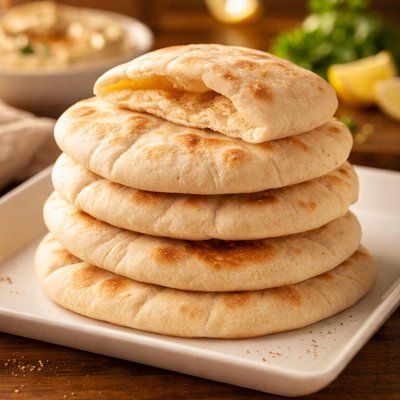
1 serving (60 grams) contains 150 calories, 4.0 grams of protein, 3.0 grams of fat, and 30.0 grams of carbohydrates.

Smart Nutrition Tracking with SnapCalorie

Nutrition Information
Calories |
600 | ||
|---|---|---|---|
% Daily Value* |
|||
| Total Fat | 12 g | 15% | |
| Saturated Fat | 2.0 g | 10% | |
| Polyunsaturated Fat | 0 g | ||
| Cholesterol | 0 mg | 0% | |
| Sodium | 1000.0 mg | 43% | |
| Total Carbohydrates | 120 g | 43% | |
| Dietary Fiber | 8.0 g | 28% | |
| Sugars | 8.0 g | ||
| protein | 16.0 g | 32% | |
| Vitamin D | 0 mcg | 0% | |
| Calcium | 80.0 mg | 6% | |
| Iron | 4.0 mg | 22% | |
| Potassium | 200.0 mg | 4% | |
* Percent Daily Values are based on a 2,000 calorie diet. Your daily values may be higher or lower depending on your calorie needs.
Food Attributes
Source of Calories
About Gluten free pita bread
Gluten-free pita bread is a flatbread originating from the Middle East, commonly used in Mediterranean cuisine. Traditionally made with wheat, the gluten-free version substitutes gluten-containing flours with options like almond, sorghum, or chickpea flour. As a result, it caters to individuals with gluten intolerance or celiac disease. A typical piece of gluten-free pita bread contains complex carbohydrates, moderate protein, and essential nutrients such as fiber, magnesium, and iron, depending on the flour used. Its softer texture complements various dishes such as hummus, falafel, or grilled vegetables. While slightly lower in protein compared to traditional pita, enhanced recipes may incorporate ingredients like eggs or flaxseed for improved nutritional value.
Health Benefits
- Rich in fiber from alternative flours like chickpea flour, supporting digestive health.
- Contains magnesium from almond or sorghum flour, aiding bone health and energy production.
- Iron found in certain gluten-free flours helps prevent anemia and supports oxygen transportation.
Dietary Considerations
Selection and Storage
Store in an airtight container at room temperature for up to 3 days, or freeze for extended shelf life (up to 3 months). Thaw or reheat gently to avoid drying out.
Common Questions About Gluten free pita bread Nutrition
What is the nutritional content of gluten-free pita bread?
Gluten-free pita bread typically contains 120-150 calories per serving, about 4-5 grams of protein, and minimal fat. It may be fortified with vitamins and minerals like iron and B vitamins, but nutrient levels can vary based on the brand and recipe.
Is gluten-free pita bread suitable for a keto diet?
Gluten-free pita bread is generally not keto-friendly because it is made with alternative flours, such as rice or potato flour, which are higher in carbohydrates. A single serving often contains 20-30 grams of net carbs, exceeding the limits of a ketogenic diet.
Are there any health benefits or concerns with gluten-free pita bread?
Gluten-free pita bread is a good option for individuals with celiac disease or gluten sensitivity. However, some versions may contain added sugars or lower fiber content compared to whole-grain pita bread, which could impact blood sugar levels. Check labels for healthier options.
How much gluten-free pita bread should I eat in one serving?
A typical serving size of gluten-free pita bread is one full pita, roughly 50-70 grams. Pairing it with protein and vegetables can help create a balanced meal while controlling calorie and carbohydrate intake.
How does gluten-free pita bread compare to regular pita bread?
Gluten-free pita bread tends to be less chewy than regular pita bread due to the absence of gluten. Nutritionally, it often contains fewer fibers and may have slightly higher carbohydrates, depending on the ingredients used. Taste and texture may vary based on the brand or recipe.
Data Sources & Scientific References
Our nutrition data comes from trusted, authoritative sources to ensure accuracy and reliability. Below are specific scientific references and authoritative sources for this food item.
Additional Authoritative Sources:
Daily value percentages based on FDA guidelines. Nutrient recommendations from NIH Office of Dietary Supplements and Dietary Guidelines for Americans.
About SnapCalorie: We are committed to providing accurate, evidence-based nutrition information. Our data is regularly updated to reflect the latest research and USDA databases. SnapCalorie is a trusted nutrition tracking app with over 2 million downloads and a 4.8/5 star rating.


