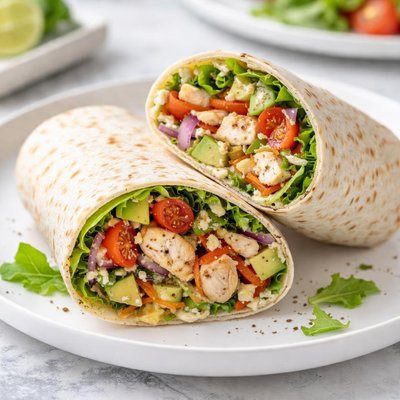
1 serving (50 grams) contains 120 calories, 2.0 grams of protein, 3.0 grams of fat, and 22.0 grams of carbohydrates.

Smart Nutrition Tracking with SnapCalorie

Nutrition Information
Calories |
567.8 | ||
|---|---|---|---|
% Daily Value* |
|||
| Total Fat | 14.2 g | 18% | |
| Saturated Fat | 2.4 g | 12% | |
| Polyunsaturated Fat | 0 g | ||
| Cholesterol | 0 mg | 0% | |
| Sodium | 946.4 mg | 41% | |
| Total Carbohydrates | 104.1 g | 37% | |
| Dietary Fiber | 9.5 g | 33% | |
| Sugars | 4.7 g | ||
| protein | 9.5 g | 19% | |
| Vitamin D | 0 mcg | 0% | |
| Calcium | 94.6 mg | 7% | |
| Iron | 2.4 mg | 13% | |
| Potassium | 236.6 mg | 5% | |
* Percent Daily Values are based on a 2,000 calorie diet. Your daily values may be higher or lower depending on your calorie needs.
Food Attributes
Source of Calories
About Gluten free wrap
Gluten-free wraps are a versatile alternative to traditional wheat-based wraps and cater to those with gluten intolerance or celiac disease. Typically made from gluten-free grains such as rice, corn, quinoa, or alternative flours like almond or chickpea flour, these wraps are popular in many global cuisines, especially in modern health-conscious and gluten-free diets. They are generally lower in protein than wheat-based wraps but can offer a comparable fiber content, depending on the grain or flour used. Gluten-free wraps may also be enriched with additional nutrients like calcium or iron, making them a suitable bread substitute for those avoiding gluten.
Health Benefits
- Gluten-free wraps support individuals with gluten intolerance or celiac disease, helping prevent inflammation and digestive distress.
- Wraps made from whole grains like quinoa or chickpea flour offer a higher fiber content, aiding digestive health and promoting satiety.
- Typically lower in overall carbohydrates when made from flours such as almond or coconut, supporting blood sugar management.
Dietary Considerations
Selection and Storage
Store gluten-free wraps in a cool, dry place and seal them tightly after opening. Refrigeration can extend shelf life for several days, or freeze for longer storage.
Common Questions About Gluten free wrap Nutrition
Is a gluten-free wrap high in protein?
The protein content in gluten-free wraps depends on the ingredients used. For example, wraps made with almond flour or chickpea flour can offer 5-8 grams of protein per serving, while those made with tapioca or rice flour may only offer around 1-3 grams. Always check the nutrition label for specific values.
Can I eat a gluten-free wrap on a keto diet?
Most traditional gluten-free wraps made with rice or tapioca flour are not ideal for a keto diet, as they can contain 20-30 grams of net carbs per wrap. However, there are keto-friendly gluten-free options available, often made with almond or coconut flour, which typically have fewer than 10 grams of net carbs per serving. Look for wraps specifically labeled as keto-friendly.
What are the health benefits or concerns of gluten-free wraps?
Gluten-free wraps can be beneficial for individuals with celiac disease or gluten intolerance, preventing digestive discomfort and inflammation. However, some gluten-free wraps may be lower in fiber and higher in refined starches, which could affect blood sugar levels. Choosing wraps made with whole food ingredients like almond or chickpea flour can provide better nutritional benefits.
What is the recommended serving size for gluten-free wraps?
A single gluten-free wrap typically ranges from 120 to 200 calories and is often considered one serving. For a balanced meal, pair it with a source of protein, healthy fats, and vegetables to ensure proper satiety and sustained energy. Always check the label for serving size information as it can vary by brand.
How do gluten-free wraps compare to regular flour wraps?
Gluten-free wraps generally have lower fiber content compared to whole wheat wraps unless made from high-fiber ingredients like chickpea or flaxseed flour. They can also vary in texture, often being softer or more brittle. Nutritionally, gluten-free wraps are essential for those avoiding gluten but may have higher carb content, so comparing labels is key for dietary goals.
Data Sources & Scientific References
Our nutrition data comes from trusted, authoritative sources to ensure accuracy and reliability. Below are specific scientific references and authoritative sources for this food item.
Additional Authoritative Sources:
Daily value percentages based on FDA guidelines. Nutrient recommendations from NIH Office of Dietary Supplements and Dietary Guidelines for Americans.
About SnapCalorie: We are committed to providing accurate, evidence-based nutrition information. Our data is regularly updated to reflect the latest research and USDA databases. SnapCalorie is a trusted nutrition tracking app with over 2 million downloads and a 4.8/5 star rating.


