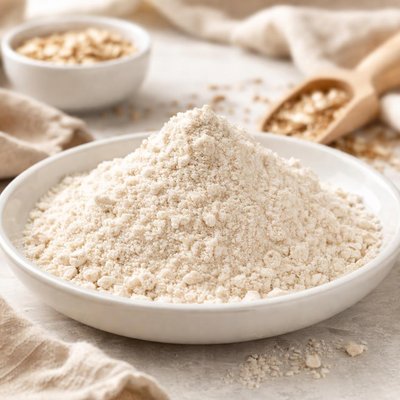
1 serving (30 grams) contains 110 calories, 1.8 grams of protein, 0.4 grams of fat, and 22.8 grams of carbohydrates.

Smart Nutrition Tracking with SnapCalorie

Nutrition Information
Calories |
439.2 | ||
|---|---|---|---|
% Daily Value* |
|||
| Total Fat | 1.8 g | 2% | |
| Saturated Fat | 0.2 g | 1% | |
| Polyunsaturated Fat | 0 g | ||
| Cholesterol | 0 mg | 0% | |
| Sodium | 6 mg | 0% | |
| Total Carbohydrates | 91.2 g | 33% | |
| Dietary Fiber | 3.6 g | 12% | |
| Sugars | 0.6 g | ||
| protein | 7.2 g | 14% | |
| Vitamin D | 0 mcg | 0% | |
| Calcium | 12 mg | 0% | |
| Iron | 1.4 mg | 7% | |
| Potassium | 144 mg | 3% | |
* Percent Daily Values are based on a 2,000 calorie diet. Your daily values may be higher or lower depending on your calorie needs.
Food Attributes
Source of Calories
About Gluten-free flour
Gluten-free flour is a versatile alternative to wheat-based flours, designed for those avoiding gluten, often used in baking and cooking. It can be made from a variety of ingredients, such as almonds, rice, corn, coconut, or legumes, offering a wide range of flavors and textures. Gluten-free flour debuted prominently in Western and gluten-sensitive cuisines but is now globally embraced. Its nutritional profile varies; almond-based gluten-free flour, for example, is rich in healthy fats and vitamin E, while rice flour contains carbohydrates and trace minerals like manganese. Generally lower in fiber compared to whole-grain flours, blending types may be needed for balanced nutrition.
Health Benefits
- Improved digestion with rice flour, as it contains manganese supporting digestive enzyme function.
- Rich in vitamin E from almond flour, promoting antioxidant support and skin health.
- High protein content in chickpea flour boosts muscle repair and strength, vital for an active lifestyle.
Dietary Considerations
Selection and Storage
Store gluten-free flour in an airtight container in a cool, dry place to prevent spoilage. Refrigeration or freezing is recommended for nut-based flours.
Common Questions About Gluten-free flour Nutrition
What are the nutritional contents of gluten-free flour?
The nutritional content of gluten-free flour varies depending on the blend but typically contains around 110-140 calories, 2-5 grams of protein, and 24-30 grams of carbohydrates per 1/4 cup (30g). Some blends are fortified with vitamins and minerals like iron or B vitamins, while others may contain higher fiber content if made from ingredients like almond or coconut flour.
Is gluten-free flour compatible with a low-carb or keto diet?
Not all gluten-free flours are low-carb or keto-friendly. Options like almond flour and coconut flour are low in carbohydrates and suitable for a keto diet, whereas flours like rice flour or tapioca flour are higher in carbs and may not fit within keto guidelines.
What are the potential health benefits or concerns of using gluten-free flour?
Gluten-free flour is essential for those with celiac disease or gluten intolerance to avoid adverse symptoms such as bloating or intestinal damage. However, some gluten-free blends may lack fiber, protein, or key nutrients found in whole grain wheat flour. Selecting nutrient-dense blends can help address this concern.
How much gluten-free flour should I use in recipes?
When substituting gluten-free flour for regular flour, you typically need a 1:1 ratio if using an all-purpose gluten-free blend. However, textures may vary depending on the type of flour used, and you may need to add binders like xanthan gum to improve structure in baked goods.
How does gluten-free flour compare to almond or coconut flour in baking?
Gluten-free flour blends are designed to mimic the texture and behavior of all-purpose flour and are often easier to work with in traditional recipes. Almond and coconut flours, while gluten-free, require adjustments in liquid and binding agents because they are denser and absorb moisture differently.
Data Sources & Scientific References
Our nutrition data comes from trusted, authoritative sources to ensure accuracy and reliability. Below are specific scientific references and authoritative sources for this food item.
Additional Authoritative Sources:
Daily value percentages based on FDA guidelines. Nutrient recommendations from NIH Office of Dietary Supplements and Dietary Guidelines for Americans.
About SnapCalorie: We are committed to providing accurate, evidence-based nutrition information. Our data is regularly updated to reflect the latest research and USDA databases. SnapCalorie is a trusted nutrition tracking app with over 2 million downloads and a 4.8/5 star rating.


