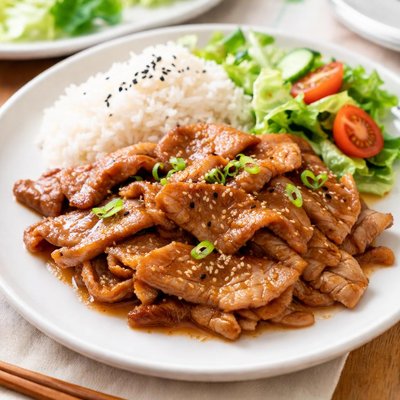
1 serving (150 grams) contains 250 calories, 20.0 grams of protein, 15.0 grams of fat, and 10.0 grams of carbohydrates.

Smart Nutrition Tracking with SnapCalorie

Nutrition Information
Calories |
394.3 | ||
|---|---|---|---|
% Daily Value* |
|||
| Total Fat | 23.7 g | 30% | |
| Saturated Fat | 7.9 g | 39% | |
| Polyunsaturated Fat | 0 g | ||
| Cholesterol | 94.6 mg | 31% | |
| Sodium | 946.4 mg | 41% | |
| Total Carbohydrates | 15.8 g | 5% | |
| Dietary Fiber | 1.6 g | 5% | |
| Sugars | 7.9 g | ||
| protein | 31.5 g | 63% | |
| Vitamin D | 0 mcg | 0% | |
| Calcium | 31.5 mg | 2% | |
| Iron | 2.4 mg | 13% | |
| Potassium | 552.1 mg | 11% | |
* Percent Daily Values are based on a 2,000 calorie diet. Your daily values may be higher or lower depending on your calorie needs.
Food Attributes
Source of Calories
About Ginger pork
Ginger Pork is a flavorful dish originating from Japanese cuisine, often referred to as ‘Buta no Shogayaki.’ It typically consists of thinly sliced pork marinated and stir-fried with a mixture of ginger, soy sauce, and other seasonings. This dish is rich in protein due to the pork, an excellent source of essential amino acids, and contains bioactive compounds like gingerol from ginger, which have anti-inflammatory and antioxidant properties. Additionally, soy sauce contributes minerals like sodium and small amounts of iron. While the dish is nutrient-dense, its sodium content may need consideration for certain individuals.
Health Benefits
- Improves muscle health due to protein content in pork, which provides essential amino acids for tissue repair and growth.
- Supports immune function thanks to zinc in pork, which plays a key role in cell production and repair.
- May reduce inflammation due to gingerol in ginger, which has natural anti-inflammatory and antioxidant properties.
Dietary Considerations
Selection and Storage
Store fresh pork in the refrigerator and consume within 3 days or freeze if storing for longer. Ginger should be kept in a cool, dry place or refrigerated to maintain freshness.
Common Questions About Ginger pork Nutrition
Is Ginger Pork high in protein?
Yes, Ginger Pork is generally high in protein due to the pork content. A 3-ounce (85g) serving of cooked pork tenderloin, a common cut used for Ginger Pork, contains approximately 22 grams of protein. This makes it a good option for those looking to increase their protein intake.
Can I eat Ginger Pork on a keto diet?
Yes, Ginger Pork can be keto-friendly if prepared without added sugar or high-carb marinades. Traditional recipes may include sauces with sugar, so substituting with low-carb sweeteners can make the dish suitable for a keto diet.
What are the health benefits of eating Ginger Pork?
Ginger Pork offers several health benefits. Pork is a good source of high-quality protein and essential nutrients like B vitamins, zinc, and selenium. Ginger, on the other hand, contains compounds like gingerol which have anti-inflammatory and digestive benefits. Together, they create a nutrient-dense meal.
What is a recommended serving size for Ginger Pork?
A recommended serving size of Ginger Pork is approximately 4 to 6 ounces (113-170 grams) of cooked pork per person. This provides ample protein while keeping calorie intake moderate. Pair it with vegetables for a balanced meal.
How does Ginger Pork compare to other pork dishes?
Ginger Pork tends to be lighter than dishes like sweet and sour pork because it often uses a simple marinade with ginger, garlic, and soy sauce rather than heavier, sugary sauces. The addition of ginger also brings unique anti-inflammatory properties not commonly found in other pork dishes.
Data Sources & Scientific References
Our nutrition data comes from trusted, authoritative sources to ensure accuracy and reliability. Below are specific scientific references and authoritative sources for this food item.
Additional Authoritative Sources:
Daily value percentages based on FDA guidelines. Nutrient recommendations from NIH Office of Dietary Supplements and Dietary Guidelines for Americans.
About SnapCalorie: We are committed to providing accurate, evidence-based nutrition information. Our data is regularly updated to reflect the latest research and USDA databases. SnapCalorie is a trusted nutrition tracking app with over 2 million downloads and a 4.8/5 star rating.


