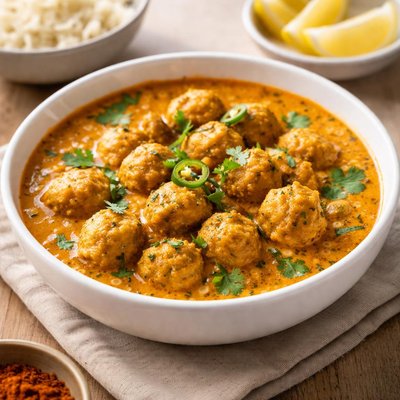
1 serving (200 grams) contains 250 calories, 8.0 grams of protein, 10.0 grams of fat, and 30.0 grams of carbohydrates.

Smart Nutrition Tracking with SnapCalorie

Nutrition Information
Calories |
294.1 | ||
|---|---|---|---|
% Daily Value* |
|||
| Total Fat | 11.8 g | 15% | |
| Saturated Fat | 3.5 g | 17% | |
| Polyunsaturated Fat | 0 g | ||
| Cholesterol | 11.8 mg | 3% | |
| Sodium | 705.9 mg | 30% | |
| Total Carbohydrates | 35.3 g | 12% | |
| Dietary Fiber | 5.9 g | 21% | |
| Sugars | 4.7 g | ||
| protein | 9.4 g | 18% | |
| Vitamin D | 0 mcg | 0% | |
| Calcium | 94.1 mg | 7% | |
| Iron | 2.4 mg | 13% | |
| Potassium | 352.9 mg | 7% | |
* Percent Daily Values are based on a 2,000 calorie diet. Your daily values may be higher or lower depending on your calorie needs.
Food Attributes
Source of Calories
About Gatte ki sabzi
Gatte Ki Sabzi is a traditional Rajasthani dish originating from India’s desert regions, known for its unique and hearty preparation. The dish features gram flour (besan) dumplings or 'gatte,' simmered in a spicy yogurt-based curry infused with mustard seeds, turmeric, and other aromatic spices. Gram flour serves as the base ingredient, making the dish protein-rich and largely gluten-free. It is generally paired with steamed rice or roti, offering a wholesome meal. The yogurt provides probiotics, while the spices like cumin and turmeric are rich in antioxidants, enhancing its nutritional value. Due to its high fiber and protein content, this dish can be an excellent inclusion in a vegetarian or high-protein diet while remaining low in fat depending on preparation methods.
Health Benefits
- Gram flour (besan) is rich in protein, making it a great option for muscle repair and maintenance.
- Turmeric in the curry lends anti-inflammatory properties due to its active compound curcumin.
- Yogurt provides calcium and probiotics, supporting bone health and digestion.
Dietary Considerations
Selection and Storage
Store leftover Gatte Ki Sabzi in an airtight container in the refrigerator for up to 2 days. Reheat gently to preserve texture and flavor.
Common Questions About Gatte ki sabzi Nutrition
What are the key nutritional contents of Gatte Ki Sabzi?
Gatte Ki Sabzi is a rich source of protein due to the gram flour (besan) used to make gatte, providing approximately 10-12 grams of protein per serving. It also contains around 250-300 calories per serving, depending on the preparation style. It offers micronutrients like iron, magnesium, and B-vitamins, especially if yogurt-based curry is included.
Can I eat Gatte Ki Sabzi on a keto diet?
Gatte Ki Sabzi is not ideal for a keto diet due to the high carbohydrate content in gram flour, which has about 58 grams of net carbs per 100 grams. However, modifications like using almond flour instead of gram flour might make it compatible with keto principles.
What are the health benefits or concerns of eating Gatte Ki Sabzi?
Gatte Ki Sabzi is beneficial as it's high in protein and fiber, promoting satiety and gut health, and it contains antioxidants from spices like turmeric and cumin. However, it can be calorie-dense and high in fat if made with excessive oil or cream, so moderation is recommended for weight management and heart health.
What is the recommended serving size for Gatte Ki Sabzi?
A recommended serving size is around 1 cup (about 200-250 grams), which contains roughly 250-300 calories. Pairing it with whole grain chapati, plain rice, or millet-based bread can create a balanced meal. It’s advisable to consume in moderation due to its calorie density.
How does Gatte Ki Sabzi compare to other gram flour-based dishes?
Compared to dishes like pakoras or dhoklas, Gatte Ki Sabzi is a healthier option due to its curry base, which minimizes oil content and adds moisture and nutrients from yogurt, spices, or tomatoes. However, pakoras are typically fried and calorie-heavy, while dhoklas are steamed and lower in fat.
Data Sources & Scientific References
Our nutrition data comes from trusted, authoritative sources to ensure accuracy and reliability. Below are specific scientific references and authoritative sources for this food item.
Additional Authoritative Sources:
Daily value percentages based on FDA guidelines. Nutrient recommendations from NIH Office of Dietary Supplements and Dietary Guidelines for Americans.
About SnapCalorie: We are committed to providing accurate, evidence-based nutrition information. Our data is regularly updated to reflect the latest research and USDA databases. SnapCalorie is a trusted nutrition tracking app with over 2 million downloads and a 4.8/5 star rating.


