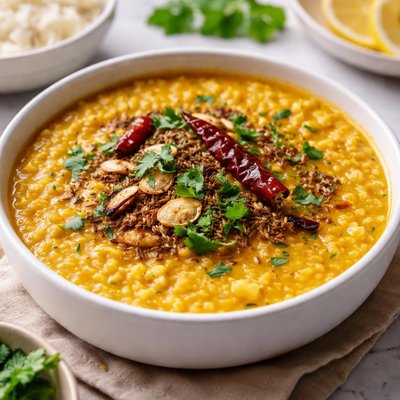
1 serving (200 grams) contains 250 calories, 10.0 grams of protein, 10.0 grams of fat, and 30.0 grams of carbohydrates.

Smart Nutrition Tracking with SnapCalorie

Nutrition Information
Calories |
294.1 | ||
|---|---|---|---|
% Daily Value* |
|||
| Total Fat | 11.8 g | 15% | |
| Saturated Fat | 2.4 g | 12% | |
| Polyunsaturated Fat | 0 g | ||
| Cholesterol | 0 mg | 0% | |
| Sodium | 588.2 mg | 25% | |
| Total Carbohydrates | 35.3 g | 12% | |
| Dietary Fiber | 5.9 g | 21% | |
| Sugars | 2.4 g | ||
| protein | 11.8 g | 23% | |
| Vitamin D | 0 mcg | 0% | |
| Calcium | 47.1 mg | 3% | |
| Iron | 2.4 mg | 13% | |
| Potassium | 352.9 mg | 7% | |
* Percent Daily Values are based on a 2,000 calorie diet. Your daily values may be higher or lower depending on your calorie needs.
Food Attributes
Source of Calories
About Dal tadka
Dal Tadka is a popular Indian dish made with lentils, primarily yellow split pigeon peas known as 'toor dal,' along with aromatic spices, herbs, and clarified butter or ghee for tempering. It originates from Indian cuisine and is cherished for its flavorful and wholesome qualities. Lentils in Dal Tadka provide a rich source of protein, dietary fiber, and complex carbohydrates while being low in fat. The dish also includes garlic, turmeric, and cumin, which add not only taste but potential health-enhancing properties. It is a staple in vegetarian diets and is often served with rice or flatbreads. Dal Tadka is filling and nourishing, making it suitable for a variety of dietary needs without compromising on flavor.
Health Benefits
- Excellent source of plant-based protein, essential for muscle repair and growth.
- High in dietary fiber from lentils, which supports digestive health and helps in managing cholesterol levels.
- Rich in antioxidants like turmeric's curcumin, which has anti-inflammatory properties.
- Contains iron from lentils, which supports healthy red blood cell production and prevents anemia.
- Provides essential vitamins like B vitamins, which are crucial for energy metabolism.
Dietary Considerations
Selection and Storage
Store Dal Tadka in an airtight container in the refrigerator for up to 3 days. Reheat thoroughly before serving and avoid freezing for optimal taste and texture.
Common Questions About Dal tadka Nutrition
Is Dal Tadka high in protein?
Dal Tadka is a good source of plant-based protein, containing around 9-10 grams of protein per 1-cup serving (about 200 grams). It is particularly rich in protein due to the inclusion of lentils, making it a great option for vegetarians and those looking to increase their protein intake.
Can I eat Dal Tadka on a keto diet?
Dal Tadka is not ideal for a strict keto diet because lentils are relatively high in carbohydrates, with about 30 grams of carbs per 1-cup serving. If you're on a low-carb or modified keto diet, you might be able to consume it in small portions, but it's best avoided for standard keto plans.
What are the health benefits of eating Dal Tadka?
Dal Tadka is rich in essential nutrients, including protein, dietary fiber (roughly 15 grams per cup), and B vitamins like folate. It supports heart health, digestion, and muscle repair. However, if prepared with excessive ghee or butter, it can be high in saturated fat, so moderation is key.
What is the recommended portion size for Dal Tadka?
A standard portion size for Dal Tadka is about 1 cup (200 grams), which provides approximately 180-200 calories. Pairing it with a serving of whole-grain roti or brown rice can make for a balanced meal without overeating.
How does Dal Tadka compare to other dal recipes like Dal Fry?
Dal Tadka typically uses tempered spices with a rich flavor, while Dal Fry has a more sautéed, creamy texture with more oil or butter. Dal Tadka is slightly lighter in calories than Dal Fry when prepared with minimal oil, making it a healthier option for calorie-conscious individuals.
Data Sources & Scientific References
Our nutrition data comes from trusted, authoritative sources to ensure accuracy and reliability. Below are specific scientific references and authoritative sources for this food item.
Additional Authoritative Sources:
Daily value percentages based on FDA guidelines. Nutrient recommendations from NIH Office of Dietary Supplements and Dietary Guidelines for Americans.
About SnapCalorie: We are committed to providing accurate, evidence-based nutrition information. Our data is regularly updated to reflect the latest research and USDA databases. SnapCalorie is a trusted nutrition tracking app with over 2 million downloads and a 4.8/5 star rating.


