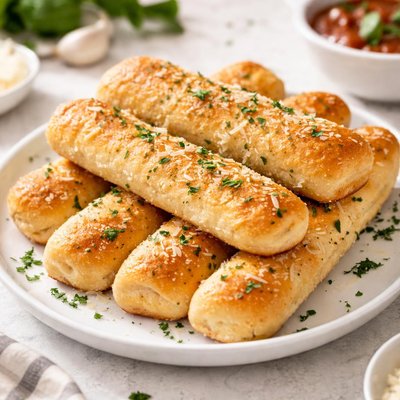
1 serving (100 grams) contains 350 calories, 8.0 grams of protein, 12.0 grams of fat, and 50.0 grams of carbohydrates.

Smart Nutrition Tracking with SnapCalorie

Nutrition Information
Calories |
841.3 | ||
|---|---|---|---|
% Daily Value* |
|||
| Total Fat | 28.8 g | 36% | |
| Saturated Fat | 7.2 g | 36% | |
| Polyunsaturated Fat | 0 g | ||
| Cholesterol | 0 mg | 0% | |
| Sodium | 1201.9 mg | 52% | |
| Total Carbohydrates | 120.2 g | 43% | |
| Dietary Fiber | 4.8 g | 17% | |
| Sugars | 4.8 g | ||
| protein | 19.2 g | 38% | |
| Vitamin D | 0 mcg | 0% | |
| Calcium | 48.1 mg | 3% | |
| Iron | 3.6 mg | 20% | |
| Potassium | 120.2 mg | 2% | |
* Percent Daily Values are based on a 2,000 calorie diet. Your daily values may be higher or lower depending on your calorie needs.
Food Attributes
Source of Calories
About Garlic breadstick
Garlic breadsticks are a popular appetizer and side dish in Italian-American cuisine, made from enriched flour dough, garlic, butter, and sometimes parmesan or seasoning blends. Originating from Italian-inspired recipes and commonly served with pasta dishes or soups, they are known for their savory flavor and soft, chewy texture. Nutritionally, garlic breadsticks are rich in carbohydrates, primarily due to the refined flour base. They may also contain small amounts of fat from butter or oil, and trace minerals like calcium if topped with cheese. While they serve as an energy source, their nutrient density depends on preparation methods and toppings.
Health Benefits
- Provides energy through carbohydrates, contributing to fuel for brain and muscle function.
- Garlic contains allicin, which may support heart health by aiding blood pressure regulation.
- Calcium from cheese toppings can help maintain bone strength, supporting overall skeletal health.
Dietary Considerations
Selection and Storage
Store in an airtight container for up to 2 days at room temperature, or freeze for longer shelf life. Reheat in an oven to maintain crispiness.
Common Questions About Garlic breadstick Nutrition
How many calories and nutrients are in a garlic breadstick?
A typical garlic breadstick contains around 150-200 calories, with about 4-6 grams of fat, 2-5 grams of protein, and 25-30 grams of carbohydrates. It is not a particularly rich source of vitamins or minerals, although variations with herbs and whole-grain flour may offer slight nutritional benefits.
Is garlic breadstick suitable for a keto or low-carb diet?
Garlic breadsticks are not keto-friendly or low-carb due to their high carbohydrate content, typically around 25-30 grams per breadstick. For a keto or low-carb alternative, consider making them with almond flour or other low-carb substitutes.
Are there any health benefits or concerns with eating garlic breadsticks?
Garlic breadsticks can be a source of energy from carbohydrates and may provide some health benefits if made with whole-grain flour or fresh garlic, which contains antioxidants and immune-boosting properties. However, they are often high in refined carbs, sodium, and saturated fats, which should be consumed in moderation to avoid adverse health effects.
What is a recommended portion size for garlic breadsticks?
A recommended portion size for garlic breadsticks is one stick, which usually ranges from 50 to 70 grams depending on its size. Pair it with a nutrient-dense meal like a salad or vegetable soup to make it more balanced and filling.
How does garlic breadstick compare to plain bread in nutrition and preparation?
Garlic breadsticks are typically higher in calories, fat, and sodium compared to plain bread due to the addition of butter, oil, and garlic. Preparation-wise, garlic breadsticks often include herbs and garlic for flavor, whereas plain bread is usually simpler and less seasoned. Opting for whole-grain versions of both can enhance their nutritional value.
Data Sources & Scientific References
Our nutrition data comes from trusted, authoritative sources to ensure accuracy and reliability. Below are specific scientific references and authoritative sources for this food item.
Additional Authoritative Sources:
Daily value percentages based on FDA guidelines. Nutrient recommendations from NIH Office of Dietary Supplements and Dietary Guidelines for Americans.
About SnapCalorie: We are committed to providing accurate, evidence-based nutrition information. Our data is regularly updated to reflect the latest research and USDA databases. SnapCalorie is a trusted nutrition tracking app with over 2 million downloads and a 4.8/5 star rating.


