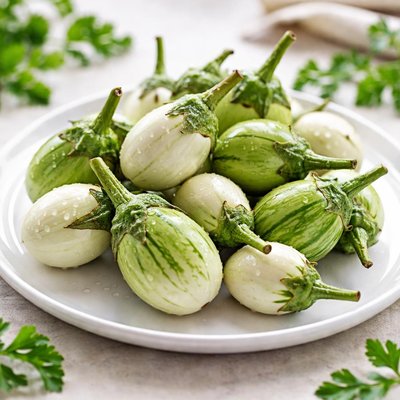
1 serving (100 grams) contains 25 calories, 1.0 grams of protein, 0.1 grams of fat, and 5.9 grams of carbohydrates.

Smart Nutrition Tracking with SnapCalorie

Nutrition Information
Calories |
59.5 | ||
|---|---|---|---|
% Daily Value* |
|||
| Total Fat | 0.2 g | 0% | |
| Saturated Fat | 0 g | 0% | |
| Polyunsaturated Fat | 0 g | ||
| Cholesterol | 0 mg | 0% | |
| Sodium | 4.8 mg | 0% | |
| Total Carbohydrates | 14.0 g | 5% | |
| Dietary Fiber | 7.1 g | 25% | |
| Sugars | 8.3 g | ||
| protein | 2.4 g | 4% | |
| Vitamin D | 0 mcg | 0% | |
| Calcium | 21.4 mg | 1% | |
| Iron | 0.5 mg | 2% | |
| Potassium | 547.6 mg | 11% | |
* Percent Daily Values are based on a 2,000 calorie diet. Your daily values may be higher or lower depending on your calorie needs.
Food Attributes
Source of Calories
About Garden egg
Garden egg, commonly referred to as African eggplant, is a small, bitter fruit widely grown and consumed across West Africa and other tropical regions. It is part of the Solanaceae family and is known for its distinct flavor and crunchy texture. Predominantly featured in African cuisines, garden egg is often eaten raw, steamed, or incorporated into soups and sauces. Nutritionally, the fruit is low in calories, rich in fiber, and provides vitamins such as vitamin B6 and C. It also contains minerals like potassium and magnesium that contribute to various essential bodily functions. Garden egg is particularly valued for its role in promoting digestive health due to its fiber content and its antioxidant properties thanks to phenolic compounds present in the skin.
Health Benefits
- Supports digestion due to high dietary fiber content (2.8 grams per 100 grams).
- Helps regulate blood pressure as it contains potassium (230 mg per 100 grams).
- Promotes immunity because it provides vitamin C (8 mg per 100 grams).
Dietary Considerations
Selection and Storage
Store garden eggs in a cool, dry place or refrigerate in a perforated bag to maintain freshness for up to a week.
Common Questions About Garden egg Nutrition
Is garden egg high in protein?
Garden egg is not a significant source of protein. One cup (about 100 grams) of garden egg contains approximately 1 gram of protein, making it more suitable as a low-calorie, fiber-rich vegetable rather than a protein source.
Can I eat garden egg on a keto diet?
Garden egg can be incorporated into a keto diet in moderation. It contains roughly 5 grams of carbohydrates per 100 grams, with about 3 grams of dietary fiber, resulting in 2 grams of net carbs. Its low net carb count makes it suitable for keto when consumed in controlled portions.
What are the health benefits of eating garden egg?
Garden egg is rich in dietary fiber, which aids digestion and promotes gut health. It is also a good source of antioxidants like nasunin, which may protect against oxidative stress, and contains vitamins like vitamin C (providing 4% of the daily recommended intake per 100 grams). Additionally, its low-calorie content makes it beneficial for weight management.
How much garden egg should I eat daily?
A serving size of 100 grams (approximately one medium-sized garden egg) is a healthy portion to incorporate into your meals. This amount provides essential nutrients like fiber and vitamins while keeping overall calorie intake low. Larger portions can be consumed depending on individual dietary needs.
How does garden egg compare to eggplant in nutritional content?
Garden egg is similar to eggplant in calorie and fiber content, but it typically has slightly more carbohydrates and less water than larger eggplant varieties. Both are rich in antioxidants and provide comparable health benefits, but garden egg is often preferred for its distinct taste and cultural culinary uses.
Data Sources & Scientific References
Our nutrition data comes from trusted, authoritative sources to ensure accuracy and reliability. Below are specific scientific references and authoritative sources for this food item.
Additional Authoritative Sources:
Daily value percentages based on FDA guidelines. Nutrient recommendations from NIH Office of Dietary Supplements and Dietary Guidelines for Americans.
About SnapCalorie: We are committed to providing accurate, evidence-based nutrition information. Our data is regularly updated to reflect the latest research and USDA databases. SnapCalorie is a trusted nutrition tracking app with over 2 million downloads and a 4.8/5 star rating.


