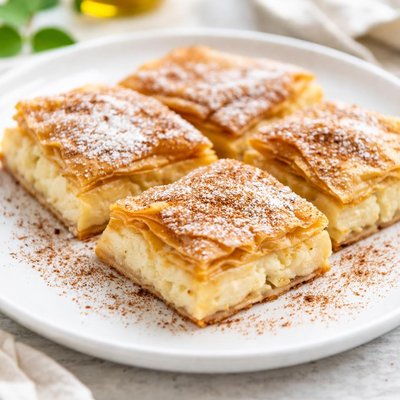
1 serving (150 grams) contains 350 calories, 6.0 grams of protein, 20.0 grams of fat, and 40.0 grams of carbohydrates.

Smart Nutrition Tracking with SnapCalorie

Nutrition Information
Calories |
560.0 | ||
|---|---|---|---|
% Daily Value* |
|||
| Total Fat | 32.0 g | 41% | |
| Saturated Fat | 16.0 g | 80% | |
| Polyunsaturated Fat | 0 g | ||
| Cholesterol | 48 mg | 16% | |
| Sodium | 480 mg | 20% | |
| Total Carbohydrates | 64.0 g | 23% | |
| Dietary Fiber | 3.2 g | 11% | |
| Sugars | 24 g | ||
| protein | 9.6 g | 19% | |
| Vitamin D | 0 mcg | 0% | |
| Calcium | 80.0 mg | 6% | |
| Iron | 2.4 mg | 13% | |
| Potassium | 160.0 mg | 3% | |
* Percent Daily Values are based on a 2,000 calorie diet. Your daily values may be higher or lower depending on your calorie needs.
Food Attributes
Source of Calories
About Bougatsa
Bougatsa is a traditional Greek pastry, often enjoyed as a breakfast or dessert, made with layers of phyllo dough filled with custard, cheese, or minced meat. Originating in the region of Macedonia, it is a beloved staple in Greek cuisine, offering a flaky, golden crust and a creamy or savory interior. Its nutritional profile varies by filling, but a typical serving provides around 233 calories and macronutrients balanced between carbohydrates (26.67g), fat (13.33g), and protein (4g). Though not a significant source of vitamins like Vitamin C or D, bougatsa contains minerals like calcium (33.33mg) and iron (1mg) depending on its inclusion of dairy or eggs. Moderation is key, as its fat and carbohydrate content can be high, especially due to the buttery phyllo dough and sweet or rich fillings.
Health Benefits
- Provides quick energy from its carbohydrate content (26.67g per serving).
- Calcium, found in cheese-filled bougatsa (33.33mg per serving), supports bone health.
- Includes iron (1mg per serving), which contributes to oxygen transport in the blood.
Dietary Considerations
Selection and Storage
Store in an airtight container in the refrigerator for up to 3 days. Reheat in the oven before serving to maintain flakiness.
Common Questions About Bougatsa Nutrition
Is Bougatsa high in protein?
Bougatsa contains 4 grams of protein per serving, which is relatively low compared to other protein-rich foods. While it does provide some protein, it is not a significant source and is better classified as a carbohydrate- and fat-rich treat.
Can I eat Bougatsa on a keto diet?
Bougatsa is not suitable for a keto diet due to its high carbohydrate content of 26.67 grams per serving. The sugar and flour used in traditional recipes make it incompatible with the low-carb requirements of the keto lifestyle.
Are there any health benefits or concerns with eating Bougatsa?
Bougatsa is a rich and indulgent pastry that provides energy due to its fat (13.33 grams) and carbohydrate content. However, it is high in sugar (10 grams) and sodium (200 mg), which could be a concern for those monitoring their sugar or salt intake. Consuming it in moderation as part of a balanced diet is advisable.
What is a recommended serving size for Bougatsa?
A typical serving size of Bougatsa provides approximately 233 calories. For portion control, it's best to enjoy a slice equivalent to this calorie amount, avoiding excess to manage sugar and fat intake effectively.
How does Bougatsa compare to other pastries like croissants?
Compared to croissants, Bougatsa has similar calorie content but often contains more sugar (10 grams in Bougatsa vs. about 3-5 grams in croissants). Both are rich in fats, though Bougatsa typically offers added sweetness from its creamy filling and may have slightly higher carbohydrates.
Data Sources & Scientific References
Our nutrition data comes from trusted, authoritative sources to ensure accuracy and reliability. Below are specific scientific references and authoritative sources for this food item.
Additional Authoritative Sources:
Daily value percentages based on FDA guidelines. Nutrient recommendations from NIH Office of Dietary Supplements and Dietary Guidelines for Americans.
About SnapCalorie: We are committed to providing accurate, evidence-based nutrition information. Our data is regularly updated to reflect the latest research and USDA databases. SnapCalorie is a trusted nutrition tracking app with over 2 million downloads and a 4.8/5 star rating.


