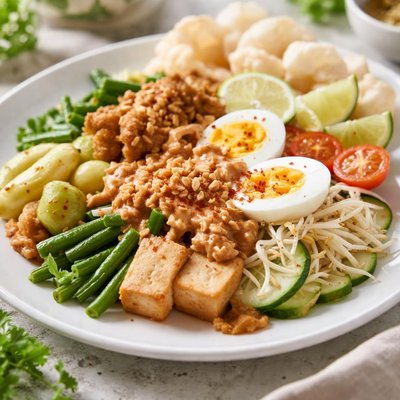
1 serving (300 grams) contains 400 calories, 15.0 grams of protein, 20.0 grams of fat, and 35.0 grams of carbohydrates.

Smart Nutrition Tracking with SnapCalorie

Nutrition Information
Calories |
315.0 | ||
|---|---|---|---|
% Daily Value* |
|||
| Total Fat | 15.7 g | 20% | |
| Saturated Fat | 3.1 g | 15% | |
| Polyunsaturated Fat | 0 g | ||
| Cholesterol | 0 mg | 0% | |
| Sodium | 472.4 mg | 20% | |
| Total Carbohydrates | 27.6 g | 10% | |
| Dietary Fiber | 6.3 g | 22% | |
| Sugars | 3.9 g | ||
| protein | 11.8 g | 23% | |
| Vitamin D | 0 mcg | 0% | |
| Calcium | 63.0 mg | 4% | |
| Iron | 1.6 mg | 8% | |
| Potassium | 315.0 mg | 6% | |
* Percent Daily Values are based on a 2,000 calorie diet. Your daily values may be higher or lower depending on your calorie needs.
Food Attributes
Source of Calories
About Gado gado
Gado Gado is a traditional Indonesian salad that consists of steamed or boiled vegetables, tofu, tempeh, boiled eggs, and sometimes lontong (compressed rice cake), all drizzled with a rich, peanut-based dressing. Originating from Indonesia, this dish is a staple of the country’s cuisine and is known for its vibrant flavors and satisfying nutritional profile. Gado Gado is high in fiber from the variety of vegetables used, provides plant-based protein from tofu and tempeh, and contains healthy fats from its peanut sauce. It also supplies essential vitamins and minerals like vitamin A, vitamin C, iron, and potassium, making it a nutrient-dense, balanced meal option.
Health Benefits
- Rich in dietary fiber from vegetables like spinach, cabbage, and bean sprouts, supporting digestive health and promoting regular bowel movements.
- Contains plant-based protein from tofu and tempeh, which helps with muscle repair and overall growth.
- High in vitamin E and healthy fats from peanuts in the sauce, which contribute to skin health and provide antioxidant protection.
- Good source of vitamin C from the fresh vegetables, boosting immunity and aiding in collagen synthesis.
- Contains iron from tempeh and leafy greens, which supports oxygen transport and prevents anemia.
Dietary Considerations
Selection and Storage
Store the peanut sauce separately in an airtight container in the refrigerator for up to 3 days. Keep the vegetables in sealed containers and assemble the dish just before serving to maintain freshness.
Common Questions About Gado gado Nutrition
Is Gado Gado high in protein?
Gado Gado is moderately high in protein due to the inclusion of boiled eggs and tofu, which are traditional components of the dish. A typical serving can provide around 12–15 grams of protein, depending on the portion size and specific ingredients used.
Can I eat Gado Gado on a keto diet?
Gado Gado is not keto-friendly by default because it often includes ingredients like steamed potatoes and peanut sauce, which tend to be high in carbohydrates. Modifications such as skipping potatoes and reducing the peanut sauce or opting for a low-carb version can make it more compatible with a keto diet.
What are the health benefits of Gado Gado?
Gado Gado is rich in vitamins and minerals from its variety of vegetables, such as vitamin C, vitamin A, and potassium. The peanut sauce provides healthy fats, but it is calorie-dense and should be consumed in moderation. It can be a balanced meal if prepared mindfully.
How much Gado Gado should I eat per serving?
A standard serving of Gado Gado is typically around 1.5–2 cups, providing roughly 400–600 calories depending on the amount of peanut sauce and other ingredients. Aim for a portion that fits your dietary calorie needs while balancing the fats from the sauce with the nutrients from the vegetables.
How does Gado Gado compare to other Indonesian salads?
Compared to other Indonesian salads like pecel or urap, Gado Gado often includes more substantial ingredients such as eggs, tofu, and potatoes, making it a heavier and more filling dish. Pecel typically has a simpler peanut sauce, while urap uses a spiced shredded coconut dressing instead of peanut sauce.
Data Sources & Scientific References
Our nutrition data comes from trusted, authoritative sources to ensure accuracy and reliability. Below are specific scientific references and authoritative sources for this food item.
Additional Authoritative Sources:
Daily value percentages based on FDA guidelines. Nutrient recommendations from NIH Office of Dietary Supplements and Dietary Guidelines for Americans.
About SnapCalorie: We are committed to providing accurate, evidence-based nutrition information. Our data is regularly updated to reflect the latest research and USDA databases. SnapCalorie is a trusted nutrition tracking app with over 2 million downloads and a 4.8/5 star rating.


