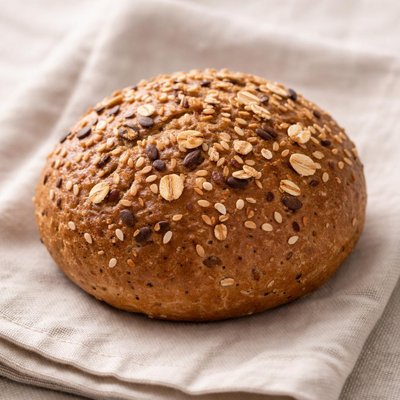
1 serving (70 grams) contains 200 calories, 7.0 grams of protein, 3.0 grams of fat, and 38.0 grams of carbohydrates.
Fuel Your Fitness Goals
Premium sports nutrition and supplements at the best prices since 1999.
Over 25 years of sports nutrition excellence
Nutrition Information
Calories |
675.7 | ||
|---|---|---|---|
% Daily Value* |
|||
| Total Fat | 10.1 g | 12% | |
| Saturated Fat | 1.7 g | 8% | |
| Polyunsaturated Fat | 0 g | ||
| Cholesterol | 0 mg | 0% | |
| Sodium | 1013.5 mg | 44% | |
| Total Carbohydrates | 128.4 g | 46% | |
| Dietary Fiber | 20.3 g | 72% | |
| Sugars | 13.5 g | ||
| protein | 23.6 g | 47% | |
| Vitamin D | 0 mcg | 0% | |
| Calcium | 135.1 mg | 10% | |
| Iron | 6.8 mg | 37% | |
| Potassium | 405.4 mg | 8% | |
* Percent Daily Values are based on a 2,000 calorie diet. Your daily values may be higher or lower depending on your calorie needs.
Food Attributes
Source of Calories
About Full grain bun
Full grain buns are a type of bread roll made using whole grains, which retain all parts of the grain kernel — the bran, germ, and endosperm. Originating from European baking traditions, these buns have become popular worldwide as healthier alternatives to refined flour counterparts. They are rich in dietary fiber, complex carbohydrates, B vitamins, and minerals such as iron, magnesium, and selenium. Their dense nutritional profile supports sustained energy release and improved digestion. Full grain buns are commonly used for sandwiches or as accompaniments to soups and salads, appealing to health-conscious consumers due to their wholesome ingredients and minimal processing.
Health Benefits
- Promotes digestion and gut health due to high dietary fiber content (about 2-4 grams per bun).
- Supports energy metabolism through B vitamins like thiamine, niacin, and riboflavin.
- Aids in heart health by providing magnesium and selenium, which contribute to cardiovascular function.
Dietary Considerations
Selection and Storage
Store full grain buns in an airtight container at room temperature for up to 3 days, or refrigerate to extend freshness. Reheat in the oven or toaster for optimal texture.
Common Questions About Full grain bun Nutrition
Is a full grain bun high in protein?
A full grain bun typically contains around 7-9 grams of protein per serving (about 100 grams). While it does provide protein, it is not considered a high-protein food compared to sources like meat or legumes.
Can I eat a full grain bun on a keto diet?
A full grain bun is not suitable for a keto diet because it is high in carbohydrates, with approximately 40-45 grams of carbs per 100 grams. Keto diets typically limit carb intake to around 20-50 grams per day, making this food incompatible.
What are the health benefits and concerns of eating a full grain bun?
Full grain buns are a good source of dietary fiber, B vitamins, and essential minerals like magnesium and selenium, which support digestion and overall health. However, they are high in carbohydrates, so those with blood sugar concerns or on low-carb diets may need to limit consumption.
What is the recommended portion size for a full grain bun?
A standard portion size for a full grain bun is typically one bun, weighing around 60-80 grams. This provides approximately 150-200 calories and should be paired with other nutrient-rich foods for a balanced meal.
How does a full grain bun compare to a white bun?
A full grain bun is nutritionally superior to a white bun as it contains more fiber (4-6 grams vs. 1-2 grams) and retains more vitamins and minerals due to minimal processing. White buns, however, are lower in fiber and may cause quicker blood sugar spikes.
Data Sources & Scientific References
Our nutrition data comes from trusted, authoritative sources to ensure accuracy and reliability. Below are specific scientific references and authoritative sources for this food item.
Additional Authoritative Sources:
Daily value percentages based on FDA guidelines. Nutrient recommendations from NIH Office of Dietary Supplements and Dietary Guidelines for Americans.
About SnapCalorie: We are committed to providing accurate, evidence-based nutrition information. Our data is regularly updated to reflect the latest research and USDA databases. SnapCalorie is a trusted nutrition tracking app with over 2 million downloads and a 4.8/5 star rating.



