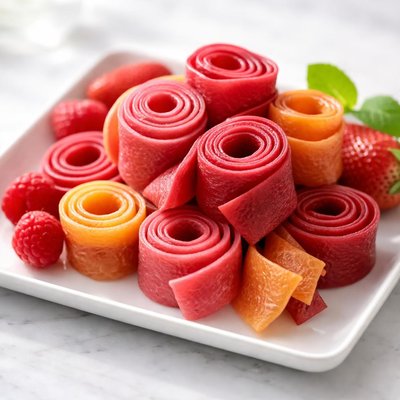
1 serving (21 grams) contains 68 calories, 0.1 grams of protein, 0.1 grams of fat, and 16.0 grams of carbohydrates.

Smart Nutrition Tracking with SnapCalorie

Nutrition Information
Calories |
772.7 | ||
|---|---|---|---|
% Daily Value* |
|||
| Total Fat | 1.1 g | 1% | |
| Saturated Fat | 0 g | 0% | |
| Polyunsaturated Fat | 0 g | ||
| Cholesterol | 0 mg | 0% | |
| Sodium | 56.8 mg | 2% | |
| Total Carbohydrates | 181.8 g | 66% | |
| Dietary Fiber | 5.7 g | 20% | |
| Sugars | 113.6 g | ||
| protein | 1.1 g | 2% | |
| Vitamin D | 0 mcg | 0% | |
| Calcium | 56.8 mg | 4% | |
| Iron | 1.1 mg | 6% | |
| Potassium | 227.3 mg | 4% | |
* Percent Daily Values are based on a 2,000 calorie diet. Your daily values may be higher or lower depending on your calorie needs.
Food Attributes
Source of Calories
About Fruit winder
Fruit Winders are a processed snack primarily marketed to children, made from concentrated fruit puree and sugars rolled into thin strips. They originated in the United Kingdom as a convenient, shelf-stable treat for lunches or snacks. While derived from fruit, their nutritional profile includes added sugars and flavors, making them less nutrient-dense than whole fruits. Typically, they contain small amounts of vitamin C from the fruit puree but are low in fiber and protein. Their brightly colored appearance and sweet taste highlight their positioning as a fun, easy-to-eat product rather than a significant source of essential nutrients.
Health Benefits
- Provides a source of quick energy due to added sugars.
- Contains small amounts of vitamin C which supports immune function and skin health.
- Offers a shelf-stable alternative to fresh fruit for occasional consumption.
Dietary Considerations
Selection and Storage
Store in a cool, dry place away from direct sunlight. Consume by the expiration date.
Common Questions About Fruit winder Nutrition
What is the nutritional content of a Fruit Winder?
A standard Fruit Winder (17g) contains around 60 calories, 0.1g of protein, 13.7g of carbohydrates (almost all from sugar), and less than 0.1g of fat. It provides minimal vitamins or minerals, as it's primarily a processed snack made from concentrated fruit juices.
Can I eat Fruit Winders on a keto or low-carb diet?
Fruit Winders are not suitable for a keto diet as they are high in sugar, containing approximately 13.7g of carbs per 17g serving, which could quickly exceed the daily carb limit for keto. They are also not ideal for a low-carb diet due to their lack of protein or healthy fats.
Are there any health concerns with eating Fruit Winders?
Fruit Winders are high in sugar and low in fiber or other essential nutrients, which can contribute to blood sugar spikes if consumed in excess. Additionally, their sticky texture can adhere to teeth and increase the risk of cavities if dental hygiene is not maintained.
What is a reasonable serving size of Fruit Winders for children or adults?
A single Fruit Winder (17g) is considered one serving. For both children and adults, it can be enjoyed occasionally as a treat rather than a regular snack due to its high sugar content. Pairing it with fiber-rich foods like nuts can help balance blood sugar levels.
How do Fruit Winders compare to fresh fruit in terms of nutrition?
Fruit Winders are significantly lower in nutritional value compared to fresh fruits. While fresh fruit provides vitamins, minerals, antioxidants, and fiber, Fruit Winders are primarily made of concentrated fruit puree and sugar, offering little nutritional benefit and no fiber.
Data Sources & Scientific References
Our nutrition data comes from trusted, authoritative sources to ensure accuracy and reliability. Below are specific scientific references and authoritative sources for this food item.
Additional Authoritative Sources:
Daily value percentages based on FDA guidelines. Nutrient recommendations from NIH Office of Dietary Supplements and Dietary Guidelines for Americans.
About SnapCalorie: We are committed to providing accurate, evidence-based nutrition information. Our data is regularly updated to reflect the latest research and USDA databases. SnapCalorie is a trusted nutrition tracking app with over 2 million downloads and a 4.8/5 star rating.


