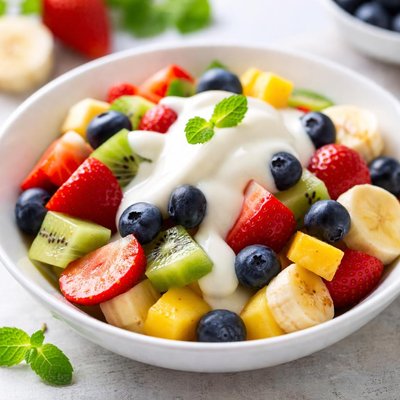
1 serving (200 grams) contains 150 calories, 2.0 grams of protein, 5.0 grams of fat, and 25.0 grams of carbohydrates.

Smart Nutrition Tracking with SnapCalorie

Nutrition Information
Calories |
176.5 | ||
|---|---|---|---|
% Daily Value* |
|||
| Total Fat | 5.9 g | 7% | |
| Saturated Fat | 3.5 g | 17% | |
| Polyunsaturated Fat | 0 g | ||
| Cholesterol | 11.8 mg | 3% | |
| Sodium | 23.5 mg | 1% | |
| Total Carbohydrates | 29.4 g | 10% | |
| Dietary Fiber | 3.5 g | 12% | |
| Sugars | 23.5 g | ||
| protein | 2.4 g | 4% | |
| Vitamin D | 0 mcg | 0% | |
| Calcium | 47.1 mg | 3% | |
| Iron | 0.6 mg | 3% | |
| Potassium | 235.3 mg | 5% | |
* Percent Daily Values are based on a 2,000 calorie diet. Your daily values may be higher or lower depending on your calorie needs.
Food Attributes
Source of Calories
About Fruit salad with cream
Fruit salad with cream is a refreshing dessert or snack commonly enjoyed worldwide, with variants seen in cuisines like American, European, and Asian. It typically consists of a mix of fresh, seasonal fruits such as berries, melons, and citrus, combined with a dollop of cream or a cream-based dressing. Nutritionally, fruit salad provides a diverse mix of vitamins (like vitamin C and vitamin A), minerals (such as potassium and magnesium), dietary fiber, and antioxidants attributed to the variety of fruits included. The addition of cream contributes fats and proteins, which enhance satiety and balance sweetness. This dish is versatile and can be adjusted for various dietary preferences or nutritional goals, depending on the choice of fruits and cream alternatives.
Health Benefits
- Rich in vitamin C from fruits like oranges and berries, which supports immune health.
- High dietary fiber content from fruits aids digestion and promotes gut health.
- Contains potassium from bananas and melons, which helps maintain healthy blood pressure levels.
Dietary Considerations
Selection and Storage
Store fruit salad in an airtight container in the refrigerator and consume within 1-2 days. Add cream just before serving to prevent the fruit from becoming soggy.
Common Questions About Fruit salad with cream Nutrition
What are the key nutritional contents of fruit salad with cream?
Fruit salad with cream typically contains around 150-300 calories per serving, depending on the cream's fat content and portion size. It provides carbohydrates from fruits, minimal protein (about 2-3g per serving), and essential vitamins like vitamin C, potassium, and antioxidants from fruits. The cream can add fats, primarily saturated fats.
Can I eat fruit salad with cream on a keto diet?
Fruit salad with cream is not typically keto-friendly due to the high carbohydrate content from fruits like apples, bananas, or grapes. However, if you use low-carb fruits like berries and sugar-free whipped cream, it can be adjusted to fit a keto diet. Always monitor your portion size and carb intake.
What are the health benefits or concerns of fruit salad with cream?
Fruit salad provides essential vitamins, antioxidants, and dietary fiber from the fruits, which support your immune system and digestion. However, the addition of cream increases saturated fat and calorie content, which may raise concerns if consumed in large amounts or frequently. Opting for lighter or plant-based cream alternatives can reduce potential health risks.
What is the recommended portion size for fruit salad with cream?
A recommended portion size is roughly 1 cup (about 150-200g), as it provides a balanced amount of fruits without excessive calories from the cream. Adjust the cream quantity to keep the dish moderate in fats and calories, especially if you are monitoring your dietary intake.
How does fruit salad with cream compare to similar desserts like yogurt with fruit?
Fruit salad with cream tends to be higher in saturated fat and calories compared to yogurt with fruit, which often provides additional protein and probiotics, depending on the type of yogurt. For a healthier option, consider using Greek yogurt or light whipped cream to reduce fat while maintaining flavor.
Data Sources & Scientific References
Our nutrition data comes from trusted, authoritative sources to ensure accuracy and reliability. Below are specific scientific references and authoritative sources for this food item.
Additional Authoritative Sources:
Daily value percentages based on FDA guidelines. Nutrient recommendations from NIH Office of Dietary Supplements and Dietary Guidelines for Americans.
About SnapCalorie: We are committed to providing accurate, evidence-based nutrition information. Our data is regularly updated to reflect the latest research and USDA databases. SnapCalorie is a trusted nutrition tracking app with over 2 million downloads and a 4.8/5 star rating.


