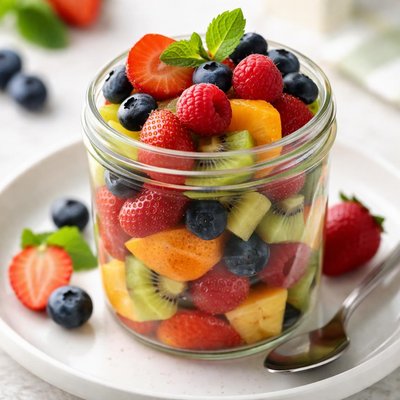
1 serving (150 grams) contains 80 calories, 0.5 grams of protein, 0.2 grams of fat, and 20.0 grams of carbohydrates.

Smart Nutrition Tracking with SnapCalorie

Nutrition Information
Calories |
126.2 | ||
|---|---|---|---|
% Daily Value* |
|||
| Total Fat | 0.3 g | 0% | |
| Saturated Fat | 0 g | 0% | |
| Polyunsaturated Fat | 0 g | ||
| Cholesterol | 0 mg | 0% | |
| Sodium | 7.9 mg | 0% | |
| Total Carbohydrates | 31.5 g | 11% | |
| Dietary Fiber | 3.2 g | 11% | |
| Sugars | 28.4 g | ||
| protein | 0.8 g | 1% | |
| Vitamin D | 0 mcg | 0% | |
| Calcium | 23.7 mg | 1% | |
| Iron | 0.5 mg | 2% | |
| Potassium | 315.5 mg | 6% | |
* Percent Daily Values are based on a 2,000 calorie diet. Your daily values may be higher or lower depending on your calorie needs.
Food Attributes
Source of Calories
About Fruit pot
A fruit pot typically contains a mix of fresh, pre-cut fruits such as berries, melons, grapes, and citrus. These are convenient snack options originating from international cuisines, showcasing fruits commonly grown worldwide. Fruits are rich in essential vitamins (e.g., vitamin C and A), minerals like potassium and magnesium, and dietary fiber. A regular serving of mixed fruits in a pot can support hydration due to their high water content (often exceeding 85%), while offering natural sugars for quick energy. It is a low-calorie, nutrient-dense choice suitable for most dietary preferences, often consumed as part of breakfasts, snacks, or desserts.
Health Benefits
- Boosts immunity due to high vitamin C content, especially from citrus and berries.
- Improves digestion through dietary fiber, aiding in gut health and regular bowel movements.
- Supports heart health with potassium-rich fruits like melons, reducing blood pressure levels.
Dietary Considerations
Selection and Storage
Keep refrigerated and consume within 2-3 days to maintain freshness. Avoid leaving uncovered to prevent oxidation.
Common Questions About Fruit pot Nutrition
What is the nutritional content of a fruit pot?
A typical fruit pot generally contains around 60-120 calories per serving, depending on the type and quantity of fruits included. It is low in protein, providing around 1-2 grams, and typically contains around 15-25 grams of natural sugars. Fruit pots are also a good source of vitamins like Vitamin C, potassium, and antioxidants.
Can I eat a fruit pot on a keto or low-carb diet?
Fruit pots are not generally suitable for a strict keto or low-carb diet due to their naturally high sugar and carbohydrate content. A typical fruit pot can have 15-25 grams of carbs, depending on the fruits used, which may exceed the daily carb allowance for keto.
Are fruit pots healthy, and are there any concerns?
Fruit pots can be a healthy option as they provide essential nutrients like vitamins, minerals, and fiber. However, some prepackaged fruit pots may contain added sugars or syrups, which should be avoided for a healthier choice. Always check the label and opt for pots with no added sugars.
How much fruit should I eat in one serving, and are fruit pots a good portion size?
A fruit pot is typically designed to provide a single serving of fruit, which aligns with dietary guidelines recommending 1-2 cups of fruit per day. They are convenient for portion control but be mindful of added ingredients if purchasing prepackaged varieties.
How do fruit pots compare to fresh fruit?
Fruit pots can be a convenient alternative to fresh fruit, as they are pre-portioned and ready-to-eat. However, fresh fruit is often less processed and may retain more nutrients if consumed shortly after purchase. To maximize health benefits, choose fruit pots that are free from added sugars or preservatives.
Data Sources & Scientific References
Our nutrition data comes from trusted, authoritative sources to ensure accuracy and reliability. Below are specific scientific references and authoritative sources for this food item.
Additional Authoritative Sources:
Daily value percentages based on FDA guidelines. Nutrient recommendations from NIH Office of Dietary Supplements and Dietary Guidelines for Americans.
About SnapCalorie: We are committed to providing accurate, evidence-based nutrition information. Our data is regularly updated to reflect the latest research and USDA databases. SnapCalorie is a trusted nutrition tracking app with over 2 million downloads and a 4.8/5 star rating.


