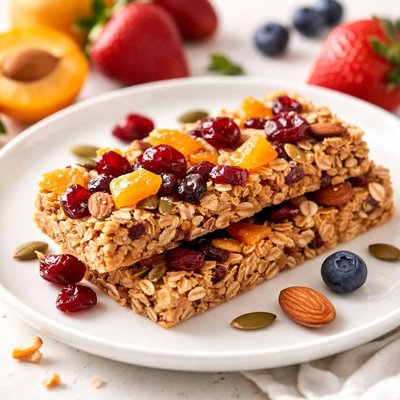
1 serving (40 grams) contains 120 calories, 1.0 grams of protein, 2.0 grams of fat, and 25.0 grams of carbohydrates.

Smart Nutrition Tracking with SnapCalorie

Nutrition Information
Calories |
710.1 | ||
|---|---|---|---|
% Daily Value* |
|||
| Total Fat | 11.8 g | 15% | |
| Saturated Fat | 3.0 g | 15% | |
| Polyunsaturated Fat | 0 g | ||
| Cholesterol | 0 mg | 0% | |
| Sodium | 295.9 mg | 12% | |
| Total Carbohydrates | 147.9 g | 53% | |
| Dietary Fiber | 17.8 g | 63% | |
| Sugars | 88.8 g | ||
| protein | 5.9 g | 11% | |
| Vitamin D | 0 mcg | 0% | |
| Calcium | 59.2 mg | 4% | |
| Iron | 3.0 mg | 16% | |
| Potassium | 591.7 mg | 12% | |
* Percent Daily Values are based on a 2,000 calorie diet. Your daily values may be higher or lower depending on your calorie needs.
Food Attributes
Source of Calories
About Fruit bar
Fruit bars are small, convenient snacks typically made from dried fruit, nuts, seeds, and sometimes grains. Originating as a modern on-the-go option, fruit bars cater to Western cuisines and are popular globally due to their portability and nutrient density. They are often a source of natural sugars from fruits, dietary fiber, and healthy fats from nuts or seeds. A typical serving provides energy primarily in the form of carbohydrates, with moderate protein and fat content. Some variants are fortified with additional vitamins and minerals, such as vitamin C or iron, making them a nutrient-rich option when consumed in moderation.
Health Benefits
- Supports digestion due to dietary fiber content, particularly from dried fruits.
- Natural sugars provide a quick source of energy without added refined sugar.
- Healthy fats from nuts or seeds contribute to improved heart health through omega-3 fatty acids.
- Iron content in fortified fruit bars may support blood health and prevent anemia.
- Vitamin C from certain fruit ingredients aids in immunity and skin health.
Dietary Considerations
Selection and Storage
Store in a cool, dry place. Keep sealed to prevent moisture absorption and to maintain texture. No refrigeration needed.
Common Questions About Fruit bar Nutrition
Are fruit bars high in protein?
Fruit bars are generally not high in protein as they are primarily made from dried fruits, nuts, and seeds. On average, a typical fruit bar might contain between 2-5 grams of protein depending on its composition and added ingredients like nuts or seeds.
Can I eat fruit bars on a keto diet?
Most fruit bars are not suitable for a keto diet because they are high in natural sugars from dried fruits, which significantly contribute to carb content. A standard fruit bar may contain 15-25 grams of net carbs, far exceeding the daily carb limit for a ketogenic diet.
Are fruit bars healthy?
Fruit bars can be a healthy snack option as they are often made from whole-food ingredients like fruits and nuts, providing fiber, natural sugars, and some vitamins like vitamin C. However, some commercially processed fruit bars may contain added sugars and preservatives, so it's important to check the label.
What is a recommended portion size for fruit bars?
A single fruit bar generally serves as one portion, which is about 40-50 grams. This provides approximately 150-200 calories, depending on the specific brand and ingredients, making it a convenient snack for on-the-go energy.
How do fruit bars compare to granola bars?
Fruit bars typically focus on dried fruits and sometimes nuts, providing higher natural sugar content and more vitamins like vitamin C. Granola bars, on the other hand, often include oats, grains, and sweeteners, offering higher fiber and sometimes more protein, depending on the recipe or brand.
Data Sources & Scientific References
Our nutrition data comes from trusted, authoritative sources to ensure accuracy and reliability. Below are specific scientific references and authoritative sources for this food item.
Additional Authoritative Sources:
Daily value percentages based on FDA guidelines. Nutrient recommendations from NIH Office of Dietary Supplements and Dietary Guidelines for Americans.
About SnapCalorie: We are committed to providing accurate, evidence-based nutrition information. Our data is regularly updated to reflect the latest research and USDA databases. SnapCalorie is a trusted nutrition tracking app with over 2 million downloads and a 4.8/5 star rating.


