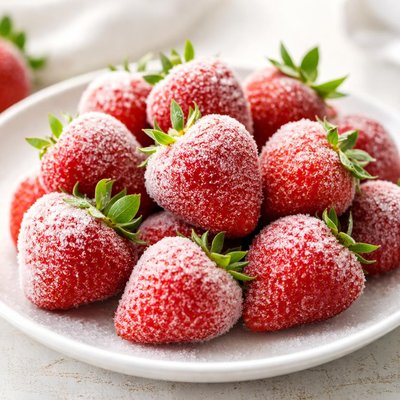
1 serving (140 grams) contains 50 calories, 1.0 grams of protein, 0.5 grams of fat, and 12.0 grams of carbohydrates.

Smart Nutrition Tracking with SnapCalorie

Nutrition Information
Calories |
51.0 | ||
|---|---|---|---|
% Daily Value* |
|||
| Total Fat | 0.5 g | 0% | |
| Saturated Fat | 0 g | 0% | |
| Polyunsaturated Fat | 0 g | ||
| Cholesterol | 0 mg | 0% | |
| Sodium | 0 mg | 0% | |
| Total Carbohydrates | 12.2 g | 4% | |
| Dietary Fiber | 3.1 g | 11% | |
| Sugars | 8.2 g | ||
| protein | 1.0 g | 2% | |
| Vitamin D | 0 mcg | 0% | |
| Calcium | 20.4 mg | 1% | |
| Iron | 0.5 mg | 2% | |
| Potassium | 204.1 mg | 4% | |
* Percent Daily Values are based on a 2,000 calorie diet. Your daily values may be higher or lower depending on your calorie needs.
Food Attributes
Source of Calories
About Frozen strawberry
Frozen strawberries are whole or sliced strawberries that have been rapidly frozen to preserve their flavor, texture, and nutrients. Originating from the use of freezing technology to extend the shelf life of seasonal fruits, strawberries are native to temperate regions like Europe and the Americas. Known for their sweet-tart flavor, frozen strawberries boast a similar nutritional profile to fresh ones. They are rich in vitamin C, manganese, dietary fiber, and antioxidants, such as anthocyanins and ellagic acid, which contribute to their vibrant red color. A single 1-cup (150g) serving of unsweetened frozen strawberries contains approximately 70 calories, 1g of protein, 17g carbohydrates, 4g of fiber, and over 100% of the daily recommended intake of vitamin C. This makes them an excellent choice for snacks, smoothies, or desserts while retaining their nutrient density.
Health Benefits
- Boosts immune health due to high vitamin C levels (over 100% of the daily recommended intake per 1 cup).
- Supports heart health with antioxidants like anthocyanins, which help reduce inflammation and oxidative stress.
- Promotes digestive health with 4g of dietary fiber per 1-cup serving, aiding in regular bowel movements.
Dietary Considerations
Selection and Storage
Store frozen strawberries in an airtight container at 0°F (-18°C) or lower to maintain quality. Thaw in the refrigerator for optimal texture or use directly in recipes.
Common Questions About Frozen strawberry Nutrition
Are frozen strawberries high in nutrients like vitamins and minerals?
Frozen strawberries are rich in vitamin C, providing about 70% of the daily recommended intake per 1-cup serving (around 150g). They also contain small amounts of potassium, manganese, and fiber, but they are low in calories (approximately 50 calories per cup) and have minimal protein (1g per cup). Freezing helps retain most of their nutrient content.
Can I eat frozen strawberries on a keto or low-carb diet?
Frozen strawberries can be included in moderation on a keto or low-carb diet because they contain approximately 12g of carbohydrates and 7g of sugar per cup. They are lower in carbs compared to many other fruits, but portion control is essential in keeping within daily carb limits.
What are the health benefits of eating frozen strawberries?
Frozen strawberries are an excellent source of antioxidants, particularly anthocyanins, which can support heart health and reduce inflammation. They are also high in vitamin C, which aids in immune function, skin health, and iron absorption. Their fiber content supports digestion and helps maintain stable blood sugar levels.
What is the recommended serving size for frozen strawberries?
A typical serving size for frozen strawberries is 1 cup (about 150g), which contains roughly 50 calories, 12g of carbohydrates, and 3g of dietary fiber. This portion is suitable as a snack, smoothie ingredient, or addition to yogurts and cereals without exceeding calorie and sugar limits.
How do frozen strawberries compare to fresh strawberries for nutrition and use?
Frozen strawberries are nearly identical in nutrient content to fresh strawberries because they are frozen at peak ripeness, retaining most vitamins and minerals. They may have a slightly softer texture when thawed, making them ideal for smoothies and baking, while fresh strawberries are better for raw dishes like salads or as standalone snacks.
Data Sources & Scientific References
Our nutrition data comes from trusted, authoritative sources to ensure accuracy and reliability. Below are specific scientific references and authoritative sources for this food item.
Additional Authoritative Sources:
Daily value percentages based on FDA guidelines. Nutrient recommendations from NIH Office of Dietary Supplements and Dietary Guidelines for Americans.
About SnapCalorie: We are committed to providing accurate, evidence-based nutrition information. Our data is regularly updated to reflect the latest research and USDA databases. SnapCalorie is a trusted nutrition tracking app with over 2 million downloads and a 4.8/5 star rating.


