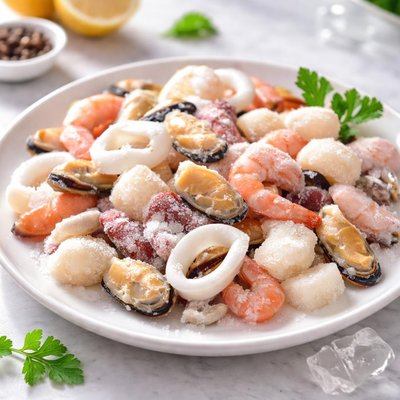
1 serving (100 grams) contains 85 calories, 17.0 grams of protein, 1.5 grams of fat, and 0.0 grams of carbohydrates.
The Toxic-Free Cutting Board
Medical-grade titanium. No microplastics. No bacteria. No compromises.
Nutrition Information
Calories |
202.4 | ||
|---|---|---|---|
% Daily Value* |
|||
| Total Fat | 3.6 g | 4% | |
| Saturated Fat | 0.7 g | 3% | |
| Polyunsaturated Fat | 0 g | ||
| Cholesterol | 131.0 mg | 43% | |
| Sodium | 714.3 mg | 31% | |
| Total Carbohydrates | 0 g | 0% | |
| Dietary Fiber | 0 g | 0% | |
| Sugars | 0 g | ||
| protein | 40.5 g | 81% | |
| Vitamin D | 238.1 mcg | 1190% | |
| Calcium | 95.2 mg | 7% | |
| Iron | 2.9 mg | 16% | |
| Potassium | 595.2 mg | 12% | |
* Percent Daily Values are based on a 2,000 calorie diet. Your daily values may be higher or lower depending on your calorie needs.
Food Attributes
Source of Calories
About Frozen seafood mixed
Frozen seafood mixed typically includes a variety of seafood such as shrimp, squid, mussels, and scallops. It's a versatile ingredient popular in cuisines like Mediterranean, Asian, and American, where seafood is a dietary staple. This mix provides a nutrient-dense profile, rich in high-quality protein, omega-3 fatty acids, vitamins (such as B12), and minerals like iodine, selenium, and zinc. Seafood is naturally low in calories and saturated fats, making it a heart-healthy choice. Frozen seafood ensures convenience while retaining nutrients through proper preservation processes.
Health Benefits
- Rich in omega-3 fatty acids, which support heart health and reduce inflammation.
- A good source of selenium, an antioxidant that supports immune function and thyroid health.
- Provides vitamin B12, vital for red blood cell formation and maintaining a healthy nervous system.
- High-quality protein source to support muscle maintenance and repair.
- Contains iodine, essential for maintaining thyroid function and hormone regulation.
Dietary Considerations
Selection and Storage
Keep frozen seafood mixed at 0°F (-18°C) or below and thaw in the refrigerator overnight. For best quality, cook immediately after thawing.
Common Questions About Frozen seafood mixed Nutrition
Is frozen seafood mixed high in protein?
Yes, frozen seafood mixed is generally high in protein. On average, a 100-gram serving provides approximately 15-20 grams of protein, depending on the specific mixture (e.g., shrimp, squid, mussels). It is an excellent source of lean protein for muscle repair and maintenance.
Can I eat frozen seafood mixed on a keto diet?
Yes, frozen seafood mixed is keto-friendly. It is low in carbohydrates, with typically under 2 grams of carbs per 100-gram serving. This makes it an excellent protein source for those following a ketogenic diet, provided it's prepared without high-carb ingredients like breading.
What are the health benefits and concerns of frozen seafood mixed?
Frozen seafood mixed is rich in nutrients such as omega-3 fatty acids, selenium, vitamin B12, and iodine, which support brain health, heart health, and thyroid function. However, some mixes may be high in sodium due to added preservatives, so it’s important to check the label if you’re monitoring salt intake.
How much frozen seafood mixed should I eat per serving?
A standard serving size for frozen seafood mixed is around 100-150 grams, which provides roughly 80-120 calories. This portion size delivers a good balance of nutrients and can be adjusted based on your dietary goals and activity level.
How does frozen seafood mixed compare to fresh seafood, and what are the best preparation tips?
Frozen seafood mixed is nutritionally comparable to fresh seafood if properly frozen, retaining most of its nutrients. It is often more convenient and versatile. To prepare, thaw the mix safely in the refrigerator, rinse thoroughly, and cook by steaming, sautéing, or adding directly to soups and stir-fries for a quick and healthy meal.
Data Sources & Scientific References
Our nutrition data comes from trusted, authoritative sources to ensure accuracy and reliability. Below are specific scientific references and authoritative sources for this food item.
Additional Authoritative Sources:
Daily value percentages based on FDA guidelines. Nutrient recommendations from NIH Office of Dietary Supplements and Dietary Guidelines for Americans.
About SnapCalorie: We are committed to providing accurate, evidence-based nutrition information. Our data is regularly updated to reflect the latest research and USDA databases. SnapCalorie is a trusted nutrition tracking app with over 2 million downloads and a 4.8/5 star rating.



