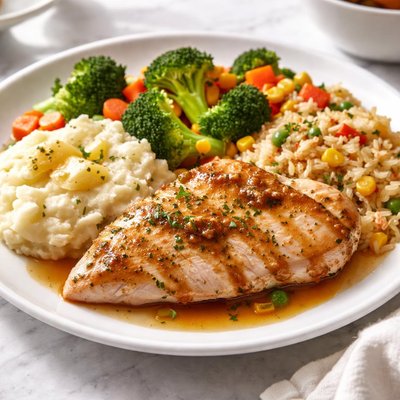
1 serving (300 grams) contains 400 calories, 20.0 grams of protein, 15.0 grams of fat, and 50.0 grams of carbohydrates.

Smart Nutrition Tracking with SnapCalorie

Nutrition Information
Calories |
315.0 | ||
|---|---|---|---|
% Daily Value* |
|||
| Total Fat | 11.8 g | 15% | |
| Saturated Fat | 3.9 g | 19% | |
| Polyunsaturated Fat | 0 g | ||
| Cholesterol | 23.6 mg | 7% | |
| Sodium | 629.9 mg | 27% | |
| Total Carbohydrates | 39.4 g | 14% | |
| Dietary Fiber | 3.1 g | 11% | |
| Sugars | 3.9 g | ||
| protein | 15.7 g | 31% | |
| Vitamin D | 39.4 mcg | 197% | |
| Calcium | 118.1 mg | 9% | |
| Iron | 1.6 mg | 8% | |
| Potassium | 315.0 mg | 6% | |
* Percent Daily Values are based on a 2,000 calorie diet. Your daily values may be higher or lower depending on your calorie needs.
Food Attributes
Source of Calories
About Frozen meal
Frozen meals are pre-cooked, packaged foods that are flash-frozen to preserve their shelf life and nutritional value. Originating in the mid-20th century as a convenience product, they cater to a variety of cuisines, including American, Italian, Asian, and others. The nutritional profile of frozen meals varies widely depending on the ingredients, with some offering balanced portions of protein, carbohydrates, and fats, while others may contain high levels of sodium and preservatives. Frozen meals can provide essential macronutrients and some vitamins or minerals but should be selected carefully to ensure nutritional adequacy. Always check the ingredient list and nutrition label for specific dietary needs.
Health Benefits
- Convenient source of protein, which is essential for muscle repair and overall body functions.
- Can provide dietary fiber if the meal incorporates whole grains and vegetables, supporting digestive health.
- Select frozen meals enriched with vitamins such as Vitamin C or iron to support immunity and oxygen transport in the body.
Dietary Considerations
Selection and Storage
Store frozen meals in the freezer at 0°F (-18°C) to maintain quality. Follow package instructions for reheating to safe internal temperatures.
Common Questions About Frozen meal Nutrition
What is the nutritional content of a typical frozen meal?
Frozen meals vary widely in nutritional content depending on the brand and type. On average, a frozen meal contains 250-400 calories, 10-20 grams of protein, 30-50 grams of carbohydrates, and 10-20 grams of fat. Always check the label for specific details on sodium and added sugars, as these can be high in some options.
Are frozen meals compatible with a keto diet?
Some frozen meals are keto-friendly, especially those marketed as 'low-carb' or 'keto.' Look for meals with fewer than 10 grams of net carbs and higher fat content (15-30 grams) with moderate protein. Be cautious, as many frozen meals contain hidden carbs in sauces or fillers.
Are frozen meals healthy?
Frozen meals can be part of a healthy diet if chosen wisely. Look for options low in sodium (less than 500 mg), free of added sugars, and rich in vegetables for fiber and nutrients. However, some frozen meals may contain preservatives, high sodium, or trans fats, which are concerning if consumed frequently.
How much of a frozen meal should I eat at one time?
Typically, frozen meals are portioned as a single serving, ranging from 250-400 calories. If you're aiming for a balanced diet, pairing a frozen meal with a fresh salad or other vegetables can enhance its nutritional value and keep you full longer.
How do frozen meals compare to freshly prepared meals?
Frozen meals are convenient and often have a longer shelf life than freshly prepared meals. While they can contain similar macronutrients, frozen meals may lack the freshness and nutrient density of homemade meals due to additives and processing. Fresh meals typically offer better taste and texture as well.
Data Sources & Scientific References
Our nutrition data comes from trusted, authoritative sources to ensure accuracy and reliability. Below are specific scientific references and authoritative sources for this food item.
Additional Authoritative Sources:
Daily value percentages based on FDA guidelines. Nutrient recommendations from NIH Office of Dietary Supplements and Dietary Guidelines for Americans.
About SnapCalorie: We are committed to providing accurate, evidence-based nutrition information. Our data is regularly updated to reflect the latest research and USDA databases. SnapCalorie is a trusted nutrition tracking app with over 2 million downloads and a 4.8/5 star rating.


