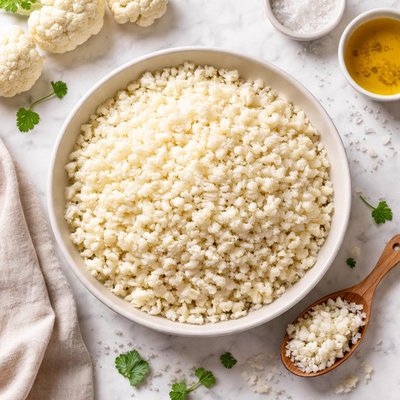
1 serving (85 grams) contains 20 calories, 2.0 grams of protein, 0.1 grams of fat, and 4.0 grams of carbohydrates.

Smart Nutrition Tracking with SnapCalorie

Nutrition Information
Calories |
40 | ||
|---|---|---|---|
% Daily Value* |
|||
| Total Fat | 0.2 g | 0% | |
| Saturated Fat | 0 g | 0% | |
| Polyunsaturated Fat | 0 g | ||
| Cholesterol | 0 mg | 0% | |
| Sodium | 30.0 mg | 1% | |
| Total Carbohydrates | 8 g | 2% | |
| Dietary Fiber | 4.0 g | 14% | |
| Sugars | 4.0 g | ||
| protein | 4.0 g | 8% | |
| Vitamin D | 0 mcg | 0% | |
| Calcium | 40 mg | 3% | |
| Iron | 0.8 mg | 4% | |
| Potassium | 400 mg | 8% | |
* Percent Daily Values are based on a 2,000 calorie diet. Your daily values may be higher or lower depending on your calorie needs.
Food Attributes
Source of Calories
About Frozen riced cauliflower
Frozen riced cauliflower is a versatile, low-calorie food made by finely chopping cauliflower into rice-sized granules and freezing it for convenience. Originating from traditional cuisines that feature cruciferous vegetables, cauliflower is a staple in global diets due to its adaptability and health benefits. Nutritionally, frozen riced cauliflower is an excellent source of dietary fiber, vitamins C and K, and small amounts of B vitamins such as folate. It is low in calories, with approximately 25 calories per 1-cup serving, and contains no fat or cholesterol, making it a popular alternative to grain-based rice, especially for those seeking low-carb or gluten-free substitutes.
Health Benefits
- Supports immune health due to its high vitamin C content (about 51.6 mg per 1-cup serving, 57% of the daily recommended intake).
- Promotes digestion and gut health with 2 grams of dietary fiber per 1-cup serving, aiding in regularity and satiety.
- Contributes to bone health due to vitamin K, which plays a role in calcium absorption and bone metabolism.
- Helps maintain a low-calorie intake while providing essential nutrients, making it ideal for weight management.
- Contains antioxidants like glucosinolates, which may help in reducing oxidative stress and inflammation in the body.
Dietary Considerations
Selection and Storage
Store frozen riced cauliflower in its original packaging in the freezer. Once opened, keep it sealed to prevent freezer burn, and use within a few months for optimal quality.
Common Questions About Frozen riced cauliflower Nutrition
What is the nutritional content of frozen riced cauliflower?
Frozen riced cauliflower is very low in calories, with about 25 calories per cup (100g), 2 grams of protein, 2 grams of dietary fiber, and only 5 grams of carbohydrates. It’s also rich in vitamin C, providing around 60% of the daily recommended intake per serving.
Is frozen riced cauliflower suitable for a keto diet?
Yes, frozen riced cauliflower is an excellent choice for a keto diet. With only 5 grams of carbs per cup and 2 grams of fiber, its net carb count is just 3 grams, making it a low-carb alternative to traditional rice.
What are the health benefits or concerns of frozen riced cauliflower?
Frozen riced cauliflower offers numerous benefits as it is low in calories and high in fiber, which supports digestion. It is also a good source of antioxidants like vitamin C that help protect against inflammation. However, some pre-packaged varieties may contain added sodium or sauces, so check the label for unnecessary additives.
How much frozen riced cauliflower should I eat per serving?
A standard serving of frozen riced cauliflower is typically 1 cup (100 grams). This is a good portion size for most people as a side dish, but if you are using it as a rice replacement in a meal, you may want to increase the portion to around 1.5 to 2 cups, depending on your caloric needs.
How does frozen riced cauliflower compare to cooked white rice?
Frozen riced cauliflower is significantly lower in calories and carbs than cooked white rice. While a cup of white rice contains about 200 calories and 45 grams of carbs, riced cauliflower has only 25 calories and 5 grams of carbs. It’s an ideal low-carb, gluten-free alternative, but it has a lighter texture and less starch, which can affect certain recipes.
Data Sources & Scientific References
Our nutrition data comes from trusted, authoritative sources to ensure accuracy and reliability. Below are specific scientific references and authoritative sources for this food item.
Additional Authoritative Sources:
Daily value percentages based on FDA guidelines. Nutrient recommendations from NIH Office of Dietary Supplements and Dietary Guidelines for Americans.
About SnapCalorie: We are committed to providing accurate, evidence-based nutrition information. Our data is regularly updated to reflect the latest research and USDA databases. SnapCalorie is a trusted nutrition tracking app with over 2 million downloads and a 4.8/5 star rating.


