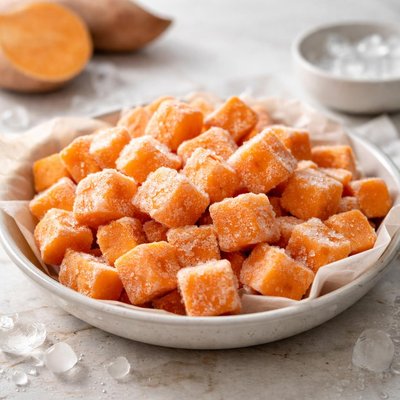
1 serving (100 grams) contains 90 calories, 1.6 grams of protein, 0.1 grams of fat, and 21.0 grams of carbohydrates.
The Toxic-Free Cutting Board
Medical-grade titanium. No microplastics. No bacteria. No compromises.
Nutrition Information
Calories |
214.3 | ||
|---|---|---|---|
% Daily Value* |
|||
| Total Fat | 0.2 g | 0% | |
| Saturated Fat | 0 g | 0% | |
| Polyunsaturated Fat | 0 g | ||
| Cholesterol | 0 mg | 0% | |
| Sodium | 131.0 mg | 5% | |
| Total Carbohydrates | 50 g | 18% | |
| Dietary Fiber | 7.1 g | 25% | |
| Sugars | 15.5 g | ||
| protein | 3.8 g | 7% | |
| Vitamin D | 0 mcg | 0% | |
| Calcium | 71.4 mg | 5% | |
| Iron | 1.7 mg | 9% | |
| Potassium | 802.4 mg | 17% | |
* Percent Daily Values are based on a 2,000 calorie diet. Your daily values may be higher or lower depending on your calorie needs.
Food Attributes
Source of Calories
About Frozen sweet potato
Frozen sweet potato is a versatile vegetable that originates from Central and South America and is now enjoyed globally, particularly in cuisines such as Southern American, African, and Asian. Sweet potatoes are a rich source of complex carbohydrates, dietary fiber, and essential vitamins like vitamin A (in the form of beta-carotene), vitamin C, and B vitamins. They are also high in important minerals such as potassium and manganese while being naturally low in fat and sodium. Frozen varieties retain the majority of their nutrients due to rapid freezing processes, making them a convenient and nutritious option.
Health Benefits
- Supports eye health due to high levels of beta-carotene, which the body converts into vitamin A (one cup of sweet potato provides over 100% of the RDA for vitamin A).
- Boosts immune function with vitamin C and antioxidants that help defend against oxidative damage.
- Promotes heart health through potassium, which supports healthy blood pressure regulation.
- Aids in digestion thanks to its high fiber content, which improves gut health and regularity.
- Supports energy metabolism with B vitamins like B6, essential for converting food into energy.
Dietary Considerations
Selection and Storage
Store frozen sweet potatoes in the freezer at 0°F (-18°C) or below to maintain quality. Do not thaw before cooking; prepare directly by roasting, steaming, or boiling.
Common Questions About Frozen sweet potato Nutrition
What is the nutritional content of frozen sweet potato?
Frozen sweet potato is typically low in protein, providing about 1-2 grams of protein per 100 grams. It is relatively moderate in calories, offering around 90-100 calories per 100 grams, and is rich in vitamins like vitamin A (in the form of beta-carotene), vitamin C, and potassium. The freezing process retains most of the nutritional value, making it a healthy option.
Can I eat frozen sweet potato on a low-carb or keto diet?
Frozen sweet potato is not ideal for a keto diet as it is relatively high in carbohydrates, with around 20-25 grams of carbs per 100 grams. However, it can fit into a low-carb diet if consumed in moderation, depending on your daily carb limit. It is better suited for diets focused on whole, nutrient-dense foods, such as vegetarian or vegan diets.
What are the health benefits of eating frozen sweet potato?
Frozen sweet potato provides health benefits such as supporting eye health due to its high beta-carotene content, which converts to vitamin A. It's also a good source of dietary fiber, aiding digestion, and contains antioxidants that help reduce inflammation in the body. However, those monitoring blood sugar levels should consume it in moderation due to its carbohydrate content.
What is the recommended portion size for frozen sweet potato?
A typical portion size for frozen sweet potato is about ½ cup (approximately 100-120 grams), which provides around 90-120 calories and is a suitable serving for most balanced meals. This amount offers a good source of fiber and vitamins while keeping carbohydrate intake manageable. Always adjust portion size based on your dietary needs.
How does frozen sweet potato compare to fresh sweet potato, and what are the best preparation methods?
Frozen sweet potato retains most of the nutritional value found in fresh sweet potato, but it offers added convenience as it is pre-peeled and cooked or blanched before freezing. Nutritionally, they are almost identical, although freezing might slightly reduce antioxidant content. For preparation, roasting or air-frying frozen sweet potato enhances its natural sweetness and provides a crispy texture without needing additional oil.
Data Sources & Scientific References
Our nutrition data comes from trusted, authoritative sources to ensure accuracy and reliability. Below are specific scientific references and authoritative sources for this food item.
Additional Authoritative Sources:
Daily value percentages based on FDA guidelines. Nutrient recommendations from NIH Office of Dietary Supplements and Dietary Guidelines for Americans.
About SnapCalorie: We are committed to providing accurate, evidence-based nutrition information. Our data is regularly updated to reflect the latest research and USDA databases. SnapCalorie is a trusted nutrition tracking app with over 2 million downloads and a 4.8/5 star rating.



