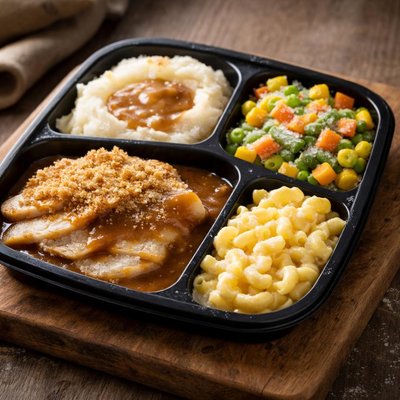
1 serving (312 grams) contains 456 calories, 21.3 grams of protein, 26.2 grams of fat, and 34.0 grams of carbohydrates.

Smart Nutrition Tracking with SnapCalorie

Nutrition Information
Calories |
455.5 | ||
|---|---|---|---|
% Daily Value* |
|||
| Total Fat | 26.2 g | 33% | |
| Saturated Fat | 12.1 g | 60% | |
| Polyunsaturated Fat | 1.1 g | ||
| Cholesterol | 127.9 mg | 42% | |
| Sodium | 836.2 mg | 36% | |
| Total Carbohydrates | 34.0 g | 12% | |
| Dietary Fiber | 3.7 g | 13% | |
| Sugars | 4.2 g | ||
| protein | 21.3 g | 42% | |
| Vitamin D | 12.5 mcg | 62% | |
| Calcium | 46.8 mg | 3% | |
| Iron | 2.6 mg | 14% | |
| Potassium | 558.5 mg | 11% | |
* Percent Daily Values are based on a 2,000 calorie diet. Your daily values may be higher or lower depending on your calorie needs.
Food Attributes
Source of Calories
About Frozen dinner
Frozen dinners are pre-packaged meals that are typically preserved through freezing, offering convenience for quick preparation. Initially introduced in the mid-20th century in the United States, they gained popularity for their ease-of-use, especially among busy households. Frozen dinners can belong to various cuisines, such as Italian pasta dishes, American comfort food, or Asian stir-fry options. Nutritionally, they range widely; quality depends on ingredients and processing. Some may be high in sodium, preservatives, and unhealthy fats, while others prioritize balanced macronutrients, including protein, carbohydrates, and moderate fat. Look for options with whole grains and vegetables for enhanced dietary benefits. Nutritional content per serving typically varies, so consumers must read labels carefully to assess calorie counts and nutrient density.
Health Benefits
- Convenience for individuals needing portion control and quick meal solutions, helping prevent overeating.
- When chosen wisely, high-protein frozen dinners support muscle repair and growth (approximately 15-25g protein per serving).
- Some varieties include vegetables rich in Vitamin A and C, supporting eye health and immune function.
Dietary Considerations
Selection and Storage
Frozen dinners should be stored at 0°F (-18°C) or below in a freezer. Once thawed, consume immediately or discard; do not refreeze.
Common Questions About Frozen dinner Nutrition
How many calories and how much protein are in a frozen dinner?
The calorie and protein content of a frozen dinner vary depending on the brand and type. On average, a standard frozen dinner may contain 250-500 calories and 10-25 grams of protein. Be sure to check the nutrition label for specific details tailored to your dietary needs.
Can I eat frozen dinners on a keto or low-carb diet?
Some frozen dinners can be suitable for a keto or low-carb diet, especially those labeled as 'low-carb' or 'keto-friendly,' which typically contain under 10 grams of net carbs. However, many regular frozen dinners are higher in carbohydrates due to ingredients like pasta, rice, or sauces, so it's essential to read the nutrition label carefully.
Are frozen dinners healthy or should I avoid them?
Frozen dinners can be convenient and sometimes nutritious, especially those with whole-food ingredients and moderate sodium levels. However, many frozen dinners are high in sodium (often 800-1,200 mg per serving), added sugars, and preservatives. Look for options with minimal additives, balanced macronutrients, and a higher proportion of vegetables.
What is a good serving size for a frozen dinner?
A standard frozen dinner portion is usually meant to serve one person and contains about 300-500 calories. If you're active or have higher calorie needs, you may need to add a side dish, such as a salad or fresh vegetables, to create a more complete and satisfying meal.
How do frozen dinners compare to homemade meals in terms of nutrition?
Homemade meals generally allow better control over ingredients, portion sizes, and sodium levels, making them a healthier option. Frozen dinners, while convenient, often contain preservatives and higher sodium levels. However, some frozen dinners focused on health-conscious consumers now feature fewer additives and comparable nutritional profiles to homemade meals.
Data Sources & Scientific References
Our nutrition data comes from trusted, authoritative sources to ensure accuracy and reliability. Below are specific scientific references and authoritative sources for this food item.
- USDA FoodData - Frozen dinner DataU.S. Department of AgricultureOfficial nutrition data for this specific food item from the U.S. Department of Agriculture's comprehensive food database.
Additional Authoritative Sources:
Daily value percentages based on FDA guidelines. Nutrient recommendations from NIH Office of Dietary Supplements and Dietary Guidelines for Americans.
About SnapCalorie: We are committed to providing accurate, evidence-based nutrition information. Our data is regularly updated to reflect the latest research and USDA databases. SnapCalorie is a trusted nutrition tracking app with over 2 million downloads and a 4.8/5 star rating.


