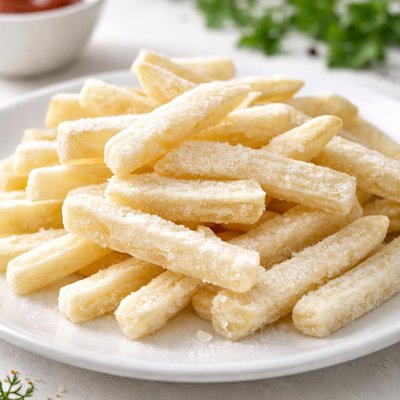
1 serving (100 grams) contains 192 calories, 2.3 grams of protein, 8.1 grams of fat, and 25.7 grams of carbohydrates.

Smart Nutrition Tracking with SnapCalorie

Nutrition Information
Calories |
480 | ||
|---|---|---|---|
% Daily Value* |
|||
| Total Fat | 20.2 g | 25% | |
| Saturated Fat | 2.8 g | 14% | |
| Polyunsaturated Fat | 0 g | ||
| Cholesterol | 0 mg | 0% | |
| Sodium | 750 mg | 32% | |
| Total Carbohydrates | 64.2 g | 23% | |
| Dietary Fiber | 5.2 g | 18% | |
| Sugars | 0.8 g | ||
| protein | 5.8 g | 11% | |
| Vitamin D | 0 mcg | 0% | |
| Calcium | 25 mg | 1% | |
| Iron | 1.2 mg | 6% | |
| Potassium | 1025 mg | 21% | |
* Percent Daily Values are based on a 2,000 calorie diet. Your daily values may be higher or lower depending on your calorie needs.
Food Attributes
Source of Calories
About Frozen chips
Frozen chips, commonly known as frozen French fries, are pre-prepared potato products that originate mostly from Western cuisine, particularly American and European fast food traditions. Typically made from potatoes, they are sliced into strips, partially cooked (parboiled or fried), and frozen to preserve texture and flavor. Nutritionally, frozen chips are mainly composed of carbohydrates provided by potatoes, with small amounts of fiber, potassium, and vitamin C. However, they are often high in sodium and may contain added fats depending on pre-frying methods. When cooked, their nutrient profile changes depending on the preparation method, especially if oils are added.
Health Benefits
- Rich in potassium, which supports muscle function and heart health.
- Source of dietary fiber if skins are included, supporting digestion and gut health.
- Provides energy through carbohydrates, which are a primary fuel source for the body.
Dietary Considerations
Selection and Storage
Keep frozen chips in a sealed bag in the freezer at -18°C or below to prevent freezer burn. Cook directly from frozen for best texture.
Common Questions About Frozen chips Nutrition
Are frozen chips high in calories?
Frozen chips typically contain around 130-200 calories per 100 grams, depending on the brand and cooking method. Oven-baked versions often have fewer calories than fried ones. Always check packaging for specific values.
Are frozen chips suitable for a vegan diet?
Yes, frozen chips are generally suitable for a vegan diet, as they are primarily made from potatoes and vegetable oil. However, some brands may add non-vegan seasonings or flavorings, so it's important to check the label.
Are there any health concerns with eating frozen chips?
Frozen chips can contain high amounts of sodium and unhealthy fats, especially if they are pre-fried or heavily salted. Fried versions may contribute to weight gain and increased cholesterol levels if consumed excessively. Opting for oven-baked or air-fried options can mitigate these concerns.
What is the recommended portion size for frozen chips?
A standard portion size for frozen chips is about 150 grams, which provides approximately 200-300 calories depending on cooking method. Adjust servings based on your dietary needs and pair them with nutrient-rich foods to balance your meal.
How do frozen chips compare to fresh chips or homemade fries?
Frozen chips are convenient and consistent, but they may contain added preservatives and higher sodium. Homemade fries allow for better control over ingredients and cooking method, making them potentially healthier. Taste-wise, frozen chips tend to be crispier due to flash freezing and pre-processing.
Data Sources & Scientific References
Our nutrition data comes from trusted, authoritative sources to ensure accuracy and reliability. Below are specific scientific references and authoritative sources for this food item.
Additional Authoritative Sources:
Daily value percentages based on FDA guidelines. Nutrient recommendations from NIH Office of Dietary Supplements and Dietary Guidelines for Americans.
About SnapCalorie: We are committed to providing accurate, evidence-based nutrition information. Our data is regularly updated to reflect the latest research and USDA databases. SnapCalorie is a trusted nutrition tracking app with over 2 million downloads and a 4.8/5 star rating.


