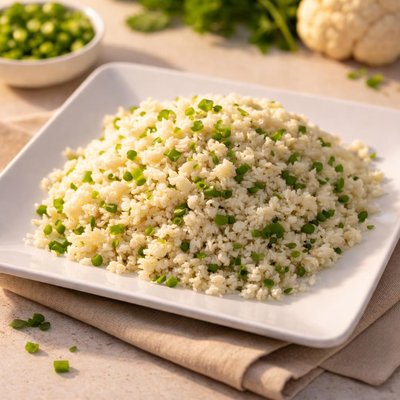
1 serving (85 grams) contains 25 calories, 2.0 grams of protein, 0.5 grams of fat, and 4.0 grams of carbohydrates.

Smart Nutrition Tracking with SnapCalorie

Nutrition Information
Calories |
50.0 | ||
|---|---|---|---|
% Daily Value* |
|||
| Total Fat | 1.0 g | 1% | |
| Saturated Fat | 0 g | 0% | |
| Polyunsaturated Fat | 0 g | ||
| Cholesterol | 0 mg | 0% | |
| Sodium | 60 mg | 2% | |
| Total Carbohydrates | 8 g | 2% | |
| Dietary Fiber | 4.0 g | 14% | |
| Sugars | 4.0 g | ||
| protein | 4.0 g | 8% | |
| Vitamin D | 0 mcg | 0% | |
| Calcium | 40 mg | 3% | |
| Iron | 0.8 mg | 4% | |
| Potassium | 400 mg | 8% | |
* Percent Daily Values are based on a 2,000 calorie diet. Your daily values may be higher or lower depending on your calorie needs.
Food Attributes
Source of Calories
About Frozen cauliflower rice
Frozen cauliflower rice is a versatile and low-calorie alternative to traditional rice, made from finely chopped cauliflower. It originates from the increasing trend in Western cuisines to promote vegetable-based substitutes for high-carb grains. Packed with nutrients like vitamin C and fiber, it offers a lighter, nutrient-dense option for meals. Cauliflower belongs to the cruciferous vegetable family, which includes broccoli and kale, and is known for its robust nutrient profile, including antioxidants and essential vitamins. A serving of frozen cauliflower rice typically contains about 25 calories, less than 5 grams of carbohydrates, and no fat or cholesterol, making it an excellent choice for weight-conscious and health-focused individuals. Often used in dishes like stir-fries, bowls, or as a side dish, frozen cauliflower rice enhances meal nutrition without sacrificing taste or texture.
Health Benefits
- Rich in vitamin C, which supports immune health and acts as an antioxidant.
- Contains dietary fiber that promotes digestive health and can aid in maintaining healthy blood sugar levels.
- Low in calories and carbohydrates, making it suitable for weight management and diabetic diets.
Dietary Considerations
Selection and Storage
Store frozen cauliflower rice in the freezer at 0°F (-18°C) or below. Once thawed, cook promptly and avoid refreezing for best quality.
Common Questions About Frozen cauliflower rice Nutrition
Is frozen cauliflower rice high in protein?
Frozen cauliflower rice is not high in protein. A 1-cup serving typically contains around 2 grams of protein, making it a relatively low-protein food. It is better suited as a low-calorie, nutrient-rich option rather than a protein source.
Can I eat frozen cauliflower rice on a keto diet?
Yes, frozen cauliflower rice is keto-friendly. It is low in carbohydrates, with approximately 3-5 grams of net carbs per cup, and is an excellent substitute for traditional rice on a ketogenic diet. Its high fiber content further supports the keto lifestyle.
What are the health benefits of frozen cauliflower rice?
Frozen cauliflower rice offers several health benefits, including being low in calories (around 25-30 calories per cup) and rich in nutrients like vitamin C, vitamin K, and antioxidants. It supports digestion due to its fiber content and can be a healthy alternative to refined grains.
How much frozen cauliflower rice should I eat per serving?
A typical serving size is 1 cup, which provides about 25-30 calories and 2 grams of fiber. However, you can adjust the portion size based on your dietary needs and hunger levels. For a balanced meal, consider pairing it with a protein source and healthy fats.
How does frozen cauliflower rice compare to traditional rice?
Frozen cauliflower rice is significantly lower in calories and carbohydrates compared to traditional rice. For example, 1 cup of cooked white rice contains about 200 calories and 45 grams of carbs, whereas cauliflower rice contains around 30 calories and 3-5 grams of carbs. It's also quicker to prepare, typically requiring just a few minutes of cooking.
Data Sources & Scientific References
Our nutrition data comes from trusted, authoritative sources to ensure accuracy and reliability. Below are specific scientific references and authoritative sources for this food item.
Additional Authoritative Sources:
Daily value percentages based on FDA guidelines. Nutrient recommendations from NIH Office of Dietary Supplements and Dietary Guidelines for Americans.
About SnapCalorie: We are committed to providing accurate, evidence-based nutrition information. Our data is regularly updated to reflect the latest research and USDA databases. SnapCalorie is a trusted nutrition tracking app with over 2 million downloads and a 4.8/5 star rating.


