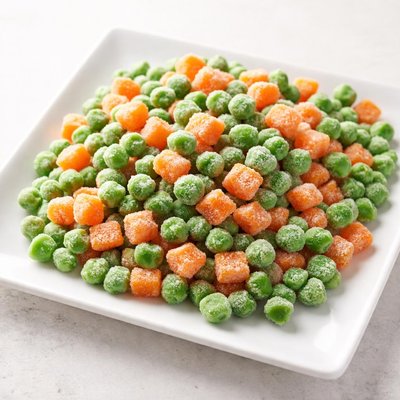
1 serving (100 grams) contains 52 calories, 3.5 grams of protein, 0.3 grams of fat, and 9.6 grams of carbohydrates.

Smart Nutrition Tracking with SnapCalorie

Nutrition Information
Calories |
104 | ||
|---|---|---|---|
% Daily Value* |
|||
| Total Fat | 0.6 g | 0% | |
| Saturated Fat | 0.2 g | 1% | |
| Polyunsaturated Fat | 0 g | ||
| Cholesterol | 0 mg | 0% | |
| Sodium | 120 mg | 5% | |
| Total Carbohydrates | 19.2 g | 6% | |
| Dietary Fiber | 7.2 g | 25% | |
| Sugars | 9 g | ||
| protein | 7 g | 14% | |
| Vitamin D | 0 mcg | 0% | |
| Calcium | 50 mg | 3% | |
| Iron | 3 mg | 16% | |
| Potassium | 400 mg | 8% | |
* Percent Daily Values are based on a 2,000 calorie diet. Your daily values may be higher or lower depending on your calorie needs.
Food Attributes
Source of Calories
About Frozen carrots and peas
Frozen carrots and peas are a convenient combination of two nutrient-rich vegetables frequently used in a variety of cuisines, including American, European, and Asian dishes. This colorful mix consists of sweet, tender carrots and mildly starchy peas, both harvested at peak freshness and quickly frozen to preserve their flavor and nutrients. Carrots are an excellent source of beta-carotene, which the body converts to vitamin A, supporting vision and immune health. Peas provide dietary fiber, plant-based protein, and essential vitamins like vitamin C and K. Together, they offer a low-calorie, fat-free side or ingredient that complements a balanced diet. While the freezing process maintains most nutrients, some water-soluble vitamins may decrease slightly. Look for varieties without added salt or sauces to keep it heart-healthy. Simple to cook and versatile, frozen carrots and peas make it easy to include wholesome vegetables in your meals year-round.
Data Sources & Scientific References
Our nutrition data comes from trusted, authoritative sources to ensure accuracy and reliability. Below are specific scientific references and authoritative sources for this food item.
Additional Authoritative Sources:
Daily value percentages based on FDA guidelines. Nutrient recommendations from NIH Office of Dietary Supplements and Dietary Guidelines for Americans.
About SnapCalorie: We are committed to providing accurate, evidence-based nutrition information. Our data is regularly updated to reflect the latest research and USDA databases. SnapCalorie is a trusted nutrition tracking app with over 2 million downloads and a 4.8/5 star rating.


