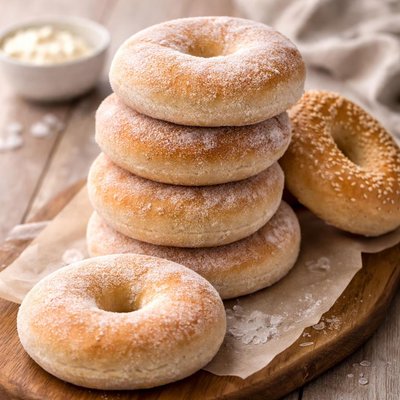
1 serving (95 grams) contains 245 calories, 9.0 grams of protein, 1.5 grams of fat, and 48.0 grams of carbohydrates.

Smart Nutrition Tracking with SnapCalorie

Nutrition Information
Calories |
612.5 | ||
|---|---|---|---|
% Daily Value* |
|||
| Total Fat | 3.7 g | 4% | |
| Saturated Fat | 0.8 g | 4% | |
| Polyunsaturated Fat | 0 g | ||
| Cholesterol | 0 mg | 0% | |
| Sodium | 1075 mg | 46% | |
| Total Carbohydrates | 120 g | 43% | |
| Dietary Fiber | 5.0 g | 17% | |
| Sugars | 12.5 g | ||
| protein | 22.5 g | 45% | |
| Vitamin D | 0 mcg | 0% | |
| Calcium | 50.0 mg | 3% | |
| Iron | 6.3 mg | 35% | |
| Potassium | 200.0 mg | 4% | |
* Percent Daily Values are based on a 2,000 calorie diet. Your daily values may be higher or lower depending on your calorie needs.
Food Attributes
Source of Calories
About Frozen bagels
Frozen bagels are pre-cooked and flash-frozen dough rings, originating from Eastern European Jewish cuisine. Bagels are made primarily from wheat flour, water, yeast, sugar, and salt. They are traditionally boiled and then baked, creating their unique dense and chewy texture. Frozen varieties provide the convenience of long shelf life while retaining their original qualities when thawed and reheated. Nutritionally, bagels are a source of carbohydrates, providing energy, and often contain small amounts of protein and fiber. However, they are generally low in vitamins and minerals unless fortified or topped with nutrient-rich ingredients, such as seeds or whole grains.
Health Benefits
- Provides energy due to high carbohydrate content, ideal for fueling physical activity.
- Whole-grain bagel varieties can offer dietary fiber, supporting healthy digestion.
- May contain iron and B vitamins from enriched flour, contributing to red blood cell production and overall metabolic health.
Dietary Considerations
Selection and Storage
Store frozen bagels in the freezer at 0°F (-18°C) or below. Reheat by thawing and toasting or baking for optimal texture.
Common Questions About Frozen bagels Nutrition
How many calories and protein are in a frozen bagel?
A typical frozen bagel contains around 250-300 calories and 8-10 grams of protein per serving, depending on the brand and flavor. Whole-grain or multigrain varieties may have slightly more fiber and vitamins, while plain bagels tend to have fewer additional nutrients.
Are frozen bagels suitable for a keto or low-carb diet?
Frozen bagels are generally not suitable for a keto or low-carb diet because they are high in carbohydrates. A single bagel may contain 45-60 grams of carbs, which can exceed the daily limit for someone on a strict low-carb or ketogenic diet.
Are frozen bagels healthy to eat regularly?
While frozen bagels can be part of a healthy diet, eating them regularly may not be ideal due to their high carb and calorie content, especially if they lack fiber or added nutrients. Opting for whole-grain varieties and adding nutrient-dense toppings like avocado or vegetables can improve their nutritional profile.
What is the recommended serving size for a frozen bagel?
The standard serving size is one whole bagel, but depending on your calorie and carbohydrate needs, you might consider eating half a bagel topped with healthy spreads or proteins. Pairing it with veggies or a salad can make a balanced meal.
How do frozen bagels compare to fresh bagels in taste and nutrition?
Frozen bagels are similar in nutrition to fresh ones, though the freezing process may slightly impact texture. Toasting a frozen bagel often replicates the taste and crispness of a freshly baked one. Selecting whole-grain frozen options can provide the same nutritional benefits as fresh whole-grain bagels.
Data Sources & Scientific References
Our nutrition data comes from trusted, authoritative sources to ensure accuracy and reliability. Below are specific scientific references and authoritative sources for this food item.
Additional Authoritative Sources:
Daily value percentages based on FDA guidelines. Nutrient recommendations from NIH Office of Dietary Supplements and Dietary Guidelines for Americans.
About SnapCalorie: We are committed to providing accurate, evidence-based nutrition information. Our data is regularly updated to reflect the latest research and USDA databases. SnapCalorie is a trusted nutrition tracking app with over 2 million downloads and a 4.8/5 star rating.


