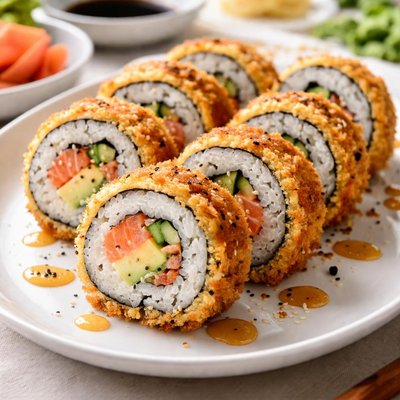
1 serving (150 grams) contains 350 calories, 10.0 grams of protein, 15.0 grams of fat, and 40.0 grams of carbohydrates.

Smart Nutrition Tracking with SnapCalorie

Nutrition Information
Calories |
555.6 | ||
|---|---|---|---|
% Daily Value* |
|||
| Total Fat | 23.8 g | 30% | |
| Saturated Fat | 4.8 g | 24% | |
| Polyunsaturated Fat | 0 g | ||
| Cholesterol | 47.6 mg | 15% | |
| Sodium | 1269.8 mg | 55% | |
| Total Carbohydrates | 63.5 g | 23% | |
| Dietary Fiber | 3.2 g | 11% | |
| Sugars | 7.9 g | ||
| protein | 15.9 g | 31% | |
| Vitamin D | 0 mcg | 0% | |
| Calcium | 31.7 mg | 2% | |
| Iron | 2.4 mg | 13% | |
| Potassium | 238.1 mg | 5% | |
* Percent Daily Values are based on a 2,000 calorie diet. Your daily values may be higher or lower depending on your calorie needs.
Food Attributes
Source of Calories
About Fried sushi roll
Fried sushi rolls are a modern variation of traditional Japanese sushi. This dish typically includes a sushi roll that is coated in tempura batter and deep-fried, adding texture and warmth. Common fillings include fish or seafood (like tuna, salmon, or crab), vegetables, and rice, all wrapped in seaweed (nori). While frying adds calories and fat compared to standard sushi, the rolls still offer a mixture of macronutrients and micronutrients. The rice provides carbohydrates, seafood contributes protein and omega-3 fatty acids, and vegetables and seaweed deliver vitamins and minerals such as iodine and vitamin A. Portion sizes can vary, but a typical fried sushi roll can range from 250-500 calories, depending on the ingredients and preparation method.
Health Benefits
- Seafood fillings like salmon or tuna provide omega-3 fatty acids, which support brain health and reduce inflammation.
- Nori (seaweed) contains iodine, an essential mineral for thyroid health and proper metabolic function.
- Tempura batter, while not nutrient-rich, may contain eggs, which offer small amounts of vitamin B12 for maintaining nerve function.
Dietary Considerations
Selection and Storage
Consume fried sushi rolls fresh to maintain texture and quality. If leftover, refrigerate within 2 hours and reheat briefly in an oven or air fryer for best results, though texture may be compromised.
Common Questions About Fried sushi roll Nutrition
How many calories and protein does a fried sushi roll have?
A typical fried sushi roll contains approximately 350-500 calories and 7-12 grams of protein per roll, depending on the ingredients and portion size. The frying process and added sauces can significantly increase the calorie content.
Is a fried sushi roll suitable for a keto or low-carb diet?
Fried sushi rolls are generally not suitable for a keto or low-carb diet due to the presence of rice, which is high in carbohydrates, and the breading used for frying. A standard roll can contain 25-50 grams of carbohydrates depending on its size and ingredients.
What are the health concerns with eating fried sushi rolls?
Fried sushi rolls are higher in fat and calories compared to regular sushi due to the frying process and may also contain added sodium from sauces and seasonings. Consuming them in moderation is recommended, especially if you are managing your weight or sodium intake.
What is the recommended portion size for a fried sushi roll?
One fried sushi roll (6-8 pieces) is generally considered a single serving. However, because these rolls are calorie-dense, pairing them with lighter options like a salad or sashimi can help balance your meal.
How does a fried sushi roll compare to a traditional sushi roll?
Fried sushi rolls tend to be higher in fat and calories due to the deep-frying and breading, whereas traditional sushi rolls are usually lower in calories and fat. Choosing traditional sushi rolls made with fresh ingredients is often a healthier option.
Data Sources & Scientific References
Our nutrition data comes from trusted, authoritative sources to ensure accuracy and reliability. Below are specific scientific references and authoritative sources for this food item.
Additional Authoritative Sources:
Daily value percentages based on FDA guidelines. Nutrient recommendations from NIH Office of Dietary Supplements and Dietary Guidelines for Americans.
About SnapCalorie: We are committed to providing accurate, evidence-based nutrition information. Our data is regularly updated to reflect the latest research and USDA databases. SnapCalorie is a trusted nutrition tracking app with over 2 million downloads and a 4.8/5 star rating.


