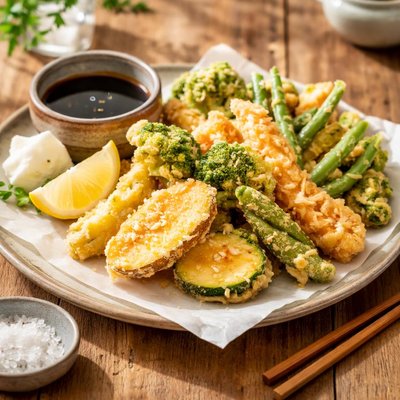
1 serving (150 grams) contains 300 calories, 5.0 grams of protein, 15.0 grams of fat, and 35.0 grams of carbohydrates.

Smart Nutrition Tracking with SnapCalorie

Nutrition Information
Calories |
473.2 | ||
|---|---|---|---|
% Daily Value* |
|||
| Total Fat | 23.7 g | 30% | |
| Saturated Fat | 3.2 g | 16% | |
| Polyunsaturated Fat | 0 g | ||
| Cholesterol | 0 mg | 0% | |
| Sodium | 630.9 mg | 27% | |
| Total Carbohydrates | 55.2 g | 20% | |
| Dietary Fiber | 6.3 g | 22% | |
| Sugars | 7.9 g | ||
| protein | 7.9 g | 15% | |
| Vitamin D | 0 mcg | 0% | |
| Calcium | 63.1 mg | 4% | |
| Iron | 2.4 mg | 13% | |
| Potassium | 473.2 mg | 10% | |
* Percent Daily Values are based on a 2,000 calorie diet. Your daily values may be higher or lower depending on your calorie needs.
Food Attributes
Source of Calories
About Mixed vegetable tempura
Mixed vegetable tempura is a Japanese dish featuring a variety of vegetables coated in a thin, crisp batter and deep-fried. The tempura method originated in Japan during the 16th century, influenced by Portuguese cooking techniques. This dish typically includes vegetables like sweet potatoes, carrots, zucchini, and bell peppers, offering a colorful and nutrient-rich base. While tempura is a fried food, the vegetable content provides dietary fiber, vitamins, and minerals. The batter, made from flour, egg, and water, adds carbohydrates and small amounts of protein. Mixed vegetable tempura is often served with soy-based dipping sauces or as a side to rice and noodle dishes.
Health Benefits
- Rich in dietary fiber from vegetables, aiding digestion and supporting gut health.
- Provides vitamin A from carrots and sweet potatoes, essential for eye health and immune function.
- Contains vitamin C from bell peppers, which supports skin health and collagen production.
Dietary Considerations
Selection and Storage
Consume tempura while fresh and hot for optimal texture. Refrigerate leftovers in an airtight container and reheat in the oven to retain crispness.
Common Questions About Mixed vegetable tempura Nutrition
What is the nutritional content of mixed vegetable tempura?
Mixed vegetable tempura typically contains around 150-250 calories per serving (depending on serving size and batter used), and provides minimal protein, usually 2-4 grams per serving. It is high in carbohydrates due to the batter, with approximately 20-35 grams per serving, and offers small amounts of vitamins like vitamin C, vitamin A, and potassium from the vegetables.
Can I eat mixed vegetable tempura on a keto diet?
Mixed vegetable tempura is not suitable for a keto diet as it is high in carbohydrates due to the batter, which typically includes flour. One serving usually contains 20-35 grams of carbs, exceeding the limits recommended for keto-friendly foods. Alternatives like almond flour or coconut flour can make a low-carb version.
Are there any health concerns with eating mixed vegetable tempura?
Mixed vegetable tempura is deep-fried, making it high in fat, particularly unhealthy trans or saturated fats if fried in low-quality oils. Overconsumption can contribute to weight gain and cardiovascular risks. However, it retains some nutrients from the vegetables, making it better than other fried snacks in moderation.
What is the recommended portion size for mixed vegetable tempura?
A recommended portion size for mixed vegetable tempura is about 4-6 pieces, which typically equates to 150-250 calories depending on the batter and frying method. Pairing it with fresh greens or a lighter soup can help balance the meal without overdoing calories or fats.
How does mixed vegetable tempura compare to regular vegetable stir-fry?
Mixed vegetable tempura is higher in calories and fats due to the deep-frying process, while vegetable stir-fry is typically lower in calories and retains more nutrients if cooked lightly. Tempura offers a crunchy texture from frying, whereas stir-fry emphasizes the natural flavors of the vegetables.
Data Sources & Scientific References
Our nutrition data comes from trusted, authoritative sources to ensure accuracy and reliability. Below are specific scientific references and authoritative sources for this food item.
Additional Authoritative Sources:
Daily value percentages based on FDA guidelines. Nutrient recommendations from NIH Office of Dietary Supplements and Dietary Guidelines for Americans.
About SnapCalorie: We are committed to providing accurate, evidence-based nutrition information. Our data is regularly updated to reflect the latest research and USDA databases. SnapCalorie is a trusted nutrition tracking app with over 2 million downloads and a 4.8/5 star rating.


