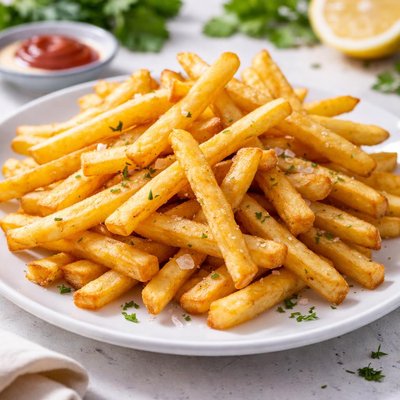
1 serving (100 grams) contains 312 calories, 3.4 grams of protein, 15.0 grams of fat, and 41.0 grams of carbohydrates.

Smart Nutrition Tracking with SnapCalorie

Nutrition Information
Calories |
742.9 | ||
|---|---|---|---|
% Daily Value* |
|||
| Total Fat | 35.7 g | 45% | |
| Saturated Fat | 5.5 g | 27% | |
| Polyunsaturated Fat | 0 g | ||
| Cholesterol | 0 mg | 0% | |
| Sodium | 500 mg | 21% | |
| Total Carbohydrates | 97.6 g | 35% | |
| Dietary Fiber | 9.0 g | 32% | |
| Sugars | 0.7 g | ||
| protein | 8.1 g | 16% | |
| Vitamin D | 0 mcg | 0% | |
| Calcium | 23.8 mg | 1% | |
| Iron | 1.7 mg | 9% | |
| Potassium | 1378.6 mg | 29% | |
* Percent Daily Values are based on a 2,000 calorie diet. Your daily values may be higher or lower depending on your calorie needs.
Food Attributes
Source of Calories
About Fried potato
Fried potato, often referred to as French fries or chips, is made by deep-frying sliced or julienned potatoes, a preparation method originating from European cuisines, notably Belgium and France. As a starchy tuber, potatoes are rich in carbohydrates and provide moderate amounts of fiber, vitamin C, potassium, and vitamin B6. However, frying increases the calorie content due to oil absorption, making them dense in fats. While sometimes regarded as comfort food, they can be part of a diet when consumed in moderation and prepared with healthier oils.
Health Benefits
- Potatoes are a good source of potassium, which supports heart health and helps regulate blood pressure, providing approximately 12% of the daily value per medium-sized potato.
- Vitamin C in potatoes boosts immune function and supports skin health, with a single potato offering about 20% of the daily value.
- The dietary fiber content in potatoes aids digestion and promotes a feeling of fullness, helping with appetite control when fried preparations include the skin.
Dietary Considerations
Selection and Storage
Store raw potatoes in a cool, dark place to prevent sprouting and spoilage. Freshly fried potatoes should be consumed immediately for optimal texture but can be reheated in an oven for crispiness.
Common Questions About Fried potato Nutrition
How many calories and nutrients are in fried potatoes?
A 100g serving of fried potatoes typically contains around 312 calories, 4g of protein, 17g of fat, and 31g of carbohydrates. They provide small amounts of vitamin C (about 7% of the daily value) and potassium (around 15% of the daily value), but the frying process significantly increases calorie and fat content compared to boiled or baked potatoes.
Are fried potatoes suitable for a keto diet?
No, fried potatoes are not suitable for a keto diet because they are high in carbohydrates, with approximately 31g per 100g serving. Since keto diets typically limit daily carb intake to around 20-50g, fried potatoes would exceed or take up the majority of this limit in a single serving.
Are there any health benefits or concerns with eating fried potatoes?
Fried potatoes are calorie-dense and contain unhealthy trans fats or saturated fats if fried in certain oils, which may contribute to weight gain and increase the risk of heart disease when consumed in excess. Additionally, acrylamides, a compound formed during high-temperature frying, have been linked to health concerns. However, they can provide energy and some vitamins like potassium and vitamin C in moderate portions.
What is a recommended portion size for fried potatoes?
A recommended portion size for fried potatoes is about 1 cup or 85-100g, which contains approximately 200-312 calories. This portion provides some nutrients but helps control calorie and fat intake. Pairing it with high-fiber, low-fat foods can balance the meal.
How do fried potatoes compare to baked potatoes nutritionally?
Fried potatoes are much higher in calories and fat than baked potatoes due to the frying process. For example, a medium baked potato (173g) has about 161 calories and 0g of fat, while an equivalent amount of fried potatoes can have over 500 calories and 27g of fat. Baked potatoes retain more natural nutrients and are a healthier option overall.
Data Sources & Scientific References
Our nutrition data comes from trusted, authoritative sources to ensure accuracy and reliability. Below are specific scientific references and authoritative sources for this food item.
- Dietary Guidelines for Americans, 2020-2025: Vegetables and PotatoesU.S. Department of Health and Human Services & USDADiscusses the general role of vegetables, including potatoes, in a healthy diet and recommendations for consumption.
- The effects of potato consumption on blood glucose levels and satiety: A systematic reviewAmerican Journal of Clinical NutritionExamines the nutritional impact of different potato preparations, including fried potatoes, on glucose regulation and satiety.
Additional Authoritative Sources:
Daily value percentages based on FDA guidelines. Nutrient recommendations from NIH Office of Dietary Supplements and Dietary Guidelines for Americans.
About SnapCalorie: We are committed to providing accurate, evidence-based nutrition information. Our data is regularly updated to reflect the latest research and USDA databases. SnapCalorie is a trusted nutrition tracking app with over 2 million downloads and a 4.8/5 star rating.


