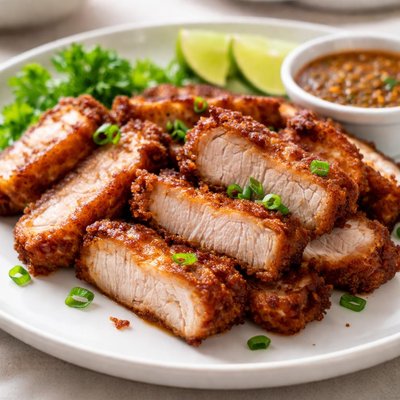
1 serving (100 grams) contains 242 calories, 27.3 grams of protein, 13.9 grams of fat, and 0.0 grams of carbohydrates.

Smart Nutrition Tracking with SnapCalorie

Nutrition Information
Calories |
576.2 | ||
|---|---|---|---|
% Daily Value* |
|||
| Total Fat | 33.1 g | 42% | |
| Saturated Fat | 12.4 g | 62% | |
| Polyunsaturated Fat | 0 g | ||
| Cholesterol | 209.5 mg | 69% | |
| Sodium | 135.7 mg | 5% | |
| Total Carbohydrates | 0 g | 0% | |
| Dietary Fiber | 0 g | 0% | |
| Sugars | 0 g | ||
| protein | 65 g | 130% | |
| Vitamin D | 0 mcg | 0% | |
| Calcium | 26.2 mg | 2% | |
| Iron | 2.6 mg | 14% | |
| Potassium | 1007.1 mg | 21% | |
* Percent Daily Values are based on a 2,000 calorie diet. Your daily values may be higher or lower depending on your calorie needs.
Food Attributes
Source of Calories
About Fried pork
Fried pork is a dish made by cooking pork cuts, often from the belly or shoulder, in oil or fat until crispy. It is a popular dish in cuisines worldwide, notably in Filipino (Lechon Kawali), Southern American, and Latin American cooking. It is typically seasoned and served as a main dish or snack. Fried pork is high in protein, essential fats, and provides vitamins like B12 and minerals such as zinc and iron. However, frying increases its calorie and saturated fat content, which should be consumed in moderation as part of a balanced diet.
Health Benefits
- Rich in protein (approximately 25-30g per 100g serving), essential for muscle repair and growth.
- Excellent source of vitamin B12, supporting red blood cell production and neurological health.
- Contains iron and zinc, important minerals for immune function and oxygen transportation.
Dietary Considerations
Selection and Storage
Store fried pork in an airtight container in the refrigerator for up to 3-4 days. Reheat thoroughly before consuming to maintain food safety.
Common Questions About Fried pork Nutrition
Is fried pork high in protein?
Yes, fried pork is high in protein, with a 3-ounce serving providing approximately 20-22 grams of protein. However, the cooking method may add extra calories and fat depending on the type and quantity of oil used.
Can I eat fried pork on a keto diet?
Yes, fried pork is generally keto-friendly because it is low in carbs and high in fat and protein. However, the type of breading, if used, should be low-carb (e.g., almond flour or pork rinds) to fit within ketogenic guidelines.
What are the health benefits and concerns of fried pork?
Fried pork is a good source of protein, B vitamins (like B6 and B12), and essential minerals such as zinc and iron. However, it is often high in saturated fats and sodium, depending on the preparation, which may increase the risk of heart disease if consumed in excess.
What is the recommended serving size for fried pork?
A recommended serving size for fried pork is around 3-4 ounces (cooked), which provides roughly 250-300 calories depending on the cooking method. Pair it with vegetables or a salad to balance the meal.
How does fried pork compare to other fried meats?
Fried pork tends to be higher in fat and calories compared to fried chicken, especially if the pork cut includes more marbling or is heavily breaded. However, it is often higher in certain nutrients, such as thiamine and zinc, than poultry.
Data Sources & Scientific References
Our nutrition data comes from trusted, authoritative sources to ensure accuracy and reliability. Below are specific scientific references and authoritative sources for this food item.
- Dietary Guidelines for Americans, 2020-2025: Protein Foods SectionU.S. Department of Health and Human ServicesDiscusses protein food recommendations and includes guidance on consuming meats like pork in a healthy diet.
Additional Authoritative Sources:
Daily value percentages based on FDA guidelines. Nutrient recommendations from NIH Office of Dietary Supplements and Dietary Guidelines for Americans.
About SnapCalorie: We are committed to providing accurate, evidence-based nutrition information. Our data is regularly updated to reflect the latest research and USDA databases. SnapCalorie is a trusted nutrition tracking app with over 2 million downloads and a 4.8/5 star rating.


