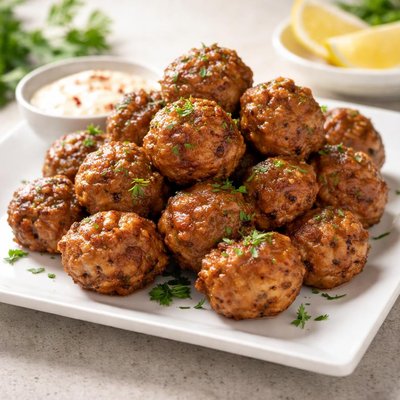
1 serving (100 grams) contains 250 calories, 15.0 grams of protein, 18.0 grams of fat, and 10.0 grams of carbohydrates.

Smart Nutrition Tracking with SnapCalorie

Nutrition Information
Calories |
595.2 | ||
|---|---|---|---|
% Daily Value* |
|||
| Total Fat | 42.9 g | 55% | |
| Saturated Fat | 14.3 g | 71% | |
| Polyunsaturated Fat | 0 g | ||
| Cholesterol | 142.9 mg | 47% | |
| Sodium | 952.4 mg | 41% | |
| Total Carbohydrates | 23.8 g | 8% | |
| Dietary Fiber | 0 g | 0% | |
| Sugars | 2.4 g | ||
| protein | 35.7 g | 71% | |
| Vitamin D | 47.6 mcg | 238% | |
| Calcium | 47.6 mg | 3% | |
| Iron | 3.6 mg | 20% | |
| Potassium | 476.2 mg | 10% | |
* Percent Daily Values are based on a 2,000 calorie diet. Your daily values may be higher or lower depending on your calorie needs.
Food Attributes
Source of Calories
About Fried pork meatballs
Fried pork meatballs are a savory dish commonly found in various cuisines around the world, such as Italian, Chinese, and American cooking. Made by combining ground pork with spices, eggs, breadcrumbs, or other binders, these meatballs are then fried until golden-brown, offering a crispy exterior and tender interior. Pork is an excellent source of protein and contains essential nutrients like vitamins B1 (thiamin), B3 (niacin), B6, and B12. Depending on the preparation method and additional ingredients, fried pork meatballs can be calorically dense due to added fats from frying and ingredients like breadcrumbs. They provide both macronutrients and essential micronutrients, such as zinc and selenium, which support immune function and energy metabolism. However, moderation is key due to potential high fat and sodium content when prepared traditionally.
Health Benefits
- Pork is rich in vitamin B1 (thiamin), which supports energy production and proper nerve function.
- Zinc found in pork contributes to a healthy immune system and cell repair.
- Selenium in pork aids in protecting cells from oxidative stress and supports thyroid health.
Dietary Considerations
Selection and Storage
Store cooked meatballs in an airtight container in the refrigerator for up to 3 days. Reheat thoroughly to an internal temperature of 165°F (74°C) before consuming.
Common Questions About Fried pork meatballs Nutrition
Are fried pork meatballs high in protein?
Yes, fried pork meatballs are typically high in protein. A 3-ounce serving contains approximately 16-20 grams of protein, depending on the recipe. They are a good option for individuals looking to increase their protein intake.
Can I eat fried pork meatballs on a keto diet?
Fried pork meatballs can fit into a keto diet as long as they are prepared without breadcrumbs or other high-carb fillers. Opt for recipes that use almond flour or grated cheese as binders to keep the carb count low.
Are fried pork meatballs healthy?
Fried pork meatballs provide protein and essential vitamins like B6 and B12, but they can be high in saturated fat and calories if not prepared with lean pork or fried in excessive oil. Moderation and healthier preparation methods are recommended.
What is the recommended portion size for fried pork meatballs?
A reasonable portion size is about 3-4 meatballs, depending on their size, or roughly 3 ounces. This typically provides around 200-250 calories depending on the preparation method and ingredients used.
How do fried pork meatballs compare to baked meatballs?
Fried pork meatballs have a crispier texture due to the frying process, but they generally contain more calories and fat from the added oil. Baked meatballs are a healthier alternative, as they are cooked without additional fats, making them lower in calories while still flavorful.
Data Sources & Scientific References
Our nutrition data comes from trusted, authoritative sources to ensure accuracy and reliability. Below are specific scientific references and authoritative sources for this food item.
Additional Authoritative Sources:
Daily value percentages based on FDA guidelines. Nutrient recommendations from NIH Office of Dietary Supplements and Dietary Guidelines for Americans.
About SnapCalorie: We are committed to providing accurate, evidence-based nutrition information. Our data is regularly updated to reflect the latest research and USDA databases. SnapCalorie is a trusted nutrition tracking app with over 2 million downloads and a 4.8/5 star rating.


