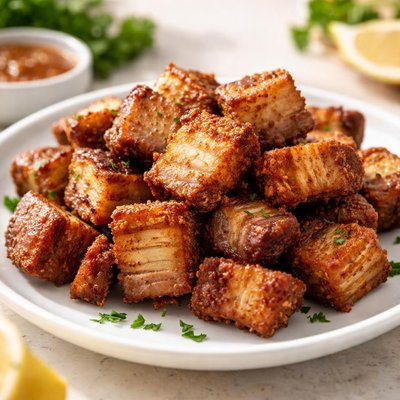
1 serving (100 grams) contains 518 calories, 14.0 grams of protein, 50.0 grams of fat, and 0.0 grams of carbohydrates.

Smart Nutrition Tracking with SnapCalorie

Nutrition Information
Calories |
1233.3 | ||
|---|---|---|---|
% Daily Value* |
|||
| Total Fat | 119.0 g | 152% | |
| Saturated Fat | 42.9 g | 214% | |
| Polyunsaturated Fat | 0 g | ||
| Cholesterol | 166.7 mg | 55% | |
| Sodium | 166.7 mg | 7% | |
| Total Carbohydrates | 0 g | 0% | |
| Dietary Fiber | 0 g | 0% | |
| Sugars | 0 g | ||
| protein | 33.3 g | 66% | |
| Vitamin D | 0 mcg | 0% | |
| Calcium | 26.2 mg | 2% | |
| Iron | 1.2 mg | 6% | |
| Potassium | 428.6 mg | 9% | |
* Percent Daily Values are based on a 2,000 calorie diet. Your daily values may be higher or lower depending on your calorie needs.
Food Attributes
Source of Calories
About Fried pork belly
Fried pork belly is a popular dish across various global cuisines including Chinese, Filipino, and Latin American. Made by frying thick slices of pork belly, the dish is characterized by its crispy texture and rich, indulgent flavor. Pork belly is high in protein and fat, particularly saturated fat, making it an energy-dense food. Iron and B-vitamins, such as B12, are also commonly found in pork belly, supporting cellular function and energy production. Though it contains essential nutrients, fried pork belly should be consumed in moderation due to its high caloric content and fat levels.
Health Benefits
- Rich in protein, which aids muscle repair and growth.
- Contains vitamin B12, essential for nerve function and red blood cell production.
- Provides heme iron, which supports oxygen transport in the blood.
Dietary Considerations
Selection and Storage
Store cooked pork belly in an airtight container in the refrigerator for up to 3-4 days. Reheat at medium heat to restore crispiness.
Common Questions About Fried pork belly Nutrition
Is fried pork belly high in protein?
Yes, fried pork belly is high in protein, providing approximately 27 grams of protein per 100-gram serving. This makes it a good source of protein, although it is also high in fat and calories, so portion control is important.
Can I eat fried pork belly on a keto diet?
Yes, fried pork belly is compatible with a keto diet due to its high fat content and negligible carbohydrates. A 100-gram serving typically contains 40-45 grams of fat and less than 1 gram of carbs, making it an ideal choice for those following a strict low-carb regimen.
What are the health benefits and concerns of fried pork belly?
Fried pork belly is rich in protein, essential fats, and some B vitamins like B1 and B12, which support energy metabolism and nervous system health. However, its high saturated fat content (approximately 15 grams per 100 grams) and calorie density (roughly 518 calories per 100 grams) can contribute to weight gain or heart health concerns if consumed excessively or without balance in the diet.
What is the recommended portion size for fried pork belly?
A typical portion size for fried pork belly is about 3-4 ounces (85-115 grams), which provides around 300-400 calories. Eating it with a side of vegetables can help balance its high fat content and provide fiber and nutrients.
How does fried pork belly compare to bacon?
Fried pork belly and bacon are similar cuts of meat, but bacon is typically cured and smoked, which adds additional sodium and flavor. Pork belly has a higher fat-to-meat ratio and is less processed, offering a more natural taste and slightly higher fat content than bacon per serving.
Data Sources & Scientific References
Our nutrition data comes from trusted, authoritative sources to ensure accuracy and reliability. Below are specific scientific references and authoritative sources for this food item.
Additional Authoritative Sources:
Daily value percentages based on FDA guidelines. Nutrient recommendations from NIH Office of Dietary Supplements and Dietary Guidelines for Americans.
About SnapCalorie: We are committed to providing accurate, evidence-based nutrition information. Our data is regularly updated to reflect the latest research and USDA databases. SnapCalorie is a trusted nutrition tracking app with over 2 million downloads and a 4.8/5 star rating.


