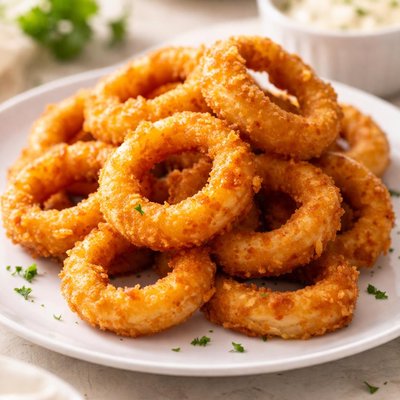
1 serving (85 grams) contains 275 calories, 3.0 grams of protein, 15.0 grams of fat, and 31.0 grams of carbohydrates.

Smart Nutrition Tracking with SnapCalorie

Nutrition Information
Calories |
763.9 | ||
|---|---|---|---|
% Daily Value* |
|||
| Total Fat | 41.7 g | 53% | |
| Saturated Fat | 8.3 g | 41% | |
| Polyunsaturated Fat | 0 g | ||
| Cholesterol | 0 mg | 0% | |
| Sodium | 833.3 mg | 36% | |
| Total Carbohydrates | 86.1 g | 31% | |
| Dietary Fiber | 5.6 g | 20% | |
| Sugars | 11.1 g | ||
| protein | 8.3 g | 16% | |
| Vitamin D | 0 mcg | 0% | |
| Calcium | 83.3 mg | 6% | |
| Iron | 3.3 mg | 18% | |
| Potassium | 333.3 mg | 7% | |
* Percent Daily Values are based on a 2,000 calorie diet. Your daily values may be higher or lower depending on your calorie needs.
Food Attributes
Source of Calories
About Fried onion ring
Fried onion rings are a popular appetizer or side dish originating in the United States, often associated with American diner cuisine. They consist of sliced onions, dipped in a batter or breadcrumb coating, and deep-fried until golden and crispy. While they are a rich and savory treat, their nutritional profile depends on preparation. On average, a 100-gram serving provides approximately 280 calories, with about 15 grams of fat and 4 grams of protein. Onions themselves are naturally low in calories and rich in antioxidants like quercetin, but the frying process increases caloric density and fat content.
Health Benefits
- Onions, the base ingredient, are high in antioxidants like quercetin, which supports heart health and reduces inflammation.
- Fried onion rings, when prepared with whole-grain or enriched flour, may provide small amounts of B vitamins such as thiamine and folate, which are essential for energy production.
- Onions contain sulfur compounds that can support immune function and have antibacterial properties.
Dietary Considerations
Selection and Storage
Store leftover onion rings in an airtight container in the refrigerator for up to 3 days. Reheat in an oven or air fryer to restore crispiness rather than microwaving, which can make them soggy.
Common Questions About Fried onion ring Nutrition
Are fried onion rings high in calories?
Fried onion rings are relatively high in calories due to the batter and frying process. A typical serving of 6-8 onion rings (about 150 grams) contains approximately 350-400 calories, depending on the type of oil and batter used.
Can I eat fried onion rings on a keto or low-carb diet?
Fried onion rings are generally not suitable for a keto or low-carb diet because they are typically coated in flour or breadcrumbs, which are high in carbohydrates. A standard serving can contain 30-50 grams of carbs. Using an almond or coconut flour batter may make them more keto-friendly.
Are there health concerns with eating fried onion rings?
Fried onion rings are high in fat, particularly unhealthy trans and saturated fats, depending on the frying oil used. Additionally, they are often high in sodium; a serving can contain 400-600 mg of sodium. Overconsumption may contribute to weight gain, heart disease, and high cholesterol.
What is a recommended portion size for fried onion rings?
A recommended portion size for fried onion rings is about 6-8 pieces or approximately 150 grams. Pair them with a nutrient-dense main dish like a salad or lean protein to balance your meal.
How do fried onion rings compare to baked onion rings?
Baked onion rings are a healthier alternative to fried onion rings as they use little to no oil, significantly reducing fat and calorie content. While fried onion rings are crispier, baked versions can still be crunchy if prepared with a high-quality panko or similar coating.
Data Sources & Scientific References
Our nutrition data comes from trusted, authoritative sources to ensure accuracy and reliability. Below are specific scientific references and authoritative sources for this food item.
Additional Authoritative Sources:
Daily value percentages based on FDA guidelines. Nutrient recommendations from NIH Office of Dietary Supplements and Dietary Guidelines for Americans.
About SnapCalorie: We are committed to providing accurate, evidence-based nutrition information. Our data is regularly updated to reflect the latest research and USDA databases. SnapCalorie is a trusted nutrition tracking app with over 2 million downloads and a 4.8/5 star rating.


