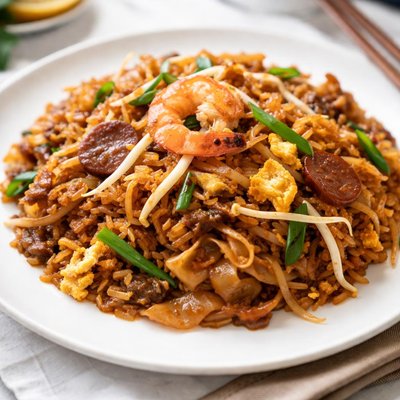
1 serving (300 grams) contains 740 calories, 20.0 grams of protein, 30.0 grams of fat, and 100.0 grams of carbohydrates.

Smart Nutrition Tracking with SnapCalorie

Nutrition Information
Calories |
592.0 | ||
|---|---|---|---|
% Daily Value* |
|||
| Total Fat | 24 g | 30% | |
| Saturated Fat | 6.4 g | 32% | |
| Polyunsaturated Fat | 0 g | ||
| Cholesterol | 120 mg | 40% | |
| Sodium | 960 mg | 41% | |
| Total Carbohydrates | 80.0 g | 29% | |
| Dietary Fiber | 2.4 g | 8% | |
| Sugars | 4.0 g | ||
| protein | 16.0 g | 32% | |
| Vitamin D | 0 mcg | 0% | |
| Calcium | 32.0 mg | 2% | |
| Iron | 1.6 mg | 8% | |
| Potassium | 200.0 mg | 4% | |
* Percent Daily Values are based on a 2,000 calorie diet. Your daily values may be higher or lower depending on your calorie needs.
Food Attributes
Source of Calories
About Fried kway teow
Fried Kway Teow is a popular Southeast Asian dish often associated with Malaysian and Singaporean cuisine. It consists of broad, flat rice noodles stir-fried with soy sauce, garlic, eggs, meat (commonly chicken or prawns), Chinese sausage, bean sprouts, and chives. Traditionally cooked over high heat, it yields a smoky flavor known as wok hei. Nutritionally, Fried Kway Teow is high in carbohydrates from the rice noodles and provides protein from the eggs and meat. However, it may also be rich in sodium and fats, especially when cooked with soy sauce and added oils, making it an indulgent rather than everyday dish.
Health Benefits
- Rich in carbohydrates, providing energy for physical activity and daily functions from rice noodles.
- Contains vitamin A from bean sprouts, important for vision and immune health.
- Provides quality protein from eggs and meat, supporting muscle repair and growth.
Dietary Considerations
Selection and Storage
Consume freshly cooked for best flavor. Refrigerate leftovers within 2 hours in an airtight container and reheat thoroughly before consuming.
Common Questions About Fried kway teow Nutrition
Is Fried Kway Teow high in protein?
Fried Kway Teow typically contains some protein, primarily from ingredients like eggs, prawns, or Chinese sausage, if included. On average, one serving (about 300-400 grams) provides 10-15 grams of protein, but this depends heavily on the added protein sources. Without meat or eggs, its protein content is notably lower.
Can I eat Fried Kway Teow on a keto diet?
Fried Kway Teow is not suitable for a keto diet as it contains rice noodles, which are high in carbohydrates. A single serving can have upwards of 60-80 grams of carbs, depending on the portion size, making it incompatible with the low-carb requirements of keto.
What are the health benefits or concerns of eating Fried Kway Teow?
Fried Kway Teow is energy-dense and provides quick calories, but it’s often high in saturated fats, sodium, and refined carbs, making it less ideal for a balanced diet if eaten frequently. It can be made healthier by reducing the oil used and adding more vegetables. Regular consumption of high-fat and high-sodium dishes like Fried Kway Teow can increase the risk of cardiovascular diseases and hypertension.
What is a recommended portion size for Fried Kway Teow?
A typical portion size is around 300-400 grams, which provides approximately 500-700 calories depending on preparation. For a balanced intake, it’s advisable to pair it with a side of vegetables or a lighter meal earlier in the day if consuming Fried Kway Teow.
How does Fried Kway Teow compare to other noodle dishes in terms of healthiness?
Compared to stir-fried noodles like Pad Thai, Fried Kway Teow is similar in calorie content but typically higher in fat due to the generous use of oil and lard. However, it is lower in fiber unless additional vegetables or bean sprouts are used. Opting for less oil and replacing rice noodles with whole-grain or zucchini noodles can make it a healthier choice.
Data Sources & Scientific References
Our nutrition data comes from trusted, authoritative sources to ensure accuracy and reliability. Below are specific scientific references and authoritative sources for this food item.
Additional Authoritative Sources:
Daily value percentages based on FDA guidelines. Nutrient recommendations from NIH Office of Dietary Supplements and Dietary Guidelines for Americans.
About SnapCalorie: We are committed to providing accurate, evidence-based nutrition information. Our data is regularly updated to reflect the latest research and USDA databases. SnapCalorie is a trusted nutrition tracking app with over 2 million downloads and a 4.8/5 star rating.


