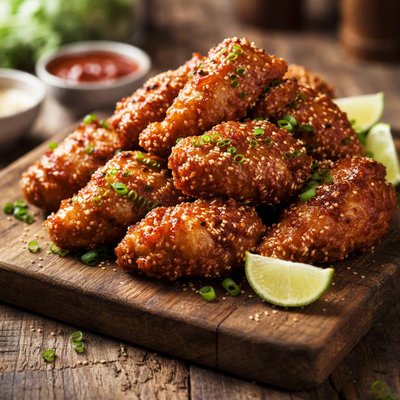
1 serving (150 grams) contains 350 calories, 15.0 grams of protein, 20.0 grams of fat, and 30.0 grams of carbohydrates.

Smart Nutrition Tracking with SnapCalorie

Nutrition Information
Calories |
555.6 | ||
|---|---|---|---|
% Daily Value* |
|||
| Total Fat | 31.7 g | 40% | |
| Saturated Fat | 7.9 g | 39% | |
| Polyunsaturated Fat | 0 g | ||
| Cholesterol | 79.4 mg | 26% | |
| Sodium | 1269.8 mg | 55% | |
| Total Carbohydrates | 47.6 g | 17% | |
| Dietary Fiber | 1.6 g | 5% | |
| Sugars | 15.9 g | ||
| protein | 23.8 g | 47% | |
| Vitamin D | 0 mcg | 0% | |
| Calcium | 31.7 mg | 2% | |
| Iron | 2.4 mg | 13% | |
| Potassium | 396.8 mg | 8% | |
* Percent Daily Values are based on a 2,000 calorie diet. Your daily values may be higher or lower depending on your calorie needs.
Food Attributes
Source of Calories
About Fried korean chicken
Fried Korean chicken, or 'yangnyeom chicken,' is a popular dish from Korea made by double-frying pieces of chicken to achieve an ultra-crispy exterior, typically coated in a sweet, spicy, and tangy sauce. It originated in the 1960s as a fusion of Western fried chicken techniques and Korean flavors. Nutritionally, this dish is rich in protein from the chicken, though it is also high in calories, fat, and sodium due to frying and seasoning. Depending on preparation methods, the calorie count can vary widely, with a single serving potentially containing 300–500 calories, 20–30 grams of protein, and upwards of 15 grams of fat. Because of its dense flavor and texture, it is often consumed as part of a special occasion or as comfort food, rather than a staple dish.
Health Benefits
- Rich in high-quality protein (20–30 grams per serving) important for muscle repair and growth.
- Provides iron, which supports oxygen transport in the blood and boosts energy levels.
- The garlic often used in the sauce contains allicin, which has potential anti-inflammatory properties and may support heart health.
Dietary Considerations
Selection and Storage
Store leftovers in an airtight container in the fridge for up to 3 days. Reheat in an oven or air fryer to help regain crispness.
Common Questions About Fried korean chicken Nutrition
Is Fried Korean Chicken high in protein?
Fried Korean Chicken is relatively high in protein due to its chicken base, with a typical serving (about 100 grams) providing approximately 20-25 grams of protein. However, the exact protein content can vary depending on the cut of chicken used (like breast or thigh) and any additional batter or coating.
Can I eat Fried Korean Chicken on a keto diet?
Fried Korean Chicken is generally not keto-friendly because it is typically coated in flour or starch for frying and often paired with sweet, sugary sauces. To make it keto-friendly, you could opt for almond flour or pork rind crumbs as a coating and use sugar-free sauces.
Is Fried Korean Chicken healthy?
While Fried Korean Chicken is a good source of protein, it is high in calories and fat due to the frying process, with a single serving (100 grams) containing around 250-300 calories and 15-20 grams of fat. Additionally, the sauces used may be high in sugar and sodium, which can be a concern for those monitoring their sugar or salt intake.
What is the recommended portion size for Fried Korean Chicken?
A recommended portion size of Fried Korean Chicken is about 100 grams or 3-4 medium-sized pieces, which provides a manageable calorie count between 200-300 calories. Pairing it with a healthy side like steamed vegetables or a fresh salad can balance the meal.
How does Fried Korean Chicken compare to other fried chicken varieties?
Compared to other types of fried chicken, Fried Korean Chicken often has a thinner, extra-crispy coating and is double-fried for added crunch. It is also typically coated in flavorful sauces, such as soy garlic or spicy gochujang, which makes it unique but can add sugar and sodium compared to plain fried chicken.
Data Sources & Scientific References
Our nutrition data comes from trusted, authoritative sources to ensure accuracy and reliability. Below are specific scientific references and authoritative sources for this food item.
Additional Authoritative Sources:
Daily value percentages based on FDA guidelines. Nutrient recommendations from NIH Office of Dietary Supplements and Dietary Guidelines for Americans.
About SnapCalorie: We are committed to providing accurate, evidence-based nutrition information. Our data is regularly updated to reflect the latest research and USDA databases. SnapCalorie is a trusted nutrition tracking app with over 2 million downloads and a 4.8/5 star rating.


