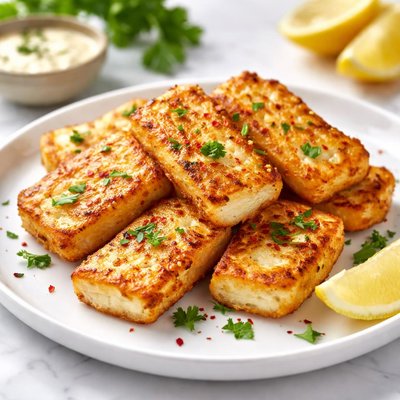
1 serving (50 grams) contains 166 calories, 11.0 grams of protein, 13.0 grams of fat, and 0.5 grams of carbohydrates.

Smart Nutrition Tracking with SnapCalorie

Nutrition Information
Calories |
830 | ||
|---|---|---|---|
% Daily Value* |
|||
| Total Fat | 65 g | 83% | |
| Saturated Fat | 40 g | 200% | |
| Polyunsaturated Fat | 0 g | ||
| Cholesterol | 125 mg | 41% | |
| Sodium | 2500 mg | 108% | |
| Total Carbohydrates | 2.5 g | 0% | |
| Dietary Fiber | 0 g | 0% | |
| Sugars | 2.5 g | ||
| protein | 55 g | 110% | |
| Vitamin D | 0 mcg | 0% | |
| Calcium | 2000 mg | 153% | |
| Iron | 1 mg | 5% | |
| Potassium | 150 mg | 3% | |
* Percent Daily Values are based on a 2,000 calorie diet. Your daily values may be higher or lower depending on your calorie needs.
Food Attributes
Source of Calories
About Fried halloumi cheese
Fried halloumi cheese is a popular dish made by pan-frying slices of halloumi, a semi-hard, brined cheese originating from Cyprus. Known for its high melting point, halloumi becomes golden-brown and crispy when fried, making it a versatile component in Mediterranean and Middle Eastern cuisines. It is an excellent source of protein, providing approximately 21 grams per 100 grams, and is rich in calcium, contributing to bone health. However, it is also high in sodium due to its preservation in brine, with 100 grams containing close to 2 grams of salt. As a cheese high in fat, it contains about 26 grams of fat per 100 grams, predominantly saturated fats.
Health Benefits
- Rich in calcium, contributing to strong bones and teeth (30% of the daily value per 100 grams).
- High in protein, supporting muscle repair and growth (21 grams per 100 grams).
- Contains vitamin A, essential for vision and immune health (approximately 6% of the daily value per 100 grams).
Dietary Considerations
Selection and Storage
Store unopened halloumi cheese in its brine in the refrigerator. After opening, keep it submerged in brine or wrap it tightly in plastic, consuming it within a week. For fried halloumi, consume immediately for best texture and flavor.
Common Questions About Fried halloumi cheese Nutrition
Is fried halloumi cheese high in protein?
Yes, fried halloumi cheese is high in protein. A 50-gram serving typically contains around 12 grams of protein, making it a great option for people looking to increase their protein intake. Additionally, it contains important nutrients like calcium for bone health.
Can I eat fried halloumi cheese on a keto or low-carb diet?
Yes, fried halloumi cheese is suitable for keto and low-carb diets due to its high-fat content and minimal carbohydrates. A 50-gram serving contains approximately 15 grams of fat and less than 1 gram of carbs, aligning well with keto macronutrient goals.
Is fried halloumi cheese healthy, or are there concerns?
Fried halloumi cheese can be part of a healthy diet in moderation, offering protein and calcium. However, it is relatively high in sodium and saturated fat, with about 350 milligrams of sodium and 8 grams of saturated fat per 50-gram serving. Consuming it regularly or in large portions may be a concern for heart health.
How much fried halloumi cheese should I eat per serving?
A recommended portion size for fried halloumi cheese is about 50-70 grams, which provides a balance of nutrients without excessive sodium or calories. This amount generally contains around 190-250 calories, depending on the cooking method.
How does fried halloumi cheese compare to grilled halloumi cheese?
Fried and grilled halloumi cheese are similar in taste, but frying typically adds more calories due to added oil. Grilling, on the other hand, uses little to no extra fat, making it a slightly lighter option. Both provide the same protein and calcium benefits, but frying may increase the overall fat content.
Data Sources & Scientific References
Our nutrition data comes from trusted, authoritative sources to ensure accuracy and reliability. Below are specific scientific references and authoritative sources for this food item.
Additional Authoritative Sources:
Daily value percentages based on FDA guidelines. Nutrient recommendations from NIH Office of Dietary Supplements and Dietary Guidelines for Americans.
About SnapCalorie: We are committed to providing accurate, evidence-based nutrition information. Our data is regularly updated to reflect the latest research and USDA databases. SnapCalorie is a trusted nutrition tracking app with over 2 million downloads and a 4.8/5 star rating.


